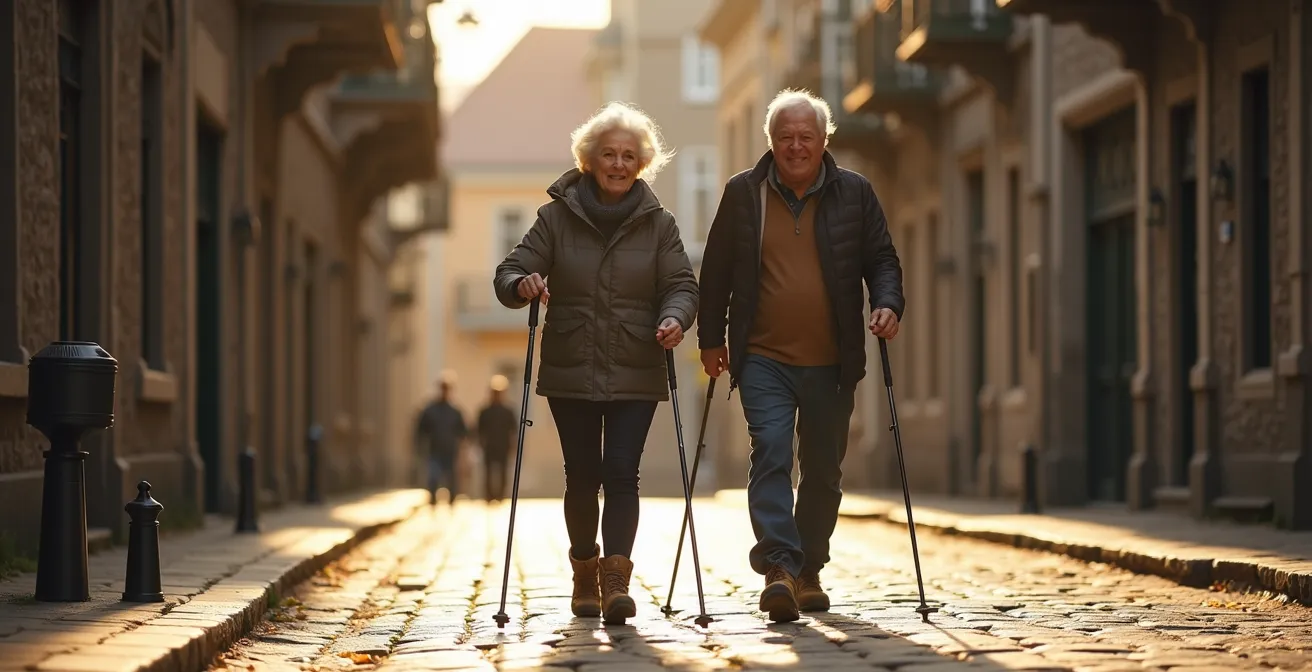
The secret to enjoying Old Quebec’s cobblestones isn’t endurance, but strategic planning that prioritizes comfort over distance.
- Prioritize footwear with thick, shock-absorbing soles (like hikers or walking shoes) over fashion boots to prevent foot fatigue.
- Use “strategic pauses”—like the Funicular or a well-placed bench—to manage your energy and enjoy the views without burnout.
Recommendation: Before you go, audit your plan for comfort: check your shoes, pre-plan your routes between Upper and Lower Town, and identify potential rest stops in advance.
Every local in Quebec City can spot them: the tourist couple, halfway up Côte de la Montagne, one partner leaning against a 300-year-old wall, grimacing. They’ve made the classic mistake. They saw the postcard-perfect images of Old Quebec, put on a pair of stylish-but-unforgiving shoes, and tried to conquer our historic city like it was a flat, modern subdivision. The charm of the cobblestones quickly fades when every step sends a jolt through your knees.
The common advice you’ll hear is frustratingly vague: “wear comfortable shoes” or “be ready for hills.” This tells you nothing. It doesn’t tell you that the real challenge isn’t the distance, but the uneven, unforgiving surfaces that fatigue your muscles in completely new ways. It doesn’t explain that the difference between a magical day and a painful one lies not in your stamina, but in your strategy.
But what if the key wasn’t to just endure the walk, but to outsmart it? The secret, which seasoned locals know by heart, is to embrace the art of the strategic pause. It’s about knowing which shortcuts are worth it, where the hidden benches are, and how to turn a rest stop into one of the best views of your trip. This isn’t just a guide on where to walk; it’s a guide on how to plan your entire visit around comfort, energy management, and insider knowledge, ensuring your memories are of the stunning architecture, not your aching feet.
We’ll break down everything you need to know, from choosing the right gear for the right season to mapping out routes that work with your energy levels, not against them. Consider this your local’s playbook to a truly enjoyable, pain-free visit.
Summary: A Local Guide’s Secrets to Walking Old Quebec’s Cobblestones Without the Pain
- Why walking Old Quebec’s Lower Town requires strategic planning for seniors
- Walking shoes vs. Fashion boots: Which ones survive the cobblestones?
- Funicular or Breakneck Stairs: The best choice for your energy levels
- The mistake of walking cobblestones in January without ice cleats
- Where to find rest stops and benches along the steepest historical routes
- Why the 1608 Bar is your best ticket to the view for the price of a cocktail
- Why tossing a Toonie ($2) is the minimum for a full 15-minute show
- Walking the Walls: A Strategic Guide to Quebec City’s Fortifications for History Buffs
Why walking Old Quebec’s Lower Town requires strategic planning for seniors
For seniors or anyone with mobility concerns, the charm of Lower Town—Place Royale, Rue du Petit Champlain—can feel intimidating. The beauty is undeniable, but so are the cobblestones. However, a pain-free visit is entirely possible with a bit of forethought. The key isn’t to avoid the area, but to approach it with a low-impact plan that prioritizes flat terrain and readily available rest areas. It’s not about how much ground you cover, but how intelligently you cover it.
The goal is to minimize steep inclines and prolonged periods on uneven surfaces. For example, starting your exploration at Place Royale allows you to enjoy the historic heart on its flattest section. From there, a stroll down the mostly level Rue Saint-Paul offers a fantastic experience with numerous accessible cafés for a strategic pause. It’s about thinking in segments. Quebec City’s accessibility guidelines require rest areas at least every 60 meters on slopes over 5%, but knowing where the best ones are is a local’s secret. Remember, the Funicular is a senior’s best friend here, offering a completely effortless—and free for those with mobility aids—return to Upper Town.
Your Pre-Walk Comfort Audit: 5-Step Checklist
- Footwear Check: Examine your shoes. Is the sole thick with good cushioning? Is there ankle support? Look for EVA foam or rubber lugs, not thin fashion soles.
- Route Reconnaissance: Look at a map. Identify your key destinations and pinpoint the steepest parts you’ll need a plan for, like the Côte de la Montagne.
- Energy Plan: Decide on your transport between Upper and Lower Town in advance. The Funicular is your best bet for energy conservation.
- Rest Stop Plotting: Pinpoint at least three potential “strategic pauses” on your intended route. This could be a park bench, a museum lobby, or a quiet café.
- Gear Integration: Pack essential gear based on the season. This is non-negotiable and includes ice cleats in winter or a water bottle and sun hat in summer.
Walking shoes vs. Fashion boots: Which ones survive the cobblestones?
This is the single most important decision you will make for your trip. I’ve seen countless visitors regret their choice by 10 a.m. The cobblestones of Old Quebec are not just uneven; they are a historical surface designed for horse-drawn carriages, not modern footwear. Your shoes need to do two things: absorb shock and provide stable grip. Fashion boots, with their typical thin, hard soles, do neither. They transmit every jolt directly to your joints and offer treacherous grip on worn, damp stone.
True walking shoes with EVA foam soles are a good choice for summer, as they are lightweight and provide excellent shock absorption. However, for all-season versatility and superior support, nothing beats a good pair of hiking boots or trail runners. Their rubber-lugged soles are designed for uneven terrain, giving you the confidence to walk on angled cobblestones and steep paths without fear of a slip. They also provide crucial ankle support, which helps prevent twists on the irregular surfaces.
This isn’t to say you can’t look stylish. Many modern hiking and walking shoe brands offer city-friendly designs. The key is to prioritize function over form. Think of your footwear as essential equipment, not just an accessory. Save the fashion boots for a nice dinner in a restaurant you’re taking a taxi to.
To help you decide, here is a direct comparison of how different footwear types handle our unique streets.
| Footwear Type | Pros | Cons | Best Season |
|---|---|---|---|
| Walking Shoes (EVA foam) | Excellent shock absorption, lightweight | Less grip on wet stones | Summer/Fall |
| Hiking Boots (rubber lugs) | Superior traction, ankle support | Heavier, can be hot | All seasons |
| Fashion Boots | Stylish for evening | Poor grip, thin soles | Indoor/evening only |
| Trail Runners | Good balance of grip and comfort | Less formal appearance | Spring/Summer |
Funicular or Breakneck Stairs: The best choice for your energy levels
The connection between Upper and Lower Town is the city’s most significant physical challenge. You have a few options, and choosing the right one is a critical exercise in energy management. Your daily energy is a finite resource; don’t waste it on a climb when you could be saving it for exploring. The most famous options are the Funicular and the Escalier Casse-Cou (Breakneck Stairs), but they serve very different purposes.
The Breakneck Stairs are an iconic photo op, but they are exactly as advertised: 59 steep, often crowded steps. Climbing them is a workout. It’s a great choice if you’re full of energy and want that classic Petit-Champlain photo, but it’s a poor choice if you’ve already been walking for hours. Conversely, the Funicular is your best strategic tool. For a few dollars, it eliminates the climb entirely in about two minutes, offering a panoramic river view as a bonus. Think of it as an investment in your afternoon’s comfort.
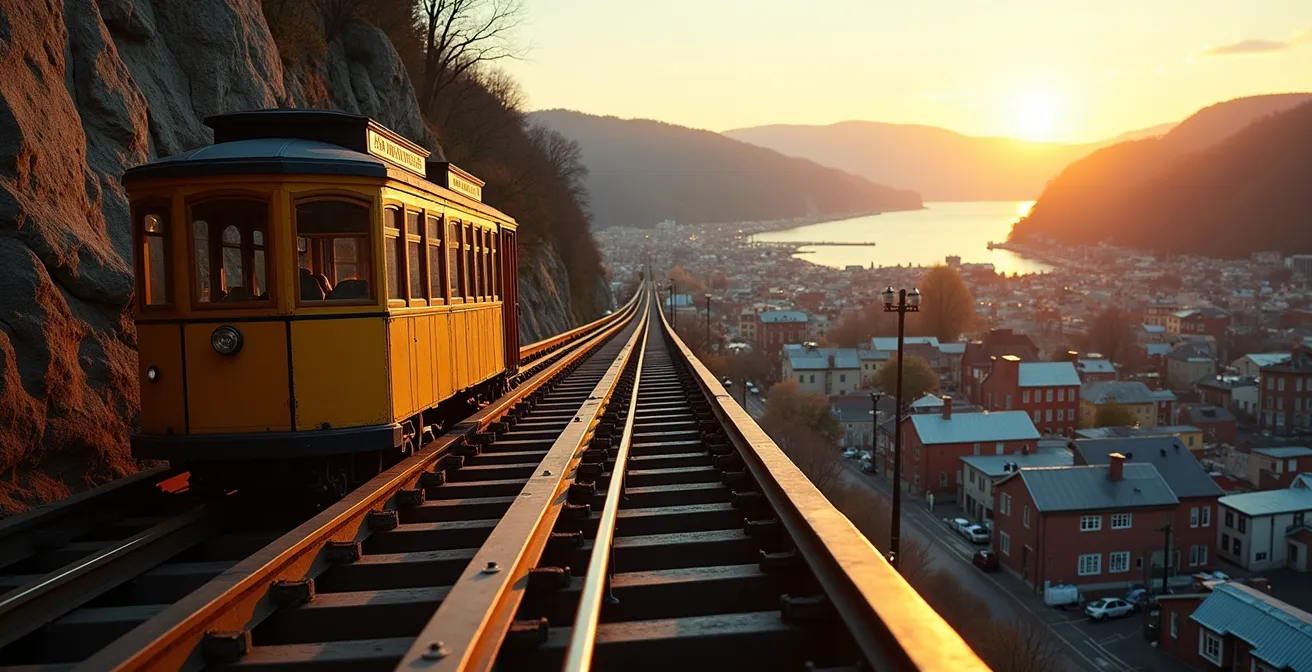
As the image shows, the elevation change is significant. Beyond these two, there are also winding roads like the Côte de la Montagne. This is a beautiful walk, but it’s a steady, 15-minute uphill trek. It’s a moderate option for those who want a walk but find the stairs too intense. Your choice should be a conscious one based on how you feel and what you still want to accomplish with your day.
Here’s how the main options stack up in terms of effort and reward:
| Route Option | Cost (CAD) | Time | Physical Effort | Views |
|---|---|---|---|---|
| Funicular | 4.00 | 2 minutes | None | Panoramic river view |
| Escalier Casse-Cou (Breakneck Stairs) | Free | 5-10 minutes | High (59 steps) | Historic Petit-Champlain |
| Côte de la Montagne (winding road) | Free | 15-20 minutes | Moderate | Gradual city views |
| Côte du Palais | Free | 20-25 minutes | Moderate-High | Local neighborhood |
The mistake of walking cobblestones in January without ice cleats
Walking Old Quebec in summer is a challenge; walking it in winter is a different sport entirely. The biggest, and most dangerous, mistake a visitor can make is underestimating the ice. The charming cobblestones become slick, uneven sheets of ice, especially on the steep hills. The pretty dusting of snow you see in photos often conceals a treacherous layer beneath. Walking without proper traction is not just uncomfortable—it’s a serious safety risk.
This is where ice cleats (crampons) become the most essential piece of gear you can own. These are not heavy-duty mountaineering spikes, but simple, slip-on grippers with coils or small studs that you pull over your existing boots. They provide the bite needed to walk confidently on icy surfaces. As a local guide, Marie from Nomad Tours Quebec, puts it, the city has a significant elevation change. Local guides report that the elevation between Upper and Lower town is around 60 meters (200 feet). That’s not a mountain, she says, “but enough to make you feel it in your calves”—and enough to cause a serious fall on ice.
If you’ve seen photos of Old Quebec, with its cobblestone streets, charming castle, and winding alleys, you might already guess that there’s some walking involved. Old Quebec is famous for its charm, its history… and yes, its hills. The elevation between them is around 60 meters (200 feet) not mountain-level steep, but enough to make you feel it in your calves after a day of exploring.
– Marie, Local Quebec Tour Guide, Nomad Tours Quebec
Don’t wait until you’re slipping to buy them. They are readily available in the city and are a small investment for a safe and enjoyable trip. You can find them in pharmacies like Pharmaprix or Jean Coutu for basic models, or at department stores like Simons and La Baie for more robust or stylish options. Canadian Tire offers the widest range. Wearing them marks you not as a timid tourist, but as a smart visitor who came prepared.
Where to find rest stops and benches along the steepest historical routes
A successful day of exploring Old Quebec is defined by its “strategic pauses.” Knowing where you can sit, catch your breath, use a washroom, and enjoy the view without having to buy something is true insider knowledge. The city is full of these spots if you know where to look. They are your secret weapon against fatigue, turning a challenging walk into a pleasant journey.
When climbing the steep Côte de la Montagne, for instance, many tourists push through, arriving at the top exhausted. The smart traveler knows to stop at Parc Montmorency halfway up. It offers benches with stunning river views and public washrooms, allowing you to break the climb into two manageable parts. Another top-tier secret is the Château Frontenac lobby. You do not need to be a guest to walk in, sit on one of the plush sofas in the climate-controlled hall, and use their clean, accessible washrooms. It’s the most luxurious free rest stop in the city.
Here are a few other golden-tier rest stops only locals regularly use:
- Morrin Centre: This English-language library and cultural centre on Rue Saint-Stanislas offers quiet seating areas and free entry. It’s a peaceful escape from the crowds.
- Holy Trinity Cathedral doorway: The covered archway provides shelter from rain or sun, and there are often benches in the adjacent yard during summer.
- Quebec City Hall (Hôtel de Ville): It has a public lobby with seating and accessible washrooms, right in the heart of Upper Town.
During the summer, the city also installs “placottoirs”—seasonal public seating areas, often in the form of small wooden decks with chairs and tables—in parking spots along commercial streets. Spotting these and using them is embracing the local way of life.
Why the 1608 Bar is your best ticket to the view for the price of a cocktail
Many visitors think getting a great view of Quebec City requires paying an admission fee to a dedicated viewpoint. While places like the Observatoire de la Capitale offer a fantastic 360° perspective, there’s a smarter, more enjoyable way to get a world-class view: the strategic pause at a well-chosen bar. This is where you can apply the “view-per-dollar” principle. Why pay just for a view when you can get the view *and* a memorable experience?
The 1608 Bar, located inside the Château Frontenac, is arguably the best example of this. For the price of a well-made cocktail (around $18-$25), you get a seat in a historic, luxurious setting with a jaw-dropping view over the St. Lawrence River and Lower Town. The atmosphere is sophisticated and relaxed, making it the perfect strategic pause in the late afternoon. You’re not just looking at the view; you’re inhabiting it. Compare that to standing on a crowded public terrace or in a sterile observatory.
Of course, there are other options. The revolving Ciel! Bistro-Bar offers stunning, dynamic views, but it’s a full dining experience. The Terrasse Dufferin is free and wonderful, but it can be crowded and exposed to the elements. The 1608 Bar hits the sweet spot between cost, comfort, and a premium experience. It’s not just a drink; it’s buying a ticket to one of the best seats in the city.
This table puts the “view-per-dollar” concept into perspective:
| Venue | Cost (CAD) | View Type | Atmosphere | Best Time |
|---|---|---|---|---|
| 1608 Bar (Château Frontenac) | $18-25/cocktail | River & Lower Town | Historic luxury | Sunset (5-7pm) |
| Observatoire de la Capitale | $14.50 admission | 360° city view | Educational | Morning (clear views) |
| Ciel! Bistro-Bar (revolving) | $35-50/meal+drink | 360° rotating | Modern dining | Dinner (7-9pm) |
| Terrasse Dufferin | Free | River panorama | Outdoor public | All day |
Why tossing a Toonie ($2) is the minimum for a full 15-minute show
Street performers, or *amuseurs publics*, are an essential part of Old Quebec’s living atmosphere. From the accordion player on Rue du Petit Champlain to the living statues on the Terrasse Dufferin, they provide the city’s soundtrack and character. For visitors, they offer a perfect opportunity for a strategic pause—a chance to stop walking, rest your feet, and soak in the culture. But there’s an unwritten rule to this exchange that many tourists miss.
Stopping to watch for a moment is free, but if you stay for a song or two, or watch a full 10-15 minute performance, it’s customary to show your appreciation with a tip. This is their livelihood. Think of it like the “pay-what-you-want” walking tours that are popular in the city; you tip based on the value you received. In Quebec City, where the quality of performance is high, a good tip is expected. A loonie ($1) is a polite nod, but a Toonie ($2) is considered the unofficial minimum for enjoying a full “show.” If a performer has truly captured your attention and given you a 15-minute break from your walk, tossing a five-dollar bill is even better.
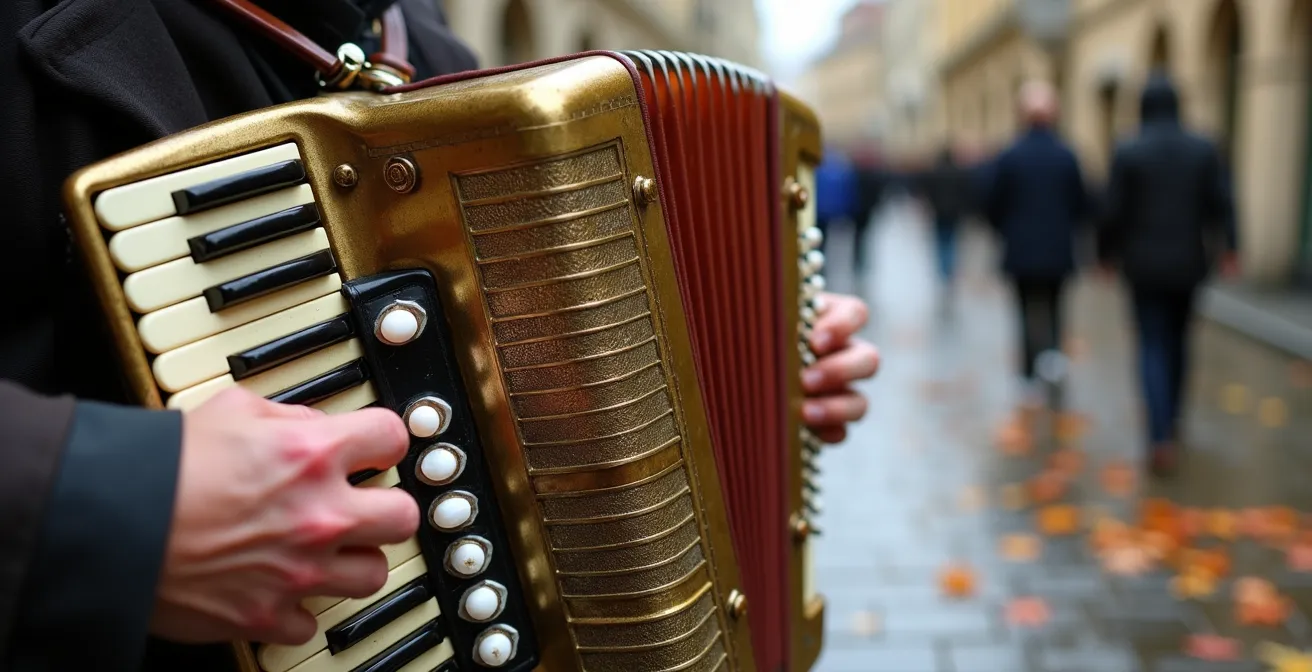
This isn’t just about paying for entertainment; it’s about participating in the culture that makes the city special. It ensures that these artists can continue to perform. You can find them at designated spots like the entrance to Holy Trinity Cathedral, along Rue du Petit Champlain, and of course, among the portrait artists on Rue du Trésor. Your small contribution ensures the magic remains for the next visitor.
Key takeaways
- The key to a pain-free visit is not endurance, but “strategic pauses”—using benches, bars, and viewpoints to manage your energy.
- Your footwear is your most important piece of gear. Choose boots or shoes with thick, shock-absorbing soles and good grip. Leave thin-soled fashion shoes at home.
- Be practical. Use the Funicular to save energy, wear ice cleats in winter, and tip street performers as a thank you for the entertainment and the rest stop.
Walking the Walls: A Strategic Guide to Quebec City’s Fortifications for History Buffs
For history buffs, no visit is complete without walking the fortifications. This is where you truly connect with the city’s military past. As the only walled city north of Mexico, Quebec’s 4.6 kilometres of ramparts offer unparalleled views and a tangible link to the 17th and 18th centuries. However, tackling the entire circuit in one go can be exhausting. The strategic approach is to break the walk into manageable, themed segments, each with its own reward.
Connected to the Citadelle, and wrapping around nearly the entire area, are the fortifications of Quebec. At around 4.5 kilometres in length, the fortifications around Old Quebec make it the only walled city north of Mexico. Part of a defence system built between 1608 (when Samuel de Champlain founded Quebec) and 1871, by French, then British and eventually Canadian forces, you can walk these walls on your own or take a tour to learn their history. Plus, you’ll enjoy the views on either side: the historic city within, and the St. Lawrence River beyond.
– Destination Canada, Official Canada Tourism Guide
Instead of an aimless wander, plan your walk. The section from Porte Saint-Louis past the Citadelle offers the most dramatic military architecture but involves some stairs. The flat stretch along Rue des Remparts is the easiest and provides breathtaking sunset views over the Lower Town and port. The part by the Parliament Building is a mix of flat paths and gentle inclines, offering a look at the city’s political heart. Finally, the descent towards the Old Port is steep but rewarding, with dramatic shadows in the afternoon light.
Here’s a possible breakdown of the 4.6km walk into strategic segments:
- The Citadel Front (1.2km): Start at Porte Saint-Louis. This section has some stairs but offers the best photos of the Citadelle itself between 10 a.m. and noon.
- Plains of Abraham View (1.1km): The flat, accessible path along Rue des Remparts is perfect for an evening stroll with optimal sunset views.
- Parliament Stretch (1.3km): This section passes Porte Saint-Jean and is best experienced in the morning light, offering a mix of city and nature views.
- Old Port Descent (1.0km): A steeper section with multiple exit points, ideal for the afternoon when the dramatic shadows highlight the port’s architecture.
Ultimately, falling in love with Old Quebec is about working with the city, not against it. It’s about trading the “power through it” mindset for a smarter, more observant approach. By choosing the right shoes, managing your energy, and embracing the art of the strategic pause, you transform a potentially painful trek into a series of wonderful discoveries. You’ll end your day with great photos and fond memories, not sore feet and regret. So, before you lace up your boots, take a moment to plan your pauses. That’s the real secret to discovering the magic of our city, one comfortable step at a time.