
Contrary to popular belief, booking a Laurentian ski chalet isn’t a simple transaction—it’s a high-stakes verification process where vigilance is your greatest asset.
- Fake listings and misleading descriptions are common, but Quebec’s mandatory CITQ establishment number is your primary tool for validating any rental under 31 days.
- “Winter reality” often clashes with listing promises; features like hot tubs, “ski-in/ski-out” access, and driveways require operational due diligence to avoid disappointment and hidden costs.
Recommendation: Never commit to a booking until you have independently verified the host’s CITQ number on the official registry and have asked specific, probing questions about winter access and amenity maintenance.
The image is tantalizing: a snow-covered chalet in the Laurentians, smoke curling from the chimney, a hot tub steaming under starry skies. For families and groups planning a ski trip, this dream is the goal. Yet, in the high-demand Quebec rental market, this dream can quickly sour into a nightmare of fraudulent listings, misleading descriptions, and unexpected costs that turn a getaway into a lesson in buyer’s remorse. Many guides will offer generic advice like “read the reviews” or “book early.” While not wrong, this counsel is dangerously insufficient for navigating the specific pitfalls of this region.
The common approach focuses on finding the best *deal*, assuming all listings are created equal. But what if the true key to a successful rental isn’t hunting for discounts, but mastering the art of forensic verification? This guide shifts the perspective. We are not just booking a property; we are conducting due diligence. It’s about learning to dismantle a listing’s promises and checking its foundation, from its legal right to operate in Quebec to the practical reality of its winter accessibility. You will learn to think like a vacation rental watchdog, armed with the knowledge to spot red flags others miss.
This article will provide a clear, actionable framework for your investigation. We’ll start by dissecting the anatomy of a scam listing, then move to verifying key amenities and decoding deceptive marketing terms. Finally, we’ll cover the logistical realities of winter in the Laurentians, from snow removal to navigating Mont-Tremblant with a family in tow, ensuring you book with absolute confidence.
Summary: Booking a Ski Chalet in the Laurentians: How to Avoid Fake Listings and Hidden Fees
- Why that “too good to be true” Mont-Tremblant chalet is likely a scam
- How to check if the hot tub is actually functional before arrival
- Ski-in/Ski-out vs. “Minutes away”: Decoding misleading proximity descriptions
- The mistake of underestimating driveway snow removal for 4 cars
- When to book for Reading Week: The 6-month rule you shouldn’t ignore
- The mandatory steps to get your establishment number before listing on Airbnb
- The “last mile” reality: When the listing says 4×4 required, do they mean it?
- Navigating Mont-Tremblant’s Pedestrian Village with Kids: Parking, Strollers, and Crowds
Why that “too good to be true” Mont-Tremblant chalet is likely a scam
In the world of Laurentian chalet rentals, a price that seems miraculously low is the single biggest red flag. Scammers prey on the desire for a deal, using professional photos (often stolen from legitimate listings) and impossibly good rates to lure unsuspecting renters. Their goal is to secure a deposit via a non-traceable method and then vanish. However, since the tragic Montreal fire of 2023, Quebec has enacted some of North America’s strictest short-term rental laws (Bill 25), giving you a powerful weapon against fraud: the Corporation de l’industrie touristique du Québec (CITQ) establishment number. This number is not optional; it is a legal requirement for anyone renting a property for 31 days or less.
The impact of these regulations has been significant. While compliance was low initially, recent data shows a dramatic shift. According to the Quebec government, the compliance rate for short-term rental laws has skyrocketed, with a 90% compliance rate observed in early 2024, a massive jump from just 58% in August 2023. This means most legitimate hosts are following the rules. A host who cannot or will not provide their CITQ number is almost certainly operating illegally, putting you at risk of a last-minute cancellation or, worse, a complete scam. Platforms like Airbnb and Vrbo are now legally obligated to display this number and face fines up to $100,000 for non-compliance, so its absence is a deal-breaker.
Your 5-Step CITQ Verification Checklist
- Demand the Number: Before any other communication, ask the host directly for their CITQ establishment number. This is a mandatory requirement for all Quebec rentals under 31 days since September 2023.
- Verify on the Listing: Check that the CITQ number is prominently displayed within the listing itself. Platforms are required to show it or face severe penalties.
- Confirm Insurance: A legitimate CITQ registration requires proof of $2 million in liability insurance. Ask the host if they can confirm they have this coverage, as it protects both parties.
- Check Municipal Approval: In tourist zones like Mont-Tremblant, hosts of non-principal residences need specific municipal authorization. A valid CITQ number implies this is in place.
- Reject Excuses: If a host claims their number is “pending,” that they are “exempt,” or offers any other excuse, walk away immediately. Under Bill 25, there are no grace periods.
This forensic verification is your first and most important line of defense. It transforms you from a passive consumer into an empowered watchdog, capable of instantly filtering out the vast majority of fraudulent or non-compliant listings.
How to check if the hot tub is actually functional before arrival
The bubbling hot tub, set against a snowy backdrop, is a quintessential part of the ski chalet fantasy. It’s also a frequent source of disappointment. A listing that advertises a hot tub doesn’t guarantee it will be clean, hot, or even operational upon your arrival. Winter in the Laurentians is harsh, and spa maintenance is a significant operational challenge and expense for hosts. Freezing temperatures can cause pipes to burst and equipment to fail, making “operational due diligence” on your part essential. You must move beyond the marketing photo and probe for proof of functionality.
A savvy renter should ask for more than a simple “yes” when confirming the hot tub’s status. Ask specific questions: “When was the hot tub last serviced?” or “What is your protocol if the hot tub malfunctions during our stay?” A professional host will have clear, immediate answers. They should be able to describe their maintenance schedule and contingency plans. Hesitation or vague responses are a warning sign that the amenity may not be a priority for them. Remember, a broken hot tub isn’t just an inconvenience; it can be an indicator of a larger lack of professional management.
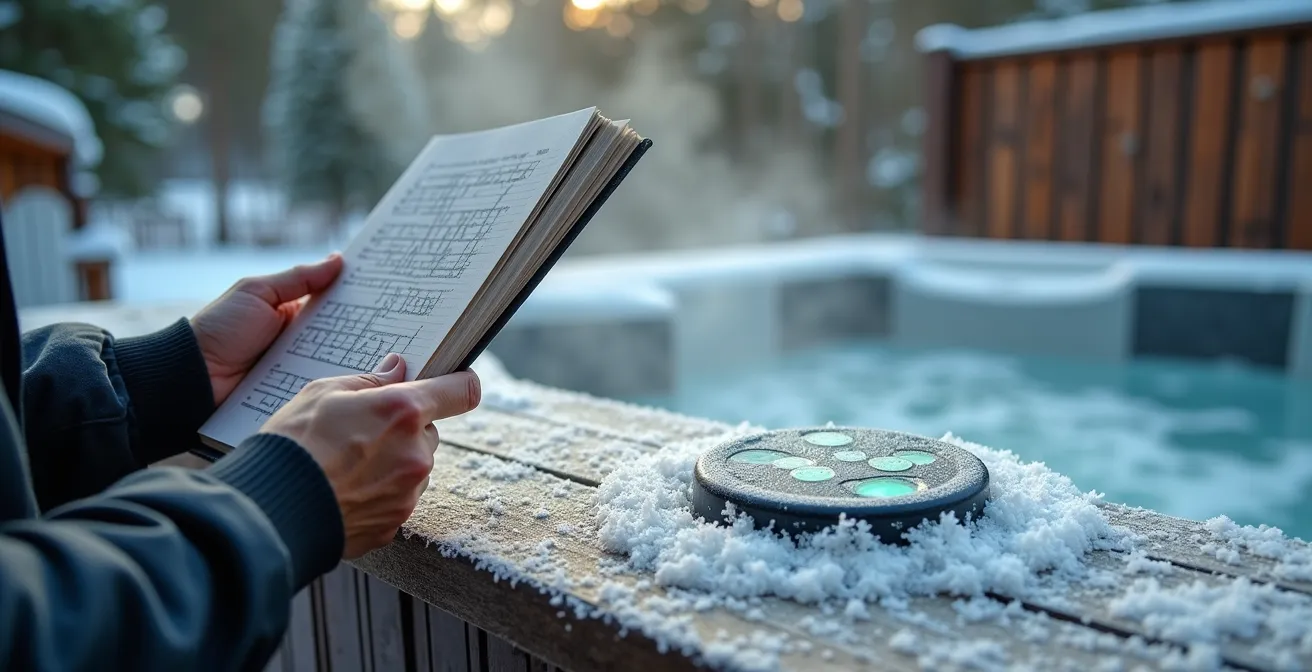
Furthermore, a functional hot tub is tied directly to the host’s legal and financial obligations. As the following case illustrates, proper insurance is not just a formality; it’s a critical safety net that separates legitimate operators from amateurs. This is why verifying the host’s CITQ certification is so crucial, as it mandates this level of protection.
Case Study: The Cost of a Cold Tub
A Montreal-area host learned a hard lesson about liability in January 2024. When their chalet’s hot tub malfunctioned and caused damage, their standard homeowner’s insurance claim was denied. The reason? They lacked the mandatory $2 million CAD liability insurance required for all CITQ-certified short-term rentals. This incident underscores why renters must insist on CITQ-compliant properties. That certification is your assurance that the host has the specific coverage needed to handle equipment failures and protect guests, even when things go wrong in the freezing cold.
By treating the hot tub as a key operational feature rather than just a photo prop, you protect your vacation experience and ensure the host is meeting their professional obligations.
Ski-in/Ski-out vs. “Minutes away”: Decoding misleading proximity descriptions
“Ski-in/ski-out” is perhaps the most abused term in ski resort real estate. A true ski-in/ski-out property allows you to ski directly from your door to a lift and back again. In Mont-Tremblant, many listings stretch this definition to its breaking point. A property described as “minutes away” might technically be close as the crow flies, but in reality, it could involve a steep, icy walk in ski boots, a convoluted drive, or reliance on an infrequent shuttle. This discrepancy between the “paper reality” of the listing and the “winter reality” on the ground can lead to what can be called the “Accessibility Tax”—the unforeseen costs in time, money, and frustration spent just getting to the slopes.
Before booking, become a digital detective. Use Google Maps with Street View and satellite imagery to scrutinize the property’s actual location relative to the runs. Look for the physical paths. Is there a groomed trail, or is it an ungroomed trek through the woods? If a car is needed, map the route to the nearest resort parking lot (e.g., P1 at Tremblant) and check the typical drive time in winter traffic. As experts from Tremblant Living Property Management note, even with good proximity, logistics can be a challenge. They state in their Mont Tremblant Ski Properties Guide, “shuttle services run less frequently in the evenings or have reduced schedules on weekdays,” a crucial detail if you plan on evening activities in the village.
The difference in convenience and cost between a true ski-in/ski-out location and one that is merely “close” is enormous. The following table breaks down the winter reality for several popular Mont-Tremblant areas, exposing the gap between marketing phrases and the on-the-ground experience.
| Location | Marketing Description | Actual Distance | Winter Reality | Parking Cost |
|---|---|---|---|---|
| Domaine de la Forêt | Ski-in/Ski-out | Direct slope access | True ski-in/out at Algonquin units | Included |
| Cap Tremblant | 5 minutes to resort | 3.5km by car | 7-10 min winter driving + parking search | $25-35/day |
| Old Village | Minutes from slopes | 6km to main gondola | 12-15 min drive in snow conditions | $20-30/day |
| Tremblant-Les-Eaux | Close to mountain | 5 min by car | Shuttle dependent (reduced evening schedule) | Free shuttle but limited |
Ultimately, a few extra minutes of research can save you hours of logistical headaches and hundreds of dollars in parking fees over the course of your trip.
The mistake of underestimating driveway snow removal for 4 cars
A listing that proudly advertises “parking for 4 cars” can paint a misleading picture in the depths of a Laurentian winter. The critical factor isn’t the square footage of the driveway, but the quality and frequency of its snow removal. A heavy snowfall overnight can easily trap vehicles, delaying your ski day or, in a worst-case scenario, blocking access for emergency services. Many property owners contract with a `déneigeur privé` (private snow removal service), but the terms of these contracts vary wildly. Some offer prompt service after a few centimetres of snow, while others may only come once a day, or worse, only after the storm has ended.
A particularly common and frustrating issue is the snowbank left at the end of the driveway by municipal plows clearing the road. A cheap snow removal contract may not include clearing this dense, heavy pile, effectively barricading you in or out. Before you book, you must ask targeted questions that go beyond a simple “is there snow removal?” The configuration of the parking is also crucial. A 2×2 side-by-side arrangement is convenient, but a 1×4 tandem driveway means constant car shuffling, a major hassle for large groups with different schedules. A seemingly minor detail like the driveway can become the biggest logistical bottleneck of your vacation if not properly vetted.
To avoid a parking nightmare, your due diligence must include a specific inquiry into the host’s winter operations. Here are the essential questions to ask before committing:
- Contract specifics: “Is your snow removal contract for municipal bank clearing included, and what is the typical response time after a snowfall?”
- Parking layout: “Could you provide a photo or diagram of the parking configuration to confirm if it is tandem or side-by-side?”
- On-site equipment: “What snow equipment is provided on-site for guests to use, such as shovels, sand/gravel, or access to a snow blower?”
- Emergency contact: “Can you provide the contact information for the private snow removal contractor in case of an emergency or missed clearing?”
- Liability confirmation: “Who is liable if a guest’s vehicle gets stuck or is damaged due to what we believe is inadequate snow clearing on the property?”
These questions signal to the host that you are a savvy renter and force them to be transparent about their winter preparedness. A professional host will appreciate your thoroughness and have ready answers.
When to book for Reading Week: The 6-month rule you shouldn’t ignore
Timing is everything, especially when targeting peak periods like Christmas, New Year’s, or the university Reading Weeks in February and March. For these high-demand slots, the best properties—the ones that are legitimately CITQ-certified, well-located, and professionally managed—are often booked solid six to nine months in advance. Waiting until the fall to book a chalet for a February ski trip is a recipe for disappointment, forcing you to choose from the slim, often subpar, pickings that remain. This is where the generic advice to “book early” fails; it lacks the specific timeline required for a competitive market like the Laurentians.
The financial incentive to plan ahead is substantial. As demand surges closer to peak dates, so do prices. While off-season rates may seem reasonable, you can expect significant premiums for holiday periods. For instance, current Booking.com data shows an average of $327 per night for weekend stays, a figure that can easily double or triple for a large, well-appointed chalet during Reading Week. By adhering to the 6-month rule, you are not only securing a better selection of properties but also locking in rates before the last-minute demand-driven price hikes kick in. This proactive approach is the hallmark of a savvy renter who understands market dynamics.

This long-range planning gives you the crucial advantage of time. It allows you to leisurely perform the due diligence outlined in this guide without the pressure of a shrinking inventory. You have the time to thoroughly vet CITQ numbers, scrutinize locations on Google Maps, and have detailed conversations with potential hosts. Trying to rush this process a few months out, when options are limited, is how renters make compromises and fall into the very traps this guide is designed to help you avoid. Mark your calendar and start your search in the summer for a winter getaway.
Treat booking a peak-season chalet like planning a major event. The foresight you exercise months in advance will directly translate into a smoother, more enjoyable, and financially sound vacation.
The mandatory steps to get your establishment number before listing on Airbnb
To fully grasp your power as a renter, it’s enlightening to understand the rigorous process a host must now undergo to operate legally in Quebec. The era of casually listing a spare cottage on Airbnb is over. The catalyst for this profound shift was a deadly fire in an illegal Montreal Airbnb in March 2023, which killed seven people. That tragedy prompted the Quebec government to fast-track and enforce Bill 25, creating a system designed to ensure safety and accountability. This isn’t just red tape; it’s a direct response to a preventable disaster, and it has teeth. For a host, failing to comply is a costly mistake.
Since the law’s implementation, enforcement has been aggressive. Between April 2023 and March 2024, Quebec authorities reported collecting over $5 million in fines from non-compliant operators. The process for a host is now standardized and non-negotiable. They must first obtain authorization from their municipality. Then, they apply to the CITQ, providing proof of municipal approval and, critically, a certificate for $2 million in civil liability insurance. Only after these documents are verified is an establishment number issued. This number must be displayed on all listings, and platforms like Airbnb are held responsible for delisting any properties that don’t comply. This regulatory framework is why your first question to any host must always be, “What is your CITQ number?”
Case Study: The Montreal Fire and the Dawn of Bill 25
The March 2023 fire in Old Montreal was a watershed moment. The investigation revealed the property was operating as a collection of illegal short-term rentals, lacking proper fire exits and safety measures. The ensuing public and political outcry led directly to the strict enforcement of Bill 25. The results have been clear: authorities have seen a dramatic increase in registration compliance since the law took full effect. The tragedy highlighted the life-or-death importance of regulation and gave birth to the robust CITQ system that now protects renters by weeding out unsafe and illegal operations.
When you insist on a CITQ number, you are not being difficult; you are leveraging a system designed for your protection and honoring the hard-learned lessons of the past.
The “last mile” reality: When the listing says 4×4 required, do they mean it?
When a Laurentian chalet listing mentions “4×4 recommended” or “winter tires essential,” it is not a casual suggestion—it is a critical warning about the “last mile” to the property. The main highways and town roads are generally well-maintained, but the final stretch to many secluded chalets often involves steep, winding, and privately maintained access roads. These roads can be treacherous in winter, covered in ice or deep snow, and a standard front-wheel-drive vehicle, even with winter tires, may not be sufficient. Ignoring this advice is a gamble that can leave you stranded, facing an expensive specialized tow, or unable to access your rental at all.
First, it’s vital to understand Quebec law. Winter tires are not optional; they are mandatory for all passenger vehicles from December 1st to March 15th. These tires must be marked with the peaked mountain and snowflake symbol. Driving without them is not only unsafe but also illegal, with the Sûreté du Québec (SQ) enforcing this rule. According to Quebec’s automotive insurance board (SAAQ), failing to comply can result in fines ranging from $200 to $300. However, even with legal winter tires, a steep, icy driveway can defeat a 2WD vehicle. The “4×4 required” note is the host’s way of telling you that the property’s access exceeds the capability of a standard car in typical winter conditions.
To avoid a mobility crisis, you need to assess the risk before you book. Don’t just take the listing’s word for it; probe for details to understand exactly what you’re up against. Here are the crucial steps to assess if your vehicle is up to the task:
- Confirm tire legality: Verify that all four of your tires have the mountain snowflake symbol, as this is the legal minimum for winter driving in Quebec.
- Inquire about the grade: Ask the owner for the exact grade percentage of the access road and driveway. Anything approaching or exceeding a 15% grade is serious terrain that likely requires true 4×4 or all-wheel drive.
- Request visual proof: Ask the host for a recent video of a car driving up the access road in snowy conditions. A photo can be deceiving; a video shows the real-world challenge.
- Secure a towing contact: Get the name and number of a local specialized towing service that serves private cottage roads. Standard roadside assistance often will not service these unplowed or remote locations.
- Check tire tread: Remember that for true winter traction, especially on ice, tire tread depth should be at least 4.8mm, well above the legal minimum of 1.6mm.
Underestimating the “last mile” is one of the most common and stressful mistakes visitors make. A few direct questions can be the difference between a smooth arrival and a vacation spent waiting for a tow truck.
Key Takeaways
- Always start by demanding and verifying the rental’s CITQ establishment number. No number, no booking—it’s your primary shield against scams and illegal operations.
- Treat listing descriptions as marketing, not fact. Independently verify proximity, winter access, and amenity functionality with targeted questions and tools like Google Maps.
- Understand the “Accessibility Tax”: factor in the real-world costs and hassles of parking, shuttles, and potential towing for chalets that aren’t truly ski-in/ski-out.
Navigating Mont-Tremblant’s Pedestrian Village with Kids: Parking, Strollers, and Crowds
Successfully booking the right chalet is only half the battle; navigating the destination itself presents its own set of challenges, especially for families. Mont-Tremblant’s pedestrian village is charming but can be overwhelming with young children, strollers, and ski gear in tow. The cobblestone paths, stairs, and crowds, combined with snow and ice, make a standard city stroller nearly useless. The key to a low-stress experience lies in smart logistical planning, from where you park to how you move your gear (and tired kids) around the resort.
Parking is the first hurdle. While there are several lots, their convenience and cost vary dramatically. Choosing the right one can significantly impact your day. The heated underground lot (P-Village) offers direct, weather-protected access to the village center, a godsend with small children, but it comes at a premium. Outdoor lots like P1 and P2 are more economical but require a ride on the open-air Cabriolet lift or a shuttle bus—a cold wait on a frigid day. Understanding these trade-offs ahead of time allows you to budget accordingly and set realistic expectations for your family’s arrival and departure.
Case Study: A Family’s Strategy for Beating the Crowds
One Toronto family with three young children refined their approach over several trips to Tremblant. Their winning strategy involves arriving at the village by 8:30 AM to secure a spot in the P-Village underground lot, effortlessly avoiding the 10 AM rush. They use the village skating rink during the 12-1:30 PM lunchtime lull and book dinners for 5 PM to beat the 6:30 PM après-ski wave. Their most crucial discovery was ditching the stroller and instead renting a ‘chariot de ski’ (a small sled or pulk for gear and kids), which glides easily over snowy and uneven paths, transforming their village navigation from a struggle into a breeze.
This table breaks down the primary parking options for families, highlighting the pros and cons of each to help you make an informed decision based on your budget and tolerance for logistical hurdles.
| Parking Location | Distance to Village | Best For | Winter Challenge | Cost/Day |
|---|---|---|---|---|
| P-Village Underground | Direct access | Families with young kids | Heated, no snow removal needed | $35-40 premium |
| P1/P2 Outdoor | Shuttle/Cabriolet required | Budget-conscious | Cold wait with kids and gear | $20-25 |
| Base of Gondola | In village center | Quick ski access | 3-4:30pm chaos at ski day end | $30-35 |
| Hotel Valet | Varies | Convenience | No hassle but expensive | $45-60 |
By applying a strategic lens to every aspect of your trip, from the initial booking to your time in the village, you transform a potentially stressful family outing into the seamless, memorable adventure you envisioned.