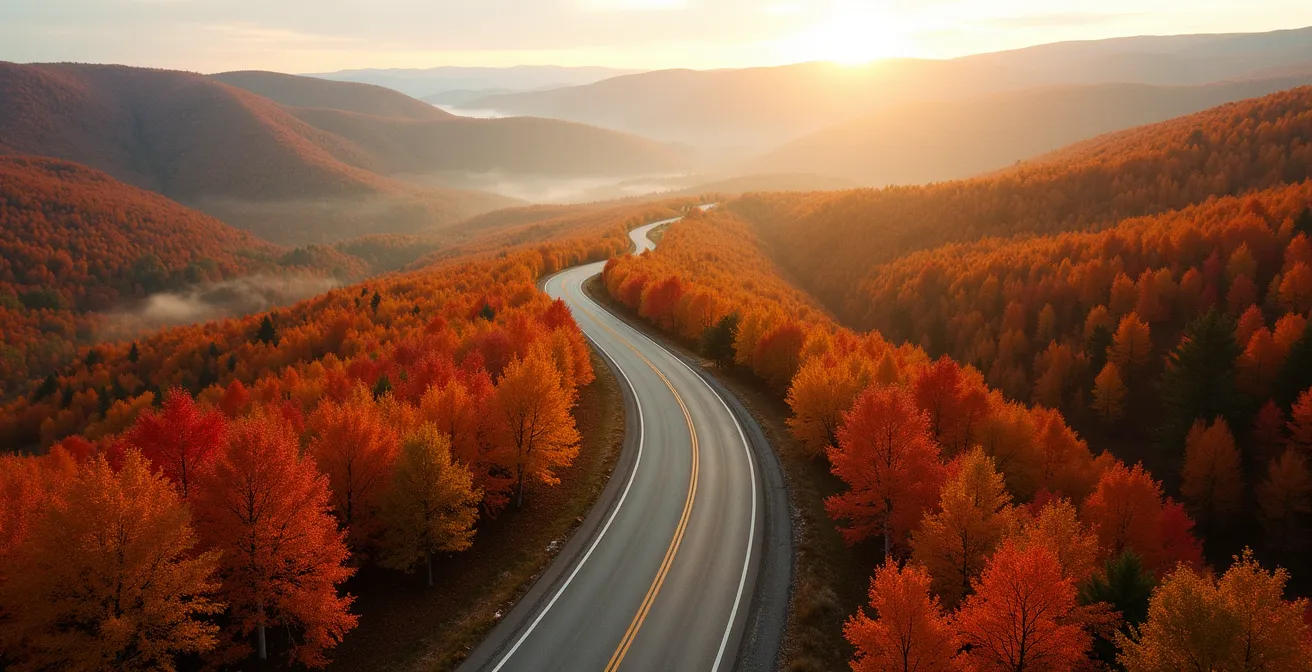
The secret to a perfect fall foliage trip isn’t just hitting the road during “peak week,” it’s about outsmarting the crowds with a strategic, multi-phased approach.
- Forget the Thanksgiving rush; the most vibrant colours often appear just before the long weekend, with fewer people on the road.
- Ditch the congested main highways for scenic backroads like Route 108, where the journey itself becomes the destination.
Recommendation: Plan your drive around the three phases of colour—early golds, crimson peak, and late russets—and swap overrun summits for stunning, quiet alternatives.
The annual pilgrimage to the Eastern Townships for “leaf-peeping” is a cherished Quebec tradition. As the air gets that crisp edge, visions of rolling hills ablaze in crimson and gold fill our minds. The common advice is simple: check the foliage map, book a weekend in October, and head for the hills. But this conventional wisdom often leads to the very thing road-trippers dread: bumper-to-bumper traffic on Highway 10 and crowded lookout points at iconic spots like Mont-Orford, turning a serene escape into a stressful ordeal.
Many guides will list the same popular towns and trails, inadvertently creating bottlenecks that dilute the magic of the season. They tell you *where* to go, but not *how* to navigate the experience. What if the key to unlocking the true soul of the Cantons-de-l’Est in autumn wasn’t about being at the most famous spot during the busiest week? What if, instead, it was about understanding the rhythm of the changing leaves and using strategic “scenic logistics” to find your own slice of paradise?
This guide offers a different perspective. We will move beyond the myth of a single “peak weekend” to embrace a more nuanced, three-phase approach to timing your visit. We’ll compare the journey on the slow, scenic roads to the rush of the highway, reveal stunning alternatives to the region’s most congested peaks, and show you how to connect your drive with the vibrant local wine scene. Get ready to plan a smarter, more inspiring, and deeply personal fall foliage adventure.
To help you craft the perfect itinerary, this article breaks down the essential strategies for your Eastern Townships road trip. Explore the sections below to master the art of chasing colour, not crowds.
Summary: Your Guide to an Unforgettable Autumn Drive
- The Thanksgiving myth: Why the best color might be gone by the long weekend
- Route 108 vs. Highway 10:Departing Gaspésie Harbors: Choosing the Right Whale-Watching Cruise for Your Motion Sickness
- Mont Orford congestion: Alternative peaks with equally good views
- The wine route connection: Vineyards with the best autumn backdrops
- Rainy day colors: Why overcast days actually make the red leaves pop
- The summit temperature drop: Why you need a windbreaker even in August
- Blue Whales or Humpbacks: Which month offers the best sightings?
- Nordic Glamping in Quebec: Choosing Accommodations That Are Actually Accessible in Winter
The Thanksgiving myth: Why the best color might be gone by the long weekend
The single biggest mistake most fall visitors make is pinning all their hopes on the Thanksgiving long weekend. While it often coincides with beautiful scenery, it’s a gamble that can backfire. Peak foliage is a fleeting moment, and a windy or rainy week can strip the iconic maples bare just before the holiday crowds arrive. Official forecasts confirm that peak conditions occur when landscapes reach 70% to 100% colour, a window that can easily open and close in the week *before* Thanksgiving.
A more strategic approach is to embrace the Three-Phase Foliage Strategy. Instead of chasing a single, elusive “peak,” you target the unique beauty of each stage of the season. This mindset transforms your trip from a high-pressure mission to a guaranteed success, no matter when you go.
- Early Golds (Late September): This is the prelude. The sugar maples are still green, but the landscape is punctuated by brilliant flashes of gold from aspens and birches. It’s the perfect time to explore lower-elevation areas like the Marais de la Rivière aux Cerises near Magog, with far fewer visitors.
- Crimson Peak (Early to Mid-October): This is the main event. The iconic maple-covered hills ignite in shades of red, orange, and scarlet. This is the time to target the region’s famous scenic drives, but ideally on a weekday just before the holiday weekend to avoid the worst traffic.
- Russet & Ochre Calm (Post-Thanksgiving): After the long weekend, many assume the show is over. They’re wrong. The brilliant reds may have faded, but the landscape settles into a sophisticated palette of deep russets, warm ochres, and burnished oranges from the oaks and beeches. This period offers a peaceful, contemplative experience with almost no crowds.
By understanding these phases, you can plan a trip that aligns with the type of experience you want, whether it’s the first bright flashes of colour or the serene, quiet beauty of the season’s end. The real secret is that there is no single “best” time—only different kinds of beautiful.
Route 108 vs. Highway 10:Departing Gaspésie Harbors: Choosing the Right Whale-Watching Cruise for Your Motion Sickness
While the second part of this title seems to have taken a scenic detour to the Gaspé Peninsula, the core question for any Eastern Townships road-tripper remains critically important: how should you get there? The choice between the fast-moving Autoroute 10 and the historic Route 108 (part of the Chemin des Cantons) is the first and most defining decision of your trip. It’s a choice between efficiency and experience, between arriving quickly and truly arriving.
Autoroute 10 is the direct path from Montreal. It’s a modern highway designed to get you from Point A to Point B as fast as possible. But in doing so, it bypasses the very soul of the region. For the traveler seeking scenic logistics, the choice is clear. Route 108 offers a higher “serendipity factor,” inviting you to discover hidden gems that the highway hides from view.
To make the decision tangible, consider this driver’s scorecard, based on what a fall foliage seeker truly values. The data is supported by a deeper analysis of the region’s top spots.
| Metric | Route 108 (Chemin des Cantons) | Highway 10 |
|---|---|---|
| Scenic Value | High – Historic villages, covered bridges | Moderate – Direct route |
| Photo Opportunities | Excellent – Multiple lookouts | Limited – Highway views |
| Local Eateries | Abundant – Village cafes | Service stations only |
| Traffic Risk | Low – Less congested | High – Friday/Sunday Montreal traffic |
| Serendipity Factor | High – Hidden gems accessible | Low – Bypasses attractions |
Case Study: The Circuit des sheds panoramiques
A prime example of Route 108’s superiority is the Circuit des sheds panoramiques. This themed drive, integrated into the local network, features nine unique, open-sided lookout points or “sheds.” According to a profile of the route, each provides spectacular views and historical context, showcasing the region’s Loyalist heritage and architecture. This is an experience you simply cannot have from the highway, transforming your drive into an educational and visually stunning journey.
Mont Orford congestion: Alternative peaks with equally good views
Parc national du Mont-Orford is the celebrity of the Eastern Townships, and during the fall, it’s swarmed by paparazzi-like crowds. The gondola lines can be long, the trails packed, and the parking lots full by mid-morning. This is the classic congestion trap. While beautiful, the experience can be compromised by its own popularity. The secret that locals know is that the region is dotted with other summits that offer equally breathtaking—and sometimes superior—panoramic views without the crowds.
Choosing an alternative peak is a key piece of your scenic logistics. Instead of fighting for a view at Orford, you can be standing in peaceful solitude, gazing out over the same rolling tapestry of colour. The key is to match the mountain to your desired experience, whether you’re with family or looking for a challenging hike.

As the image above illustrates, reaching the summit of an alternative peak like Mont-Ham offers that same incredible sense of accomplishment and an uninterrupted 360-degree vista. Here are four excellent alternatives to Mont-Orford:
- Family-Friendly 360° View: Mont-Ham. Located a bit further afield, this 713-meter peak rewards a manageable hike with one of the most spectacular panoramic views in the region. With 18km of trails and facilities at the base, it’s a perfect and well-organized day trip.
- The Hiker’s Network: Mont Sutton/PENS. For those who love to wander, the network of trails at Mont Sutton offers over 50km of interconnected paths. You can hike for hours, discovering different lookouts and perspectives across a vast, protected landscape.
- The Quiet Border Lookout: Pinnacle Mountain. Near the charming village of Baldwin’s Mills, this local favorite offers a relatively short hike to a stunning lookout that gazes over Lake Lyster and towards the US border. It’s an intimate and rewarding climb.
- The Local’s Secret: Mont-Glen. This lesser-known peak features an observation tower at its summit, providing a unique elevated perspective over the surrounding valleys. It’s a true hidden gem for those looking to get off the beaten path.
The wine route connection: Vineyards with the best autumn backdrops
A fall drive through the Cantons-de-l’Est is about more than just leaves; it’s a multi-sensory experience. The crisp air, the scent of woodsmoke, and, increasingly, the taste of local wine. The Brome-Missisquoi Wine Route (La Route des Vins) weaves through the same landscape as your foliage tour, offering the perfect opportunity to combine scenic driving with gastronomic discovery. This is where your logistical planning transforms into a true sampling of the local art de vivre.
The scale of the route is impressive. It covers 160km and includes 25 vineyards that are responsible for an incredible 60% of Quebec’s total wine production. Visiting during the fall harvest season (September-October) adds another layer of excitement, with opportunities to witness or even participate in grape picking, stomping, and other celebratory events. A stop at a vineyard isn’t just a pause; it’s an immersion in the agricultural heart of the region.
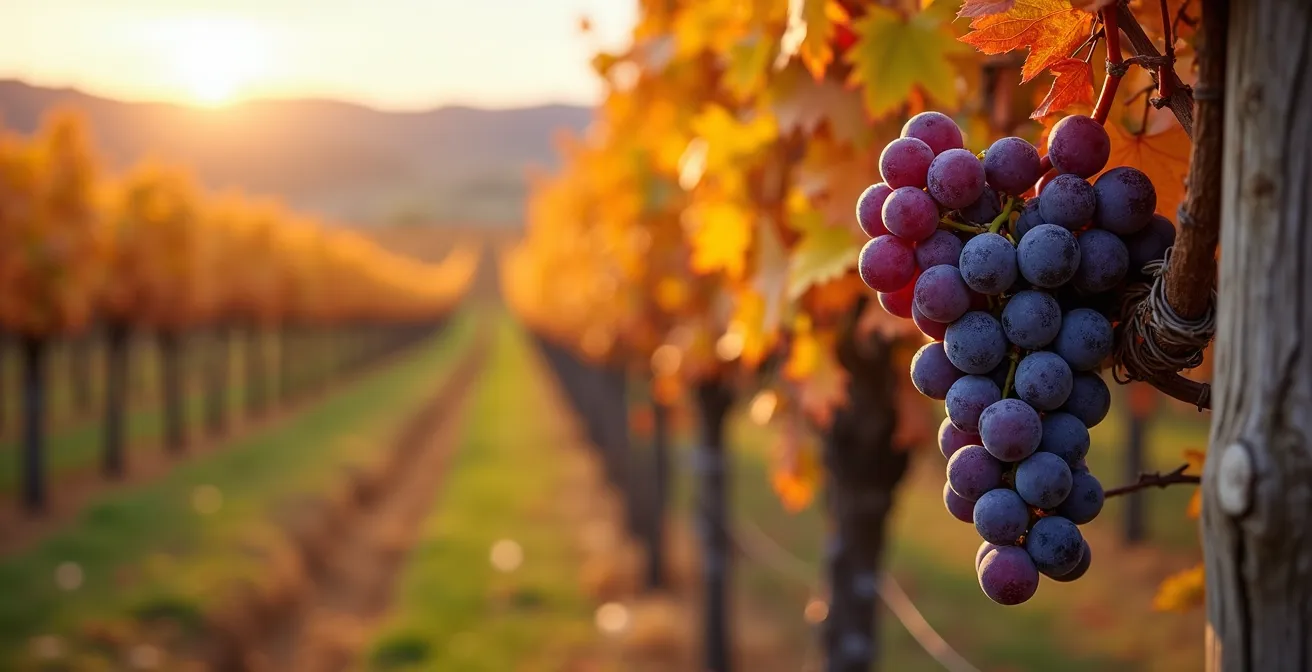
For the photographer and scenery lover, certain vineyards offer exceptionally compelling visuals where the structured lines of the trellises contrast beautifully with the wild chaos of fall colour on the hills behind them. To elevate your photo gallery, seek out these prime locations:
- Vignoble du Ruisseau: Famous for its stunning architecture and the powerful “leading lines” created by its vineyard rows, drawing the eye toward the colourful hills beyond.
- Val Caudalies: A perfect blend of modern and rustic, where sleek architectural elements provide a striking contrast to the warm, natural autumn landscape.
- Domaine des Côtes d’Ardoise: Combine your wine tasting with culture. This vineyard hosts Quebec’s largest outdoor sculpture exhibition, placing art directly among the vines for truly unique photo compositions.
- Vignoble de l’Orpailleur: A pioneer in Quebec wine, this historic estate features an Économusée dedicated to winemaking, offering a dose of heritage alongside its picturesque setting.
Rainy day colors: Why overcast days actually make the red leaves pop
A forecast of rain can feel like a death sentence for a foliage trip. Many will cancel their plans, imagining a world of grey, muted tones. This is another myth ripe for busting. For photographers and true colour enthusiasts, an overcast day is a secret weapon. The harsh glare and deep shadows of a bright, sunny day can actually wash out colours. A cloudy sky, however, creates a different kind of magic.
The science behind it is simple and is a foundational concept in professional photography. As one principle states:
An overcast sky acts as a giant light diffuser, eliminating harsh glare and shadows. This saturates the colors, making reds and oranges appear more vibrant
– Photography principle, Professional photography technique
This phenomenon of colour saturation means that a rainy or overcast day can be the absolute best time to capture the deep, rich tones of the maple leaves. The wet leaves glisten, their colours deepen, and the entire forest takes on a moody, dramatic character that brilliant sun cannot replicate. So, instead of cancelling, you pivot. A rainy day is an opportunity to focus on different kinds of beauty and experiences.
Action Plan: Your Townships Rainy Day Itinerary
- Drive through a covered bridge like the Pont de Milby and roll down the windows. Notice how the rain enhances the rich, earthy scent of old wood.
- Seek indoor culture by visiting the world-class Musée des beaux-arts de Sherbrooke, a perfect refuge with outstanding collections.
- Lean into the cozy atmosphere by exploring the many charming antique shops in villages like Brome Lake (Knowlton).
- Warm up with a hot chocolate or coffee at a quintessential café, such as Saveurs et Gourmandises in the impossibly picturesque village of North Hatley.
- Embrace the “cocooning” spirit of Quebec by checking into a cozy inn with a fireplace, turning the dreary weather into the main attraction.
The summit temperature drop: Why you need a windbreaker even in August
While the title specifically mentions August, this piece of mountain wisdom is a critical part of your scenic logistics for a fall trip. The principle remains the same: for every 100 metres you ascend, the temperature can drop by approximately 1°C. This effect, known as the environmental lapse rate, is even more pronounced when you factor in wind chill at an exposed summit.
In autumn, this can mean starting a hike at the base of Mont-Sutton or Mont-Ham in a comfortable 15°C sunshine and arriving at the top to a biting wind that makes it feel closer to freezing. The warm, golden light of a fall afternoon can be deceptive. Being unprepared for the summit temperature drop can quickly turn a beautiful moment into a shivering, unpleasant experience, forcing you to cut your stay at the top short.
The solution is simple but essential: always pack layers. A lightweight, packable windbreaker is non-negotiable, even if the day feels warm in the valley. It weighs next to nothing in your daypack but provides an indispensable barrier against wind, preserving your body heat and allowing you to comfortably linger at the summit to soak in the views you worked so hard to earn. A thin hat and gloves are also wise additions. This small bit of preparation is the difference between a triumphant summit photo and a hasty, cold retreat.
Key takeaways
- Ditch the Thanksgiving weekend rush; the best colours and fewest crowds are often found in the days leading up to it.
- Choose scenic backroads like Route 108 over the congested Highway 10 to discover hidden villages, lookouts, and local charm.
- Avoid the overrun Mont-Orford and opt for spectacular, quieter alternative peaks like Mont-Ham or the Mont Sutton network.
Blue Whales or Humpbacks: Which month offers the best sightings?
As your trip-planning curator, sometimes it’s about looking at the bigger picture of what a journey through Quebec can offer. While our focus is squarely on the terrestrial beauty of the Eastern Townships’ fall foliage, this question points to another of the province’s world-class natural wonders: the marine life of the St. Lawrence Estuary. If your road trip extends beyond a weekend, this is a detour worth considering.
The epicentre for whale watching is the Saguenay–St. Lawrence Marine Park, easily accessible from towns like Tadoussac or Baie-Sainte-Catherine. The season generally runs from May to October, overlapping perfectly with the beginning of the fall colour season. The answer to which whale you’ll see depends heavily on the month.
Humpback whales are the acrobats of the sea, famous for their breaching behaviour. They are most reliably seen from July through September. By October, many have begun their migration south. For blue whales, the largest animals on Earth, the window is often narrower and less predictable, typically peaking in late August and September. Therefore, if your trip is in late September, you stand a good chance of seeing a variety of species, including minke whales, fin whales, and possibly both humpbacks and blues. By mid-October, sightings become less frequent as the animals depart for warmer waters. This is a completely different experience from the fall foliage drive, trading quiet hills for the vast, open water of the estuary.
Nordic Glamping in Quebec: Choosing Accommodations That Are Actually Accessible in Winter
This final piece of logistical planning addresses a crucial question: where to stay? The title’s mention of “winter” provides a strategic clue for the fall traveler. Many of Quebec’s most unique accommodations, such as seasonal “glamping” sites, shut down for the year after the Thanksgiving weekend. Knowing which places remain open—and are therefore “accessible in winter”—is the key to finding exceptional lodging during the quieter, later phases of the fall season.
Opting for a “Nordic” style accommodation—think minimalist cabins, geodesic domes, or micro-chalets with large windows and cozy interiors—is the perfect way to complement a fall foliage tour. These structures are designed to blend with nature, offering an immersive experience that a standard hotel room cannot match. They embody the Quebec spirit of cocooning: finding warmth, comfort, and contentment while surrounded by the beauty of the natural world.
When searching for a place to stay, especially if you’re planning a trip for the “Russet & Ochre Calm” phase in late October, use keywords like “four-season,” “year-round,” or “winter access.” This will filter out the seasonal operations and show you the robust, insulated structures designed for a Nordic climate. Booking one of these unique stays can become a highlight of your trip, providing a warm, stylish, and memorable base from which to explore the serene late-autumn landscape. It ensures your cozy retreat is guaranteed, even as the season winds down and the first hints of winter are in the air.
Now that you’re equipped with a complete strategy—from timing and routes to alternatives and accommodations—the final step is to start mapping out your personal itinerary. Build in time for spontaneity, and get ready to experience the Eastern Townships’ fall colours like never before.