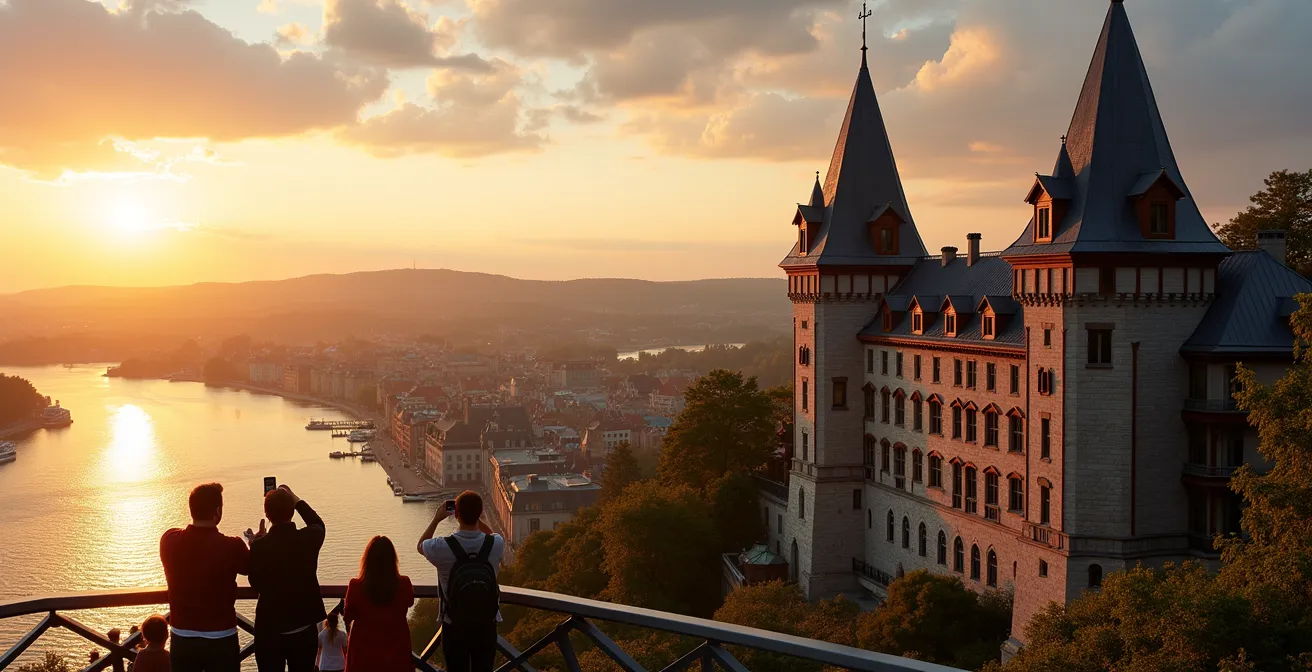
Experiencing the Château Frontenac’s luxury isn’t about skipping it; it’s about strategically accessing its best features for a fraction of the cost.
- The best view-to-cost ratio is a specific cocktail at the 1608 Bar, not a full, expensive meal.
- The most iconic photos aren’t from directly in front, but from calculated spots like the Lévis ferry or specific parks at sunset.
Recommendation: Focus on “experience arbitrage”—comparing the value of an internal activity (like the paid tour) against a superior external alternative (like visiting the nearby Saint-Louis Forts).
The silhouette of the Fairmont Le Château Frontenac dominates the Quebec City skyline, a fairytale castle promising unparalleled luxury—with a price tag to match. For the budget-conscious traveler, the idea of stepping inside can feel like a distant dream, an experience reserved for those willing to drop $800 a night. The common advice is to simply walk through the lobby or snap a picture from the Dufferin Terrace. But this barely scratches the surface and misses the true magic.
What if the key wasn’t just to visit, but to *hack* the experience? This isn’t about being cheap; it’s about being clever. It’s about understanding the hotel’s ecosystem to extract the maximum amount of ambiance, history, and iconic views for the price of a single, well-chosen drink or a strategically timed walk. This is the art of experience arbitrage: knowing when to indulge inside the castle walls and when a better, more authentic experience lies just beyond them.
This guide provides a tactical playbook for the savvy traveler. We will dissect the value of its most accessible luxuries, from the famous 1608 Bar to the guided historical tours. We’ll identify the precise moments and locations that offer the most “Iconic ROI” (Return on Investment) and help you navigate the crowds like an insider. Forget being a tourist on the outside looking in; it’s time to experience the soul of the Château without touching your savings.
This article provides a detailed roadmap to maximizing your visit. Explore the sections below to discover specific strategies for everything from finding the perfect photo spot to enjoying authentic local cuisine nearby.
Summary: Your Playbook for Hacking the Château Frontenac Experience
- Why the 1608 Bar is your best ticket to the view for the price of a cocktail
- Guided tour vs. History books: Is the paid visit inside worth the $25?
- Governor’s Park or Ferry: Which spot frames the Château perfectly at sunset?
- The mistake of missing the toboggan slide right outside the lobby
- When to visit the lobby to avoid the 3,000 passengers disembarking
- Funicular or Breakneck Stairs: The best choice for your energy levels
- The Concorde revolving restaurant: Can you go just for a drink?
- Where to Find Authentic Cipaille (and Other Classics) in Quebec City
Why the 1608 Bar is your best ticket to the view for the price of a cocktail
The most effective way to soak in the Château’s opulent atmosphere is not through a pricey dinner, but with a single, strategic drink. The 1608 Bar offers the quintessential luxury experience—stone walls, leather armchairs, and a commanding view of the St. Lawrence River—for a fraction of the cost of a meal at the Champlain restaurant next door. This is the core of value hacking: you’re buying the same million-dollar view and historic ambiance, but your entry ticket is a cocktail.
The key is to treat it as a planned mission, not a casual stop. Your investment will be around $28 for a signature cocktail, so the goal is to maximize the return on that spend. This means optimizing your timing. Arrive between 2 PM and 5 PM on a weekday to avoid the evening rush and enjoy a quieter, more personal experience. This is the golden window where you can often secure a prime seat by the window without a reservation.
Don’t just order a generic beer or wine. The 1608 prides itself on cocktails that highlight local Quebec flavours, turning your drink into a cultural experience. Ask the bartender for their recommendation based on local spirits like gin from Ungava or maple-infused whisky. By doing this, you’re not just a tourist having a drink; you’re an explorer of terroir, all from one of the most exclusive viewpoints in the city.
Guided tour vs. History books: Is the paid visit inside worth the $25?
The one-hour guided tour of the Château, offered for around $25, presents a classic dilemma for the budget hacker. Is it a worthwhile investment or a tourist trap? The tour, led by costumed guides, grants you access to public spaces like the lobby, the Champlain restaurant, and the grand Ballroom. It has even been recognized as one of the Top 20 most popular activities in Canada by the Viator Experience Awards, promising deep historical insights.
However, the value proposition is debatable when you practice “experience arbitrage.” Visitor feedback is mixed. While many praise the knowledgeable guides, a common complaint is the limited scope. You won’t see guest rooms or truly exclusive areas. As one reviewer noted, they felt they only saw “an empty bar, an empty ballroom and an empty restaurant.” For $25, you are essentially paying for a curated walk through spaces you could partially glimpse on your own, albeit with added historical narration.
This is where comparing alternatives becomes crucial. The true value of the Château tour must be weighed against other historical experiences in Quebec City. A self-guided visit to the nearby Saint-Louis Forts and Châteaux National Historic Site, for a similar price, lets you explore the actual archaeological ruins that lie directly beneath the Dufferin Terrace—the very foundation of power in the colony. The choice becomes one of narrated opulence versus tangible history.
The following table helps put the tour’s value into perspective against other local options:
| Experience | Price | Duration | Unique Access |
|---|---|---|---|
| Château Frontenac Guided Tour | $25 CAD | 1 hour | Interior public rooms, ballroom, historical context |
| Saint-Louis Forts National Historic Site | Similar price range | Self-guided | Underground archaeological remains beneath Dufferin Terrace |
| Old Quebec Walking Tour | Comparable | 2 hours | Exterior sites, broader historical coverage |
Governor’s Park or Ferry: Which spot frames the Château perfectly at sunset?
Every visitor wants that perfect, postcard-worthy shot of the Château Frontenac. The common mistake is taking it from the Dufferin Terrace, which is too close to capture its grandeur. The savvy photographer knows that the best shots come from a distance, where the hotel can be framed against the city and the river. The two best contenders for this are Governor’s Park (Parc des Gouverneurs) and the Québec-Lévis ferry.
Governor’s Park, located just behind the Château, offers a unique angle, framing the hotel’s soaring roofs with the lush greenery of the park. It’s a fantastic option for a morning shot when the sun illuminates the facade. However, for the ultimate sunset photo, the clear winner is the Québec-Lévis ferry. For the cost of a cheap ferry ticket, you get a mobile viewing platform that allows you to capture the Château as the sun sets behind it, bathing the entire skyline in a golden glow. This is experience arbitrage at its finest: a simple piece of public transit provides a photographic opportunity that no expensive tour can match.
This shot from the ferry deck captures the essence of the moment, with the photographer and their gear poised to capture the iconic skyline as winter ice floats on the St. Lawrence.
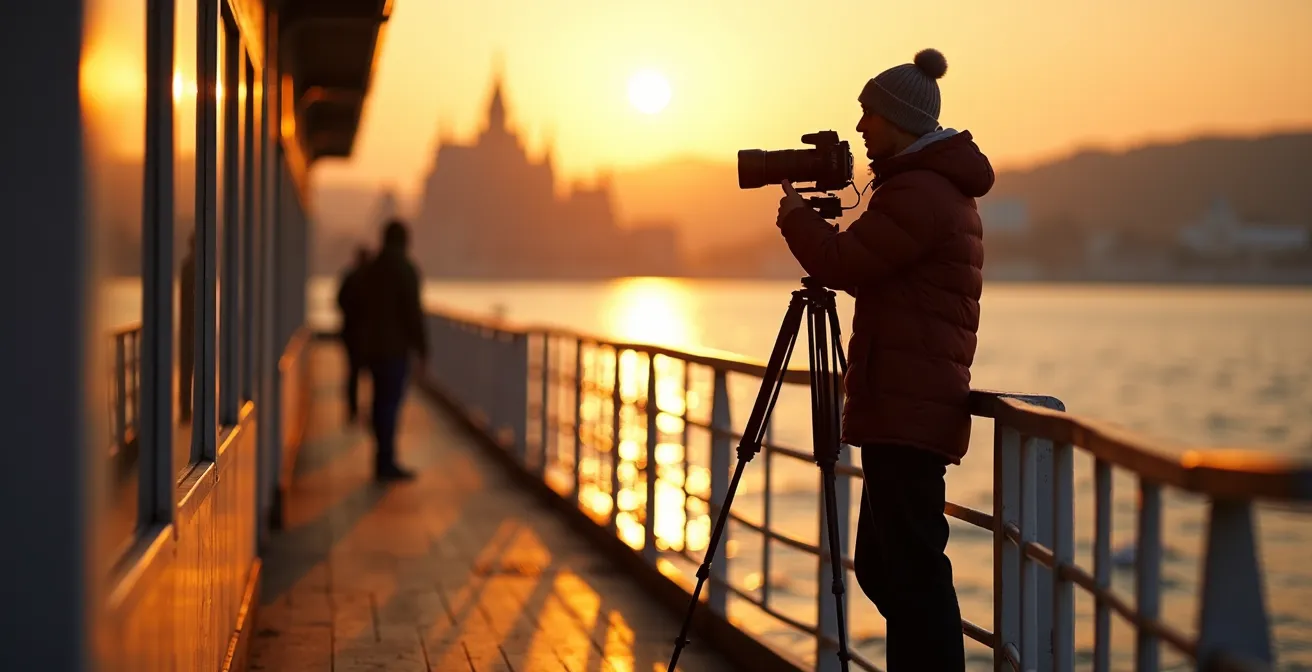
To execute this shot, aim to be on the ferry about 30 minutes before sunset. This gives you time to find a good spot on the deck and watch as the light changes. Other excellent vantage points for different perspectives include:
- Place des Canotiers: For a ground-level view that incorporates the Old Port.
- Pierre-Dugua-De-Mons Terrace: An elevated classic, offering a wide panorama.
- Terrace in Lévis: Across the river, this spot gives the most dramatic, wide-angle vista of the hotel and the entire Old Quebec cliffside.
The mistake of missing the toboggan slide right outside the lobby
While your focus might be on accessing the Château’s interior, one of the most exhilarating and historic experiences is located just steps from its main entrance. Overlooking the St. Lawrence River on the Dufferin Terrace sits the Glissades de la Terrasse, a toboggan slide that has been a beloved winter tradition for over a century. Missing this is a rookie mistake, as it offers a blast of pure, unadulterated fun with the iconic hotel as your backdrop.
This isn’t just a simple slide; it’s a piece of living history. For a small fee, you can rent a toboggan, haul it to the top of the ramp, and fly down the icy tracks at speeds up to 70 km/h. It’s an experience that connects you directly to the city’s winter culture and is a highlight of the famous Quebec Winter Carnival. According to Fairmont’s own materials, this historic slide remains a beloved Quebec Winter Carnival attraction, cementing its status as a must-do activity.
To get the most out of your ride, strategic timing is once again key. The slide is fastest on very cold days when the ice is hard. For the best conditions, try to time your ride shortly after the staff have re-iced the tracks. While it can be enjoyed day or night, a night ride offers a particularly magical view of the illuminated Château and the twinkling lights of Lévis across the river. It’s a high-thrill, low-cost activity that provides a memory far more vivid than a simple walk through the lobby.
When to visit the lobby to avoid the 3,000 passengers disembarking
Walking through the grand lobby of the Château Frontenac is a right of passage for any visitor to Quebec City. The soaring ceilings, wood paneling, and historic artifacts are a sight to behold. However, your experience can be either one of serene awe or a frantic battle through a sea of tourists. The difference lies entirely in timing—a concept I call “Crowd Judo.” The biggest mistake is wandering in midday, when you’ll collide with hotel check-ins, check-outs, and, worst of all, cruise ship passengers.
The Port of Quebec can welcome ships with over 3,000 passengers, and a significant portion of them make a beeline for the Château. To avoid this human tsunami, your first move should be to check the Port of Quebec’s cruise ship schedule online and aim for a no-ship day if possible. Barring that, avoid the hotel lobby between 11 AM (checkout rush) and 3 PM (check-in rush). The absolute best time for a quiet, almost private viewing is after 9 PM. The daytime crowds have vanished, and the softened lighting gives the space a magical, timeless quality.
When you do enter, walk with purpose. Don’t linger hesitantly at the entrance, which marks you as a loiterer. Act like you belong—head confidently towards the 1608 Bar, the lower-level shops, or simply stride down one of the long corridors. As one visitor eloquently put it:
You don’t need to be a guest to wander through. I’d actually recommend that anyone visiting Quebec City take a quiet walk through the lobby and lower level. You’ll pick up on details you might’ve missed from the outside, and it adds a layer of history to everything else you’ll see in Old Quebec. Even with the buzz of Dufferin Terrace just outside, the interior felt like a cocoon.
Funicular or Breakneck Stairs: The best choice for your energy levels
Connecting the Dufferin Terrace to the charming Quartier Petit Champlain below are two options: the modern Funicular and the historic Breakneck Stairs (L’Escalier Casse-Cou). Choosing between them isn’t just a matter of convenience; it’s a strategic choice that impacts your budget, your photos, and your connection to the city’s history.
The Funicular is the easy way out. For a $4 fare, it offers a smooth, quick ride with a nice view. During icy winter conditions, it’s not just a convenience but a genuine safety measure. However, taking the funicular means missing out on a piece of Quebec’s soul. The Breakneck Stairs have been a vital link between the upper and lower towns since the 17th century. Walking them is a journey through history, treading the same path as centuries of merchants and residents.
The stairs offer a micro-workout with a huge payoff: unique photo angles of the Rue du Petit Champlain that are completely inaccessible from the funicular. The twists and turns of the staircase frame the colourful streetscape in a way that creates photos with incredible depth and character. This is a clear case where a little physical effort yields a much higher “Iconic ROI.”
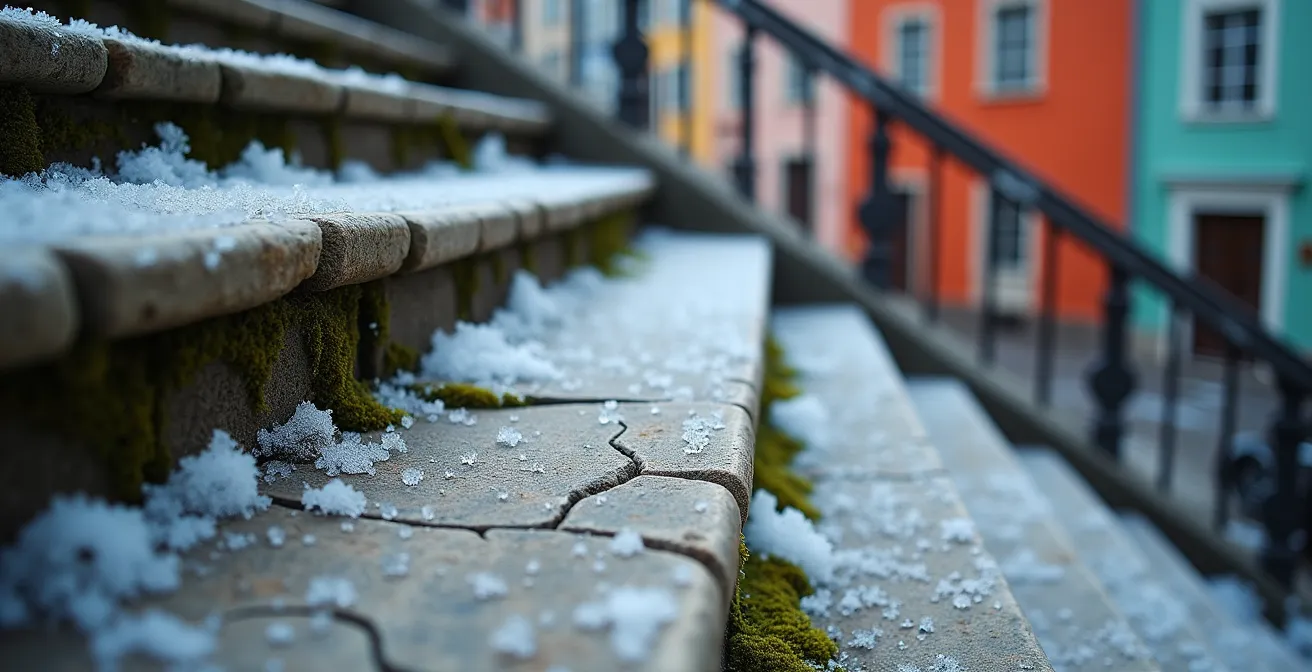
The verdict? Unless weather conditions are dangerous or mobility is a concern, choose the stairs on your way down to take advantage of the photo opportunities. You can always take the funicular back up if your energy is flagging after exploring the Lower Town. This hybrid approach gives you the best of both worlds: historical immersion, great photos, and a little help when you need it most.
The Concorde revolving restaurant: Can you go just for a drink?
When seeking a panoramic view of Quebec City that *includes* the Château Frontenac, many travelers look to Ciel! Bistro-Bar, the revolving restaurant atop Le Concorde hotel. The question for the value hacker is: can you get that 360° view just for the price of a drink, and how does it compare to the experience inside the Château at the 1608 Bar? The answer is yes, you absolutely can, and it’s a classic example of experience arbitrage.
Going to Ciel! just for a drink is a brilliant move, especially in the mid-afternoon between the lunch and dinner services. The atmosphere is more relaxed, and you can enjoy the full, slowly rotating panorama without committing to a full meal. This experience offers a completely different value proposition than the 1608 Bar. At 1608, you are *inside* the icon, looking out. At Ciel!, you are *outside* the icon, watching it command the cityscape from above. It offers a breathtaking perspective on the hotel’s scale and its relationship to Old Quebec, the Plains of Abraham, and the St. Lawrence River.
The choice between Ciel! and 1608 isn’t about which is “better,” but what kind of experience you’re seeking. One is about historic, static elegance; the other is about modern, dynamic spectacle. For the savvy traveler, the ideal plan might even include both on different days: an afternoon cocktail at Ciel! for the grand overview, and an evening drink at 1608 for an intimate, luxurious immersion.
This table breaks down the strategic choice between the two premier bar views in the city:
| Aspect | Ciel! at Le Concorde | 1608 Bar at Château Frontenac |
|---|---|---|
| View Type | 360° rotating view OF the Château and old city | Static view FROM within the icon over St. Lawrence River |
| Best Time for Drinks Only | Mid-afternoon between lunch and dinner | 2 PM to 5 PM for quieter experience |
| Atmosphere | Modern revolving panorama | Historic elegance with stone walls |
| Reservation Needs | Less needed for drinks only at off-peak times | Recommended for weekends |
Key Takeaways
- The 1608 Bar Hack: A single, well-timed signature cocktail between 2-5 PM on a weekday offers the best value for experiencing the Château’s luxury and views.
- The Photography Hack: Skip the Dufferin Terrace. The best photos are from a distance, with the Lévis ferry at sunset providing the most dramatic, high-value shot for a minimal cost.
- The Experience Arbitrage Hack: Always weigh an internal Château experience against a local alternative. The $25 guided tour may offer less tangible history than a visit to the nearby Saint-Louis Forts for a similar price.
Where to Find Authentic Cipaille (and Other Classics) in Quebec City
A truly savvy trip to Quebec City isn’t complete without diving into its hearty, traditional cuisine. While you can find high-end dining in and around the Château, the most authentic and value-rich food experiences are often found where the locals eat. This is the final piece of the value-hacking puzzle: complementing your high-end “hacks” like a cocktail at the 1608 Bar with genuinely local, affordable, and delicious meals.
Forget the tourist traps in the most crowded parts of Petit Champlain. The real culinary treasures are in neighborhoods like Saint-Jean-Baptiste and Saint-Roch. Here, you’ll find bistros and small restaurants serving up classics like tourtière du Lac-Saint-Jean (a deep-dish meat pie, different from the classic tourtière), and the elusive cipaille, a layered meat and potato pie that is the soul of Quebecois home cooking. One excellent strategy is to pair a sophisticated cocktail at the Château with a hearty, traditional meal in Saint-Roch afterward—the perfect high-low experience.
For those looking for a more structured discovery, a guided food tour can be an excellent investment. The Historical Walking and Tasting Tour, for example, takes you to curated local spots, providing context and know-how from seasoned guides. This allows you to sample the best of Quebec’s terroir without the guesswork, ensuring every dollar spent on food is a dollar spent on authentic culture.
Case Study: The Value of a Guided Food Tour
The Historical Walking and Tasting Tour offers a 3.5-hour curated journey through Quebec’s culinary heritage. By partnering with local restaurants where talented chefs showcase regional ingredients, participants move beyond tourist fare. They gain direct access to local know-how through guided tastings, experiencing traditional preparations with modern flair, turning a simple meal into an educational and memorable event.
Your Action Plan: Finding Authentic Quebecois Cuisine
- Identify Hubs: List local-heavy neighborhoods like Saint-Jean-Baptiste and Saint-Roch on your map, marking them as your primary zones for culinary exploration beyond the Old Town walls.
- Inventory the Classics: Create a checklist of dishes you want to try beyond poutine: cipaille, tourtière du Lac-Saint-Jean, and pâté chinois. Know what to look for on menus.
- Check for Authenticity: When you find a spot, ask the staff about their dishes. A passionate answer about the origin of their tourtière or the secrets of their cipaille is a green light.
- Assess Value vs. Hype: Compare the menu prices in a Saint-Roch bistro to a tourist-facing restaurant. Judge whether you’re paying for a prime location or for high-quality, authentic food.
- Plan Your Culinary Route: Design a day that combines a high-end experience (like a drink at the Château) with a genuine, affordable meal in a local’s favourite spot to create a balanced and memorable visit.
Now that you have the complete playbook, you’re equipped to build a Quebec City itinerary that balances iconic luxury with authentic local discovery, ensuring every moment and every dollar is spent wisely.