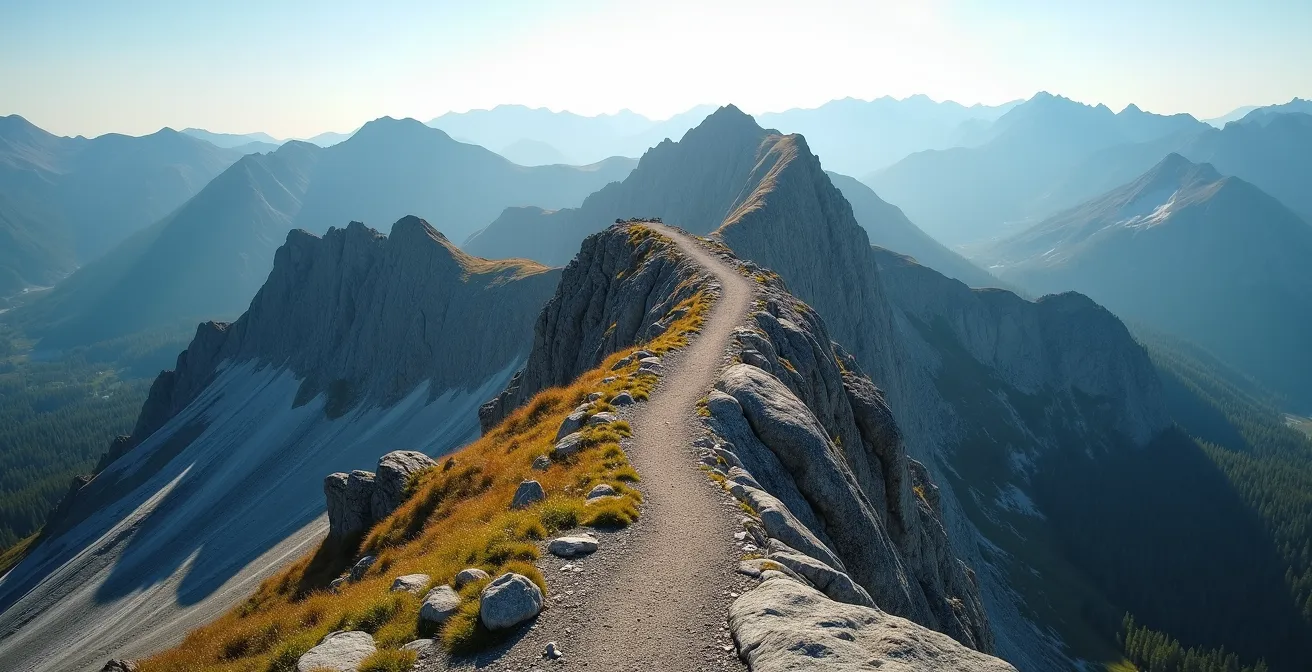
The greatest risk on Quebec’s high peaks is not the trail’s difficulty, but a critical underestimation of your margin for safety.
- Mandatory park rules, like the noon cutoff time, are based directly on rescue data and are not negotiable.
- Your gear choice—especially footwear for wet granite and layering for the summit—directly determines your ability to self-rescue.
- Respecting the environment, from access roads to the fragile tundra, is an integral part of your safety plan.
Recommendation: Treat every piece of advice in this guide not as a suggestion, but as a critical safety protocol learned from real-world rescue operations.
The view from the top of the Acropole des Draveurs is one of the most stunning in Quebec. It’s a powerful reward for a demanding effort. Many hikers prepare by reading blog posts that offer standard advice: pack snacks, wear good shoes, and check the weather. As a mountain search and rescue volunteer, I can tell you that this level of preparation is dangerously incomplete for a trail of this caliber. We see the consequences of this minimalist approach season after season.
The difference between a successful summit and a call to emergency services often comes down to a few key decisions made before you even leave the car. This is not about being the strongest or fastest hiker; it’s about being the smartest and most humble. It’s about understanding the ‘why’ behind each safety rule. The unforgiving nature of Charlevoix’s granite, the rapid weather shifts at altitude, and the sheer physical demand of the trail leave no room for error. An unprepared hiker not only puts themselves at risk but also the park wardens and rescue teams who must then operate in those same hazardous conditions.
This guide is different. It’s built on the hard lessons learned from years of rescue operations in Quebec’s mountains. We will move beyond the basic checklist to analyze the critical margins of safety you must build into your plan. We will cover the non-negotiable rules for water, timing, and gear on the Acropole, and extend that safety mindset to other challenges you’ll face in Quebec’s outdoors, from crowded alternative peaks to the reality of remote access roads. Consider this your pre-mission briefing.
To help you navigate this essential information, we’ve broken down the key preparation points into distinct sections. Each one addresses a common failure point we see in the field, providing the context you need to make safe and informed decisions on your next adventure.
Summary: Hiking the Acropole des Draveurs: Preparation for Quebec’s Steepest Alpine Trails
- Water requirements: Why 1 liter is dangerous on the Acropole climb
- The cutoff time: Why park rangers turn you back if you start after 12 PM
- Boots vs. Trail Runners: What works on Charlevoix granite?
- The summit temperature drop: Why you need a windbreaker even in August
- Alpine tundra fragility: Why stepping off-trail destroys decades of growth
- Mont Orford congestion: Alternative peaks with equally good views
- The “last mile” reality: When the listing says 4×4 required, do they mean it?
- Departing Gaspésie Harbors: Choosing the Right Whale-Watching Cruise for Your Motion Sickness
Water requirements: Why 1 liter is dangerous on the Acropole climb
One of the most common and preventable mistakes we see is severe dehydration. On a trail like the Acropole des Draveurs, bringing a single liter of water is not a minor oversight; it’s a critical failure in planning. The trail is a strenuous, continuous ascent with very little shade. Your body will be working at a high capacity for several hours, losing significant fluid through sweat, especially on a warm day. There are no water sources along the trail to refill your bottle.
When dehydration sets in, it’s not just about feeling thirsty. Your cognitive function declines, leading to poor decision-making. Muscle cramps become more likely, which can be debilitating on steep descents. Your endurance plummets, turning the last few kilometers into a grueling and dangerous ordeal. This isn’t theoretical; a recent Canadian hydration survey revealed that 43% of Canadians cited leisure outdoor activities to be dehydrating, and the Acropole is far from a casual activity.
For this specific hike, our absolute minimum recommendation is 2 to 3 liters of water per person, and even more on hot, humid days. Electrolyte supplements are also highly advised to replenish the salts you lose. Carrying this weight is not a burden; it is your primary safety tool. It is the fuel that will get you to the summit and, more importantly, safely back down to the valley floor.
The cutoff time: Why park rangers turn you back if you start after 12 PM
SÉPAQ park wardens enforce a strict cutoff time at the Acropole des Draveurs trailhead: if you are not on the trail by 12:00 PM (noon), you will be turned away. This is not an arbitrary rule to manage crowds; it is a safety measure rooted in hard data and rescue experience. The reason is simple: a late start is one of the leading causes of hikers needing rescue after dark. The trail is not a simple walk; it is a hike that takes 4 to 6 hours for most experienced hikers to complete.
Starting at noon means you would likely be descending during the late afternoon, when fatigue is highest and light begins to fail. A simple twisted ankle at 4 PM can quickly escalate into a full-blown nighttime emergency. The temperature drops rapidly, the trail becomes much harder to navigate in the dark, and your risk of a serious fall increases exponentially. From a rescue perspective, a nighttime operation on these steep, rocky slopes is significantly more complex and dangerous for everyone involved.
The cutoff time is your mandatory safety margin. It ensures that even with minor delays, you have a sufficient buffer of daylight to complete your descent safely. If you arrive at the park after the cutoff, do not try to argue or sneak onto the trail. It is a sign that you must switch to a shorter, safer objective for the day. Responsible planning includes having a Plan B.
If you find yourself arriving too late for the Acropole, the park offers several excellent shorter hikes that can be safely started in the afternoon. Consider these as intelligent alternatives, not disappointments.
| Trail Name | Distance | Duration | Difficulty | Afternoon Start OK? |
|---|---|---|---|---|
| Le Riverain | 3.2 km | 1.5 hours | Easy | Yes |
| Les Chutes | 2.8 km | 1 hour | Easy | Yes |
| La Chouenne | 5.4 km | 2.5 hours | Moderate | Yes (before 2 PM) |
Boots vs. Trail Runners: What works on Charlevoix granite?
Your choice of footwear is arguably the most critical gear decision you will make for the Acropole des Draveurs. The trail is defined by Charlevoix’s slick, unforgiving granite. When dry, it offers decent grip. When wet—which is common in Quebec, even after a brief shower—it becomes notoriously slippery. Trail runners might be lighter and feel more agile, but they often lack the two things you need most on this terrain: ankle support and specialized grip.
A mid-height or high-cut hiking boot provides crucial stability for your ankles. On the long, steep descent, your legs will be fatigued, and a misstep is easy. A supportive boot can be the difference between a minor stumble and a severe sprain or fracture that requires a litter evacuation. Furthermore, look for boots with a sole compound specifically designed for wet rock, such as Vibram Megagrip. This is not a marketing gimmick; it is a technical feature that provides a measurable increase in adhesion.
While some highly experienced trail runners with very strong ankles may opt for low-cut shoes, our field experience shows that the vast majority of hikers benefit from more robust footwear. As one hiker noted after their experience, this is not a place for compromise. The recommendation is clear, as stated by a hiker from Seb’s Urban Adventures after completing the trail, he would ” strongly recommend hiking boots and hiking poles.” The poles are a non-negotiable accessory, regardless of your footwear, as they transfer a significant amount of strain from your knees to your arms on the punishing descent.
Your Action Plan: Footwear Selection for Quebec Granite
- Assess Your Experience: Only consider trail runners if you are a seasoned hiker with excellent ankle strength and confidence on technical terrain.
- Check the Sole: Look specifically for high-friction rubber compounds like Vibram Megagrip, designed for adhesion on wet, smooth surfaces. Test them on a wet rock if possible.
- Prioritize Ankle Support: For most people, and anyone carrying a pack over 20 lbs, a mid or high-cut boot is the safer choice to prevent sprains on the descent.
- Include Trekking Poles: Always bring trekking poles. They are essential for stability on slippery sections and drastically reduce the impact on your knees.
- Test Before You Go: Never wear brand-new boots on a major hike. Ensure they are well broken-in and comfortable on varied terrain to prevent debilitating blisters.
The summit temperature drop: Why you need a windbreaker even in August
It can be a beautiful, warm 25°C day in the Malbaie River valley when you start your hike. It is a common and dangerous assumption that these conditions will persist at the summit. They will not. The Acropole des Draveurs forces you up to a summit of 1,048 metres, where you are fully exposed to the elements. For every 100 metres you climb, the temperature typically drops by about 1°C. That’s a 10-degree drop from the base to the summit, before even accounting for the wind.
Wind is the critical factor. The wind-chill effect can make a cool 15°C feel like it’s near freezing, especially when you are sweaty from the climb. This is how hypothermia starts, even in the middle of summer. You stop moving at the summit to admire the view, the wind cuts through your damp shirt, and your core body temperature begins to drop. We’ve assisted hikers who were shivering uncontrollably in August simply because they didn’t pack an extra layer.
This is why a lightweight, packable windbreaker is an absolutely essential piece of gear, regardless of the forecast. It weighs almost nothing but provides a critical barrier against wind, trapping your body heat and preventing rapid cooling. A rain jacket can serve the same purpose. Packing a warm mid-layer, like a fleece or a light insulated jacket, is also a wise precaution. As one hiker aptly commented, this is a lesson you learn quickly on the trail.
The more you climb, the less you will be protected from the weather: remember to bring warm clothes.
– AllTrails Hiker
Alpine tundra fragility: Why stepping off-trail destroys decades of growth
As you approach the summit of the Acropole des Draveurs, the forest gives way to a rare and precious ecosystem: alpine tundra. The low-lying shrubs, mosses, and lichens you see are not just hardy plants; they are ancient, slow-growing organisms clinging to life in an incredibly harsh environment. Stepping off the marked trail here is not a minor transgression. It is an act of destruction with long-lasting consequences. This is not just any park; as noted by SummitPost, “The Acropolis is located within Hautes Gorges de la Riviere Malbaie National Park, a 233 square kilometer park and UNESCO world biosphere reserve.”
The reasoning is biological. The growing season at this altitude is extremely short, and the soil is thin. A single footstep can crush plants that took decades to grow. The delicate lichens, like Reindeer Moss, that cover the rocks may only grow a few millimeters per year. When this fragile vegetation is destroyed, the thin soil beneath is exposed to erosion by wind and rain. A small path created by one person trying to get a better photo quickly widens as others follow, leading to permanent scars on the landscape that can take centuries to heal, if they heal at all.
Staying on the designated trail is therefore not just a rule; it is an act of preservation. The park has invested in durable rockwork and clear markers to protect this ecosystem while allowing us to experience it. Respecting these boundaries is part of the social contract of being a responsible hiker. It ensures that the wild, raw beauty of the summit will remain for future generations to witness. The best view is always from the trail.
A Lesson in Patience: The Growth Rate of Alpine Tundra
The summit of Montagne des Érables, which shares a similar environment, is covered in alpine tundra. Here, specialized organisms like Reindeer Moss have an incredibly slow life cycle. Under these harsh conditions of wind, cold, and a short growing season, they grow only millimeters per year. The vibrant patches of life you see on the summit rocks may be older than you are. A single careless step can undo decades of slow, patient growth.
Mont Orford congestion: Alternative peaks with equally good views
A key part of successful mission planning is choosing the right objective for the conditions. Sometimes, the biggest hazard isn’t the terrain, but the sheer number of people on it. Mont Orford is a classic Quebec hike, but its proximity to Montreal means it can be extremely congested, especially on weekends. High traffic on a trail introduces its own set of risks: parking is difficult, narrow trails become crowded, the sense of solitude is lost, and the potential for accidents can increase.
From a risk management perspective, choosing a less-trafficked but equally rewarding alternative is often the smartest move. It reduces stress, enhances the quality of your experience, and allows you to hike at your own pace. Quebec has a wealth of spectacular peaks that offer stunning vistas without the crowds of the Eastern Townships’ most popular mountain. Expanding your hiking portfolio is a strategic way to improve your overall outdoor experience.
Consider this table not just as a list of alternatives, but as a tool for strategic planning. It allows you to weigh factors like driving time, expected crowd levels, and even the post-hike reward, enabling you to make an informed choice that best suits your goals for the day. A successful day in the mountains is one you enjoy safely, and sometimes that means avoiding the beaten path.
| Peak | Drive from Montreal | Crowd Level | View Type | Post-hike Brewery |
|---|---|---|---|---|
| Mont Orford | 1.5 hours | Very High | 360° lakes | Multiple in Magog |
| Mont-du-Lac-des-Cygnes | 4 hours | Low | Valley panorama | MicroBrasserie Charlevoix |
| Mont Mégantic | 2.5 hours | Moderate | Dark sky preserve | Brasserie 11 Comtés |
| Mont du Dôme (ZEC) | 4 hours | Very Low | Sea of foliage | Limited options |
The “last mile” reality: When the listing says 4×4 required, do they mean it?
Your adventure doesn’t start at the trailhead; it starts the moment you turn off the paved highway. In many of Quebec’s most beautiful regions, like Charlevoix or the Gaspé Peninsula, access to trailheads and cottages involves navigating a network of rural roads. A common point of failure we see is city dwellers underestimating the term “4×4 required.” It is not a suggestion; it is a critical piece of information about the road’s condition.
The necessity of a 4×4 or all-wheel-drive vehicle is highly seasonal and terrain-dependent. The most notorious period is the spring thaw, or ‘dégel‘ (typically March-April), when frozen gravel roads turn into deep mud pits capable of trapping any vehicle without sufficient ground clearance and traction. However, even in summer, a listing might state 4×4 required for steep, loose gravel driveways where a front-wheel-drive sedan would simply spin its wheels. In winter, many private or secondary roads (‘chemins privés’ or ‘non-entretenus l’hiver’) are not plowed at all, making them completely impassable without a capable vehicle.
Ignoring this requirement can leave you stranded miles from your destination, often without cell service. It’s a frustrating and potentially dangerous start to your trip. As a study of the Charlevoix region’s accessibility notes, a road passable by a sedan in dry August conditions can be strictly 4×4-only in the spring or winter. Always trust the property or park listing. If it says 4×4, they mean it.
| Road Type | Winter 4×4 Need | Spring Thaw 4×4 Need | Summer 4×4 Need | Municipal Maintenance |
|---|---|---|---|---|
| Rang municipal | Low | Low | None | Yes |
| Chemin privé | High | High | Moderate | No |
| Non-entretenue l’hiver | Essential | High | Low | Summer only |
Key Takeaways
- Your Margin of Safety is Non-Negotiable: Always carry more water, food, and layers than you think you need, and always respect official cutoff times.
- Gear Must Match the Terrain: On Quebec’s steep granite, ankle-supporting boots with superior wet-rock grip and trekking poles are essential safety equipment, not optional accessories.
- Preparation is Holistic: A safe adventure accounts for everything from vehicle access on rural roads to the specific environmental risks of your destination, whether on land or at sea.
Departing Gaspésie Harbors: Choosing the Right Whale-Watching Cruise for Your Motion Sickness
The principles of safe preparation extend beyond the mountains. Any time you venture into a powerful natural environment, you must assess the risks and manage your personal limitations. A whale-watching excursion in the St. Lawrence, for example, requires the same mindset as preparing for a peak ascent. The “terrain” is different—open water instead of rock—but the core concept of matching your plan to the conditions and your own resilience remains the same.
A primary factor for many on the water is motion sickness. This is not a sign of weakness; it’s a physiological response that can ruin an experience and, in severe cases, be debilitating. Just as you choose footwear for the trail, you should choose your boat and departure point based on your susceptibility to seasickness. Different harbors and boat types offer vastly different experiences.
For instance, the choppy waters at the confluence of the Saguenay and St. Lawrence rivers near Tadoussac can be challenging, making a larger, more stable catamaran a much safer bet than a Zodiac for those who are prone to motion sickness. The open ocean swells near Percé present another type of movement. Understanding these variables allows you to make an intelligent choice that maximizes your enjoyment and minimizes discomfort. It’s about proactively managing a known personal limitation, which is the very essence of good planning.
| Harbor | Water Conditions | Boat Type Options | Seasickness Risk | Dramamine Availability |
|---|---|---|---|---|
| Tadoussac | Choppy confluence waters | Zodiac, Catamaran | High (Zodiac) / Low (Catamaran) | Jean Coutu nearby |
| Percé | Open ocean swells | Large catamaran | Low-Moderate | Pharmaprix in town |
| Gaspé | Variable bay waters | Mixed fleet | Moderate | Multiple pharmacies |
| Baie-Sainte-Catherine | Protected fjord | Smaller boats | Low-Moderate | Limited – stock up before |
Ultimately, a successful trip to the Acropole des Draveurs—or any of Quebec’s wild places—is measured by your safe return. It requires a mindset of profound respect for the power of the environment and an honest assessment of your own preparation. Apply these principles to every adventure you plan, and you will not only be safer, but you will also find a deeper, more rewarding connection with the incredible landscapes of Quebec.