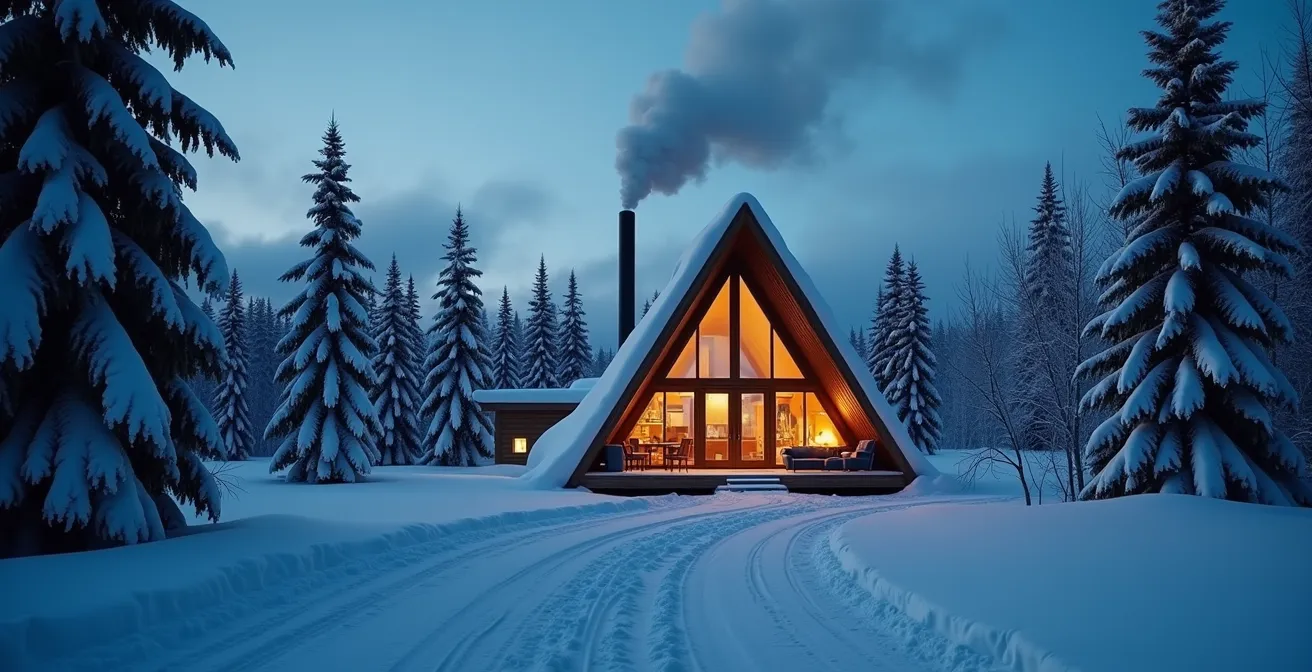
Booking a Quebec winter cabin based on pretty photos without verifying logistics is the fastest way to a frozen, stranded nightmare.
- “Accessible” in a listing doesn’t guarantee your 2WD car can make it; the “last mile” of unplowed road is the real test.
- “Rustic charm” can mean no running water in freezing temperatures and the constant work of a wood stove.
Recommendation: Before you book, conduct a logistical audit. Use the checklists in this guide to ask hosts pointed questions about road plowing, water sources, and heating reality.
The dream is alluring: a cozy cabin nestled in a silent, snow-covered Quebec forest. You picture yourself with a hot drink, gazing at the winter wonderland through a large window, the perfect escape from city life. But for the urbanite with a standard two-wheel-drive sedan, a nagging fear creeps in. What if the picturesque cabin is at the end of a steep, icy, unplowed road? What if “rustic” means hauling water in -20°C weather? Many guides list beautiful destinations, but they often gloss over the harsh logistical realities of a Quebec winter.
The common advice is to “pack warm clothes” and “rent a 4×4,” but this isn’t always practical or necessary. The truth is, many stunning glamping spots are perfectly manageable with a regular car, provided you do your homework. The key isn’t a bigger vehicle; it’s logistical transparency. It’s about learning to translate the romantic marketing language of online listings into a practical reality check.
This guide is not another list of pretty cabins. It’s a rural logistics manual for the city dweller. We will deconstruct the common pitfalls of winter glamping, from the “last mile” problem of road access to the real meaning of a “cozy wood stove.” By the end, you will be equipped with the right questions to ask before you book, turning your fear of the unknown into a confident, actionable plan for the perfect, and safe, winter getaway.
To navigate the practicalities of your next winter escape, we’ve broken down the essential logistical hurdles you need to clear. This summary outlines the key areas to investigate, ensuring your trip is memorable for all the right reasons.
Summary: A Practical Guide to Quebec Winter Glamping
- The “last mile” reality: When the listing says 4×4 required, do they mean it?
- Wood stove vs. Electric: The reality of waking up at 4 AM to add logs
- Frozen pipes and water jugs: What “rustic” really means for your morning coffee
- The survival kit: Food and meds you must bring when the nearest store is 30km away
- Wi-Fi or dead zone: How to check signal strength before booking for “remote work”
- Why the VIP parking is worth the $20 when you have toddlers and ski gear
- March thaw: The specific weather window when the sap actually flows
- Hiking the Acropole des Draveurs: Preparation for Quebec’s Steepest Alpine Trails
The “last mile” reality: When the listing says 4×4 required, do they mean it?
This is the single most critical question. A host might describe their property as “accessible,” but their definition could be based on their own pickup truck, not your city sedan. The main paved road might be perfectly clear, but the final 500 meters to the cabin—the “last mile”—could be a private, unplowed, icy incline. In Quebec, while 100% of vehicles must have winter tires from December 1 to March 15, tires alone can’t defeat a steep, unplowed driveway. When a listing says “4×4 recommended,” treat it as mandatory. If it says nothing, your job is to investigate.
The key is to perform an “infrastructure audit” before booking. Don’t be shy; you are asking for crucial safety information. A good host will appreciate your diligence and provide honest answers. This proactive step is the difference between a smooth arrival and waiting hours for a tow truck in freezing temperatures.
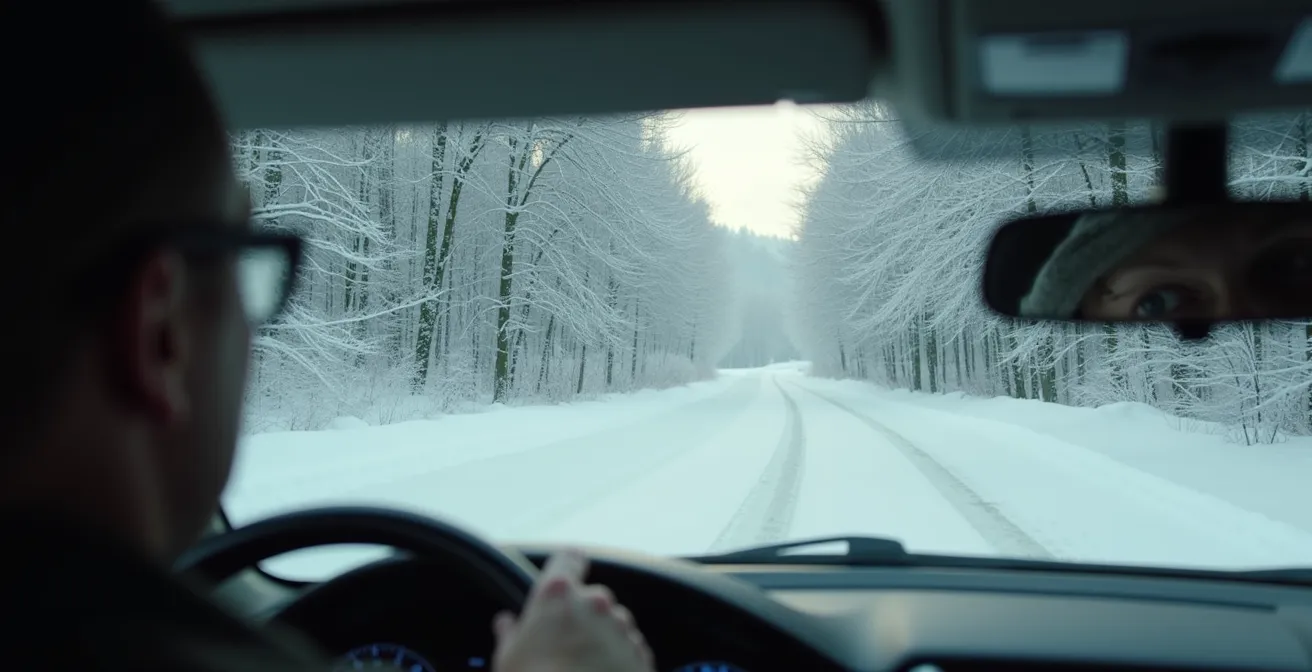
As seen in this typical rural scene, even a well-equipped vehicle faces challenges on narrow, snow-covered roads. The focus must be on confirming the maintenance level of the specific access road to your rental, not just relying on the capability of your vehicle. The most important factor is how frequently the road is plowed during and after a storm.
Your Pre-Booking Winter Access Checklist
- Ask the host directly: “Who is responsible for plowing the final access road and the driveway, and what is the typical frequency during a snowstorm?”
- Request recent visual proof: “Could you please send a short video or a few recent photos of the final 500 meters of the road leading to the property?”
- Verify the terrain: “Is the driveway flat, or does it feature any steep or winding slopes that could become icy?”
- Confirm the road surface: “Is the access road paved, gravel, or a dirt road?” This affects how ice and snow accumulate.
- Check for social proof: “Have previous winter guests with a standard 2WD car and winter tires shared any feedback about their arrival experience?”
Wood stove vs. Electric: The reality of waking up at 4 AM to add logs
The image of a crackling wood stove is central to the cozy cabin fantasy. However, it represents a choice between active and passive heating, a crucial logistical point. A wood stove is an “active” system: it requires your constant attention. This means splitting kindling, learning how to manage airflow (the damper), and, most importantly, waking up in a cold cabin at 4 a.m. to add more logs. If you’re not prepared for this, the romance fades quickly, replaced by the shivering reality of a poorly managed fire.
Electric heating, on the other hand, is “passive.” You set the thermostat and it works. While it may lack the rustic ambiance, it guarantees a consistently warm space, which is a major safety and comfort factor, especially for families with small children. When evaluating a property, don’t just see “wood stove” as a feature; see it as a responsibility you are taking on. Ask the host how well the cabin retains heat and if there’s any backup heat source. A well-insulated structure makes a world of difference.
Case Study: The Proactive Approach to Wood Heating
The Ferme 5 Étoiles holiday resort in Côte-Nord provides an excellent model. Their yurts, exposed to harsh regional winters, are equipped with woodstoves. Critically, their setup includes well-organized dry wood storage, ample fire starters, and clear, detailed instructions on how to manage the fire overnight. This demonstrates the level of preparation required from a host to make wood heating a viable and safe option for guests, even when temperatures plummet to -30°C.
Frozen pipes and water jugs: What “rustic” really means for your morning coffee
“Rustic” is a wonderful marketing term that can mean anything from charmingly vintage decor to a complete lack of indoor plumbing. In a Quebec winter, you must assume the latter. Many off-grid cabins have no running water to prevent pipes from freezing and bursting, a costly and catastrophic failure. This means your water for drinking, cooking, and washing will come from large jugs you either bring yourself or are provided by the host. It also means the bathroom will likely be an outhouse or a composting toilet, which presents its own set of challenges in freezing weather.
This isn’t a deal-breaker, but it requires a shift in mindset and planning. You need to calculate your water needs, plan meals that are water-efficient (like stews or one-pot pastas), and accept a more basic level of hygiene for a few days. As one reviewer noted about a well-managed property, preparedness is everything.
The cabin is the perfect blend of rustic and cozy, with many thoughtful little amenities that made us feel at home right away and eliminated the stress of packing compared to traditional tent camping.
– Hipcamp Reviewer, Hipcamp Quebec
This positive experience comes from a host who clearly communicated the water situation, allowing the guest to pack accordingly. Before booking, ask directly: “What is the water source for the cabin in winter, and what is the bathroom setup?”
For a trip without running water, your planning should be meticulous. Here are the essentials:
- Calculate water needs: Budget a minimum of 4 litres per person per day. This covers drinking, cooking, and minimal washing.
- Source your water: Before heading into a remote area, purchase large 18L blue water jugs, readily available at Quebec grocery stores like IGA and Metro, or convenience stores like Couche-Tard.
- Plan your meals: Focus on one-pot meals that conserve water, such as Quebec’s classic soupe aux pois, chili, or stews.
- Manage hygiene: Bring biodegradable wipes for quick “cat baths” (toilette de chat) and hand sanitizer. Be mentally and physically prepared for using an outhouse in the cold.
The survival kit: Food and meds you must bring when the nearest store is 30km away
When you’re isolated, you are your own first responder. A sudden snowstorm could block the access road for a day or two, and the nearest grocery store or pharmacy might be a 30-kilometer drive away on precarious roads. You cannot rely on being able to “pop out” for supplies. This means packing not just for your planned stay, but also having a contingency plan for at least 48-72 extra hours. This includes non-perishable food, any essential prescription medications, and a complete first-aid kit.
Your preparation should be twofold, covering both your vehicle and your cabin. Getting stuck in your car on a remote road is a different emergency from being snowed-in at your cabin, and each requires a specific set of tools and supplies. A physical road map is a critical, non-negotiable backup, as cell service and GPS can be unreliable in many rural areas of Quebec.
This table from CAA-Quebec provides a clear distinction between the essential items for your car and the emergency supplies for your destination.
| Car Winter Kit | Cabin Emergency Kit |
|---|---|
| Snow shovel | Fire starters & waterproof matches |
| -40°C windshield fluid | Emergency candles/headlamps |
| Traction aids | Non-perishable food (3-day supply) |
| Fully charged power bank | First aid kit & medications |
| Physical Quebec road map | Battery-powered radio |
Wi-Fi or dead zone: How to check signal strength before booking for “remote work”
Many listings now advertise “Wi-Fi available,” targeting the growing remote work trend. However, in rural Quebec, “Wi-Fi” is often delivered via satellite (like Starlink) or a weak cellular hotspot, not a stable fiber optic line. This can mean high latency, slow upload speeds, and service interruptions during heavy snow or cloud cover. If your trip depends on reliable internet for video calls or large file transfers, you must verify the infrastructure. As the Hipcamp Quebec Guide wisely notes, expectations should be managed.
The further north you go, the wilder the landscapes and fewer the facilities
– Hipcamp Quebec Guide, Hipcamp’s guide to Quebec glamping
This is also a critical safety issue. Don’t assume you will have cell service. Check the coverage maps for major Canadian providers (Bell, Telus, Rogers, and Vidéotron) for the cabin’s specific address. If coverage is patchy, you are entering a potential communication dead zone. Inform someone of your exact location and planned return time. Sometimes, the best approach is to embrace the lack of signal as part of the experience—a true disconnection.
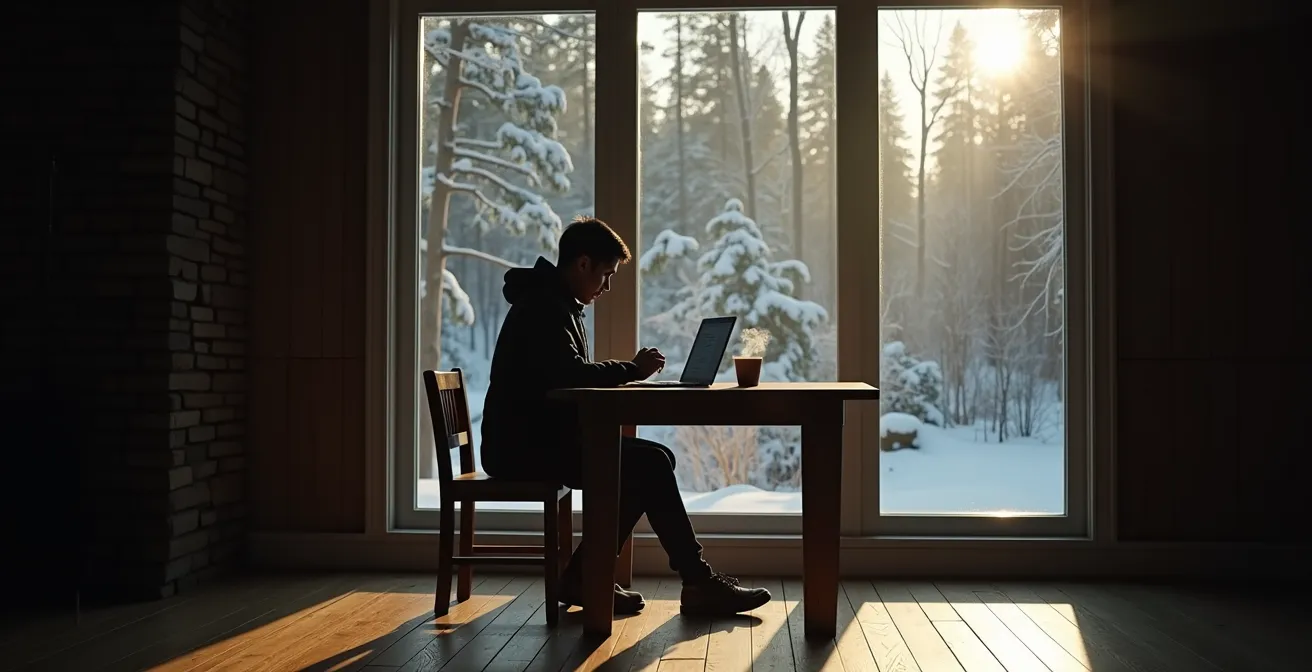
The allure of working from a scenic location is powerful, but the reality of connectivity can be challenging. Before committing to a “workcation,” it’s vital to perform a connectivity audit. A five-minute check can save you from a trip-ruining technical headache.
Follow these steps to verify connectivity before you book:
- Check provider maps: Consult the official coverage maps from Bell, Telus, Rogers, and Vidéotron for the property’s exact location, not just the nearest town.
- Request proof of speed: Ask the host for a recent screenshot from a service like Speedtest.net, paying close attention to the upload speed, which is crucial for video calls.
- Identify a backup: Locate the nearest town with a public library or a café that offers free Wi-Fi as a contingency workspace.
- Understand the technology: If the property uses satellite internet (like Starlink), research its potential limitations, such as weather-related outages or data caps.
- Embrace disconnection: If reliable internet isn’t a strict necessity, consider the trip an opportunity to truly disconnect from digital demands.
Why the VIP parking is worth the $20 when you have toddlers and ski gear
Parking might seem like a minor detail, but in winter, it can become a major logistical challenge, especially for families. Some popular glamping sites, like those run by Huttopia, are designed as car-free environments to enhance the sense of peace and nature. This often means a centralized parking area located 200 to 500 meters away from the actual accommodations. While they provide carts for gear, navigating that distance with toddlers, luggage, groceries, and ski equipment through snow or on ice can be an exhausting and stressful start to your vacation.
This is where properties offering door-side parking, even for a premium, provide immense value. Being able to unload your car directly at your cabin door eliminates a significant physical and mental burden. When you’re managing small children who are cold and tired, the convenience of not having to make multiple trips through the snow is worth far more than any “VIP parking” fee. As one family’s review highlights, a seamless arrival sets the tone for the entire trip.
True glamping, everything you needed was provided and thought of already.
– Hipcamp Family, Hipcamp Quebec
This feeling of being “thought of” is often rooted in these kinds of practical conveniences. Before booking, check the property map or ask the host directly about the distance from the parking spot to the cabin door. If you have young children or a lot of gear, prioritizing a location with dedicated, adjacent parking is a wise investment in your own comfort and sanity.
Case Study: The Huttopia Sutton Parking Model
At Huttopia Sutton, the signature system of having central parking areas and providing wheeled carts is effective in creating a tranquil, vehicle-free village. However, this model presents a clear trade-off. For couples or groups of adults, it’s a minor inconvenience. For a family arriving after a long drive with two toddlers and a week’s worth of supplies, the 200-500 meter walk in winter conditions can be a formidable challenge. This makes properties with door-side parking a premium choice for this specific demographic, transforming a stressful arrival into a smooth start to the holiday.
March thaw: The specific weather window when the sap actually flows
March in Quebec is a season of transition and unpredictability, home to both the magic of the sugar shacks and the misery of the spring thaw. The maple sap flows when temperatures rise above freezing during the day and drop below freezing at night. This same cycle turns snowy roads and driveways into a treacherous mix of ice, deep slush, and thick mud, known locally as gadoue. A dirt or gravel access road that was perfectly manageable when frozen can become an impassable mud pit for a 2WD vehicle.
This period is so notoriously unpredictable that, despite the arrival of spring-like days, the law doesn’t take any chances. As regulations show, winter tires remain mandatory until March 15, a clear acknowledgement from authorities that winter conditions can persist. If you’re planning a trip to a cabane à sucre, prioritize accommodations with paved road access to avoid getting stuck in the mud. The ideal trip involves finding a glamping site with its own on-property sugar shack, minimizing travel on potentially hazardous secondary roads.
Planning for a March trip requires preparing for all conditions. Here’s how to approach it:
- Monitor sap flow: Check the websites or social media of local sugar shacks for real-time updates on when the sap is running. Don’t book too far in advance.
- Prioritize paved roads: When booking your stay, specifically ask the host if the entire route to the cabin is paved to avoid the dreaded gadoue.
- Stay on-site: Look for glamping locations that have their own sugar shacks or maple syrup experiences to eliminate the need for extra driving.
- Pack for duality: Your packing list should include full winter gear (hat, gloves, insulated coat) as well as waterproof mud boots and quality sunglasses for the intense glare off the melting snow.
Key Takeaways
- Never trust a listing’s “accessible” claim without asking for proof of the “last mile” and its plowing schedule.
- A “cozy wood stove” is an active responsibility; opt for electric heat if you want guaranteed warmth without middle-of-the-night chores.
- “Rustic” almost always means no running water in winter. Confirm the water and bathroom situation before you book.
- Your survival kit must account for being stranded in your car AND being snowed-in at your cabin for 48+ hours.
Hiking the Acropole des Draveurs: Preparation for Quebec’s Steepest Alpine Trails
After settling into your cozy, accessible cabin, the desire for adventure kicks in. Quebec’s national parks offer world-class hiking, but in winter, these trails demand a level of respect and preparation far beyond a summer stroll. The Acropole des Draveurs trail is a perfect example. It’s often promoted in travel blogs for its stunning views, but these articles can be dangerously outdated. Assuming a trail is open or safe based on a blog post from last season is a critical mistake.
Your primary source of information must always be the official park authority, Sépaq (Société des établissements de plein air du Québec). Their websites provide real-time updates on trail closures, conditions, and avalanche risks. Attempting a high-altitude winter hike without the right gear is not just risky; it can be fatal. Essential equipment is not optional.
Safety Protocol Case Study: The Acropole des Draveurs Winter Closure
The Acropole des Draveurs trail in Parc national des Hautes-Gorges-de-la-Rivière-Malbaie is considered a benchmark for extreme hiking in Quebec. For this reason, official sources like Aventure Quebec highlight that Sépaq typically CLOSES this trail entirely during the winter months. The decision is based on severe avalanche risk, unavoidable ice sheets on steep sections, and extreme wind exposure. This official closure policy serves as a stark reminder: always trust official, current sources over general travel advice for any high-risk activity.
If you plan to hike on any open alpine trail in Quebec during winter, a minimum level of gear is required for your safety. This is not a comprehensive list, but a starting point for any serious winter hike:
Essential Winter Hiking Gear Checklist
- Traction: Microspikes or trail crampons (crampons de marche) are non-negotiable. Ice is everywhere, often hidden under a thin layer of snow.
- Protection: A windproof and waterproof shell jacket (coquille) rated for alpine conditions is essential to protect against wind chill.
- Emergency: Carry an emergency bivy or space blanket and a signaling device (whistle, mirror) for every hike, no matter how short.
- Navigation: Download offline maps to your phone before you leave, as cell coverage is notoriously unreliable in the mountains.
- Registration: If the park offers a registration system for hikers, use it. Let them know your plan and your expected return time.
By shifting your mindset from a passive consumer of pretty pictures to an active auditor of logistics, you empower yourself. The perfect Quebec winter glamping experience is not about finding a magical cabin that has no challenges; it’s about finding one where the challenges are known, understood, and planned for. Now you have the tools to do just that.