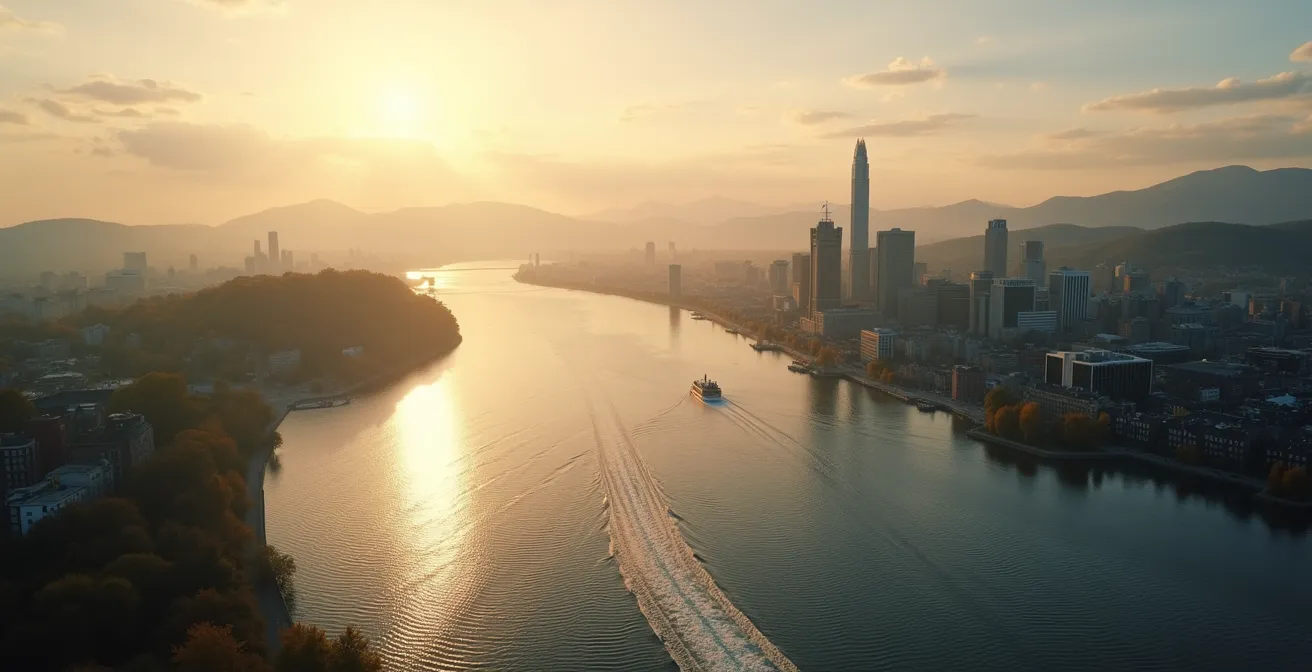
The perfect Quebec City skyline photo depends on whether you value a controlled, panoramic canvas (Observatoire) or a dynamic, iconic water-level composition (Ferry).
- The Observatoire de la Capitale offers the highest, weather-proof viewpoint for expansive, map-like cityscapes.
- The Québec-Lévis Ferry provides the classic “postcard shot” with the Château Frontenac reflected in the water for a fraction of the price.
Recommendation: For a single, guaranteed epic shot, choose the Observatoire. For the iconic, classic photo with a sense of place and movement, the Ferry is unbeatable value.
Every tourist in Quebec City faces the same visual dilemma: where can you capture that breathtaking, iconic photograph of the skyline? You see the majestic Château Frontenac towering over Old Quebec, and the immediate instinct is to find the perfect vantage point. The internet offers a flurry of options, from free terraces to paid attractions, often leaving you more confused than when you started. Should you pay for a high-elevation view, or is the best shot available for the price of a transit ticket?
Many guides will simply list popular spots. They’ll tell you about the Terrasse Dufferin or the Plains of Abraham. But for the discerning visitor, the one who sees the city through a lens, the choice often boils down to a strategic trade-off: the soaring height of the Observatoire de la Capitale versus the classic perspective from the Québec-Lévis Ferry. This isn’t just about seeing the view; it’s about composing the perfect image.
But what if the key wasn’t just about location, but about understanding the visual language of each spot? This guide moves beyond a simple list. We will treat this as a visual composer’s manual, breaking down the cost, compositional framing, and light choreography of Quebec City’s premier viewpoints. Instead of just telling you where to go, we will show you how to analyze each option to decide which photographic “return on investment” is right for you, ensuring you leave with a masterpiece, not just a memory.
This article will dissect the city’s best panoramic perspectives, from paid observation decks to revolving restaurants and public parks. We will analyze the pros and cons of each, not just as a tourist, but as a photographer seeking the ultimate shot.
Summary: A Photographer’s Guide to Quebec’s Best Views
- Observatoire de la Capitale: Is the 31st-floor view worth the admission price?
- The 12-minute cruise: How to get the “postcard shot” for the price of a transit ticket
- The Concorde revolving restaurant: Can you go just for a drink?
- Ciel! vs. Terrace Dufferin: Elevation differences and visibility
- Golden hour angles: Which deck faces the sun correctly in the evening?
- Governor’s Park or Ferry: Which spot frames the Château perfectly at sunset?
- The Martello Towers: Are the guided tours inside worth the admission?
- Experience the Château Frontenac Without Breaking the Bank: Dining and Tours for Non-Guests
Observatoire de la Capitale: Is the 31st-floor view worth the admission price?
For the photographer seeking an unobstructed, god’s-eye view of Quebec City, the Observatoire de la Capitale presents a compelling offer. Perched on the 31st floor of the Marie-Guyart Building, it is unequivocally the city’s highest viewpoint. Official data confirms the observatory offers Quebec City’s highest viewpoint at 221 meters above sea level, providing a 360-degree panorama that transforms the city into a living map. From here, you can trace the winding streets of the old city, see the fortifications in their entirety, and appreciate the strategic placement of the Citadelle.
The primary photographic advantage is control and clarity. The climate-controlled environment means your shoot isn’t dependent on weather. Rain, snow, or the biting Quebec winter wind won’t interfere. This makes the admission price a sort of insurance policy for getting a guaranteed, high-quality shot. The floor-to-ceiling windows offer a clean, expansive canvas, ideal for wide-angle lenses and detailed cityscapes. As one visitor noted, the experience is optimal under the right conditions.
Really nice place with a breathtaking view, I went there on a clear day and really got to enjoy the city from every angle.
– Visitor review, Observatoire de la Capitale official website
However, this controlled environment comes at a literal cost. The question of “worth” is a direct comparison to the alternatives. This is where the photographer’s return on investment comes into play. As this comparative analysis of viewing options shows, the cost is significantly higher than the ferry.
| Viewing Option | Cost (Adult) | Duration | Weather Dependent |
|---|---|---|---|
| Observatoire de la Capitale | $20 CAD | Unlimited | No – Climate controlled |
| Quebec-Levis Ferry (Round trip) | $8.10 CAD | 24 minutes total | Yes – Outdoor deck |
| Difference | $11.90 more | Self-paced vs fixed | All-weather vs fair weather |
The verdict? If your goal is a sprawling, detailed panoramic that captures the city’s full layout and you want to eliminate weather as a variable, the $20 CAD admission is a justifiable expense for the guaranteed access and unparalleled elevation. It’s an investment in a specific type of shot: the grand, all-encompassing overview.
The 12-minute cruise: How to get the “postcard shot” for the price of a transit ticket
If the Observatoire offers the grand panorama, the Québec-Lévis Ferry delivers the iconic “hero shot.” This is where you capture the classic postcard image of the Château Frontenac presiding over the cityscape, with its reflection shimmering on the St. Lawrence River. The photographic return on investment here is astronomical; for what is essentially the price of a bus ride, you gain access to a mobile viewing platform that presents the city in its most flattering and recognizable form.
The ferry isn’t just a mode of transport; it’s a strategic photographic tool. The 12-minute crossing between Quebec City and Lévis is a slow, cinematic pan across the entire skyline. Unlike a static viewpoint, the boat’s movement allows for subtle shifts in composition, letting you perfectly align the elements of the old town, the fortifications, and the modern city. The water in the foreground adds a dynamic element—ice floes in winter, golden reflections at sunset—that a land-based view can’t replicate.
The key to success is planning. Capturing the perfect shot from the ferry isn’t about luck; it’s about positioning and timing. Following a few simple steps can transform a simple crossing into a highly productive photo session.
Your Action Plan for the Perfect Ferry Shot
- Board the ferry at 10 rue des Traversiers near the Petit-Champlain district.
- For the classic skyline shot, position yourself on the upper deck’s port side (left side) when departing from Quebec City.
- The prime moment for the Château Frontenac view occurs about 4-6 minutes into the 12-minute crossing.
- On the return journey from Lévis, switch to the starboard side (right side) for a full view of the Old Quebec skyline.
- For a different perspective, visit the Terrasse de Lévis near the ferry terminal on the other side for an excellent static, elevated view between crossings.
For a round-trip cost of just over $8 CAD, the ferry provides a world-class photographic opportunity that rivals and, for many, surpasses more expensive attractions. It offers a sense of place, scale, and dynamism that is essential to the quintessential Quebec City photograph.
The Concorde revolving restaurant: Can you go just for a drink?
Floating just below the Observatoire, on the 28th floor of the same building, is another option for a sky-high view: Ciel! Bistro-Bar. This revolving restaurant adds a layer of motion and luxury to the panoramic experience. The core question for many travelers on a budget is whether this stunning vista is accessible without committing to a full, pricey meal. The answer is a resounding yes.
Ciel! Bistro-Bar is designed to accommodate guests who simply want to enjoy a cocktail while taking in the view. The bar area is welcoming, and visiting for a drink is a common and accepted practice. This strategy offers a fantastic compromise: you get a world-class, high-elevation, 360-degree view for the price of a drink or two. The restaurant completes one full turn in a leisurely 90 minutes for a complete 360-degree rotation, allowing you to see the city from every possible angle without leaving your seat. It’s a dynamic, comfortable, and deeply impressive way to experience the cityscape.
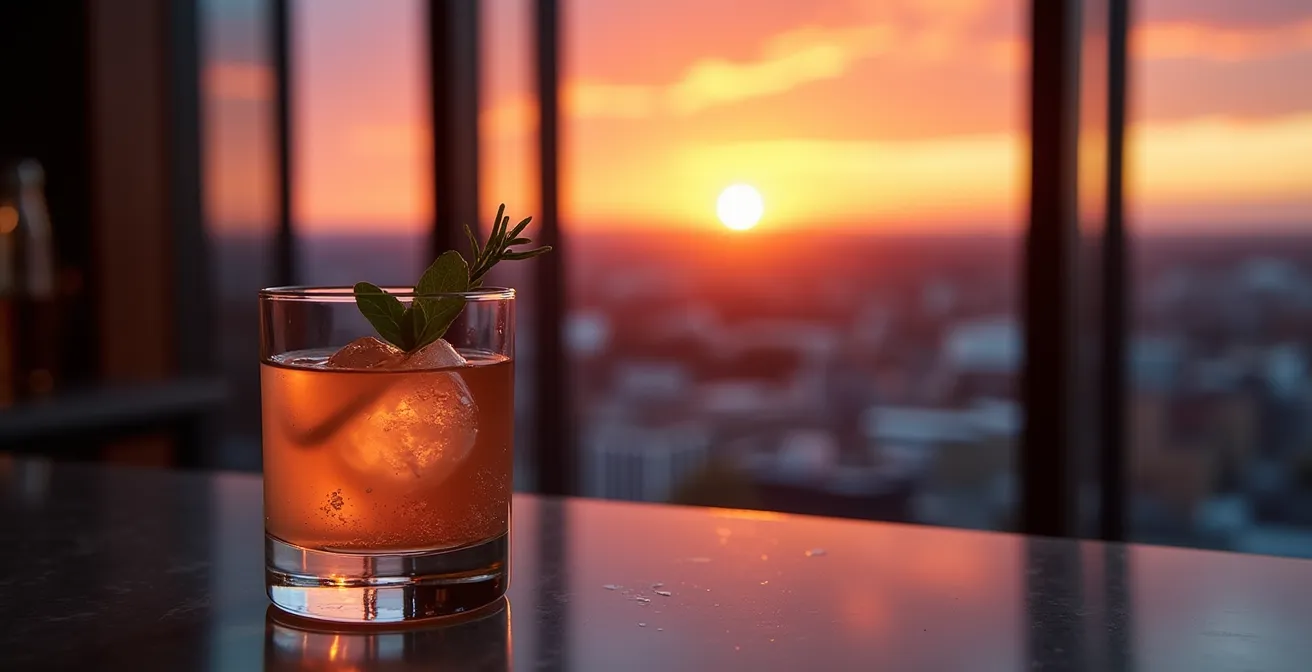
This approach combines the elevation of the Observatoire with a touch of affordable luxury. As many visitors and locals attest, it’s a fantastic way to access the view without the commitment of a full dinner reservation. For a photographer, it’s a chance to capture the sunset with a perfectly framed cocktail in the foreground, adding a narrative of “joie de vivre” to your shot. It transforms the viewing experience from passive observation to active participation in the city’s sophisticated ambiance.
Cost us less than $400 for 4 persons including cocktails, bottle of wine, appetizers, main course and a generous tip. If you’re not hungry, you can always stop by for a drink and take in the view.
– Local experience on TripAdvisor
So, can you go just for a drink? Absolutely. It’s perhaps the smartest way to leverage this multi-million dollar view, combining photographic opportunity with a memorable, upscale experience for a fraction of a full meal’s cost.
Ciel! vs. Terrace Dufferin: Elevation differences and visibility
Comparing the view from Ciel! Bistro-Bar to the one from Terrasse Dufferin is not about which is “better,” but about understanding two fundamentally different ways of seeing the city. It’s a classic debate of “panorama” versus “presence.” Ciel! offers the panorama: a detached, all-encompassing vista that lets you appreciate the city’s scale and geography. You are an observer, looking down upon the landscape from a protected perch.
Terrasse Dufferin, the iconic boardwalk at the foot of the Château Frontenac, offers presence. Here, you are not observing the city; you are *in* it. Your view is at street level, immersed in the energy, sounds, and history of Old Quebec. From a photographic standpoint, this changes everything. Instead of capturing the city as a whole, you are capturing moments within it. Your lens finds close-up details: the turrets of the Château against the sky, the cannons pointing towards the river, the bustling activity of tourists and street performers. The visibility is limited to what’s directly in front of you, but the emotional impact is heightened.
The key difference is the story you want to tell with your photograph. – Ciel! tells a story of scale, geography, and grandeur. It’s for the shot that says, “This is the vast and beautiful Quebec City.” – Terrasse Dufferin tells a story of history, atmosphere, and human experience. It’s for the shot that says, “I was here, at the heart of it all.”
This distinction is critical for any visual storyteller. The elevation of Ciel! abstracts the city into a beautiful pattern, while the ground-level view from the Terrasse grounds you in its tangible reality.
Dufferin Terrace provides ‘presence’—you’re immersed in the history, hearing the street performers, and feeling the energy of the city right at the foot of the Château.
– Tourism analysis, Best Views Quebec City Guide
Ultimately, the choice depends on your artistic goal. Do you want the epic landscape or the intimate environmental portrait? One offers a breathtaking overview, while the other provides an unforgettable sense of being part of the history you’re capturing. Most visitors will, and should, experience both.
Golden hour angles: Which deck faces the sun correctly in the evening?
For a photographer, “when” is as important as “where.” The golden hour—that magical period shortly after sunrise or before sunset—can transform a good photo into an extraordinary one. In Quebec City, with its dramatic skyline and riverside setting, understanding the “light choreography” is crucial. So, which viewpoint is best positioned to capture that warm, evening glow?
The answer depends on the season, as the sun’s position changes dramatically. However, a general rule applies: because Quebec City is on the north shore of the St. Lawrence River, the sun typically sets behind the city when viewed from the east. This means that for the most dramatic sunset shots where the city itself is bathed in golden light, you need to be on the Lévis side or on the ferry heading towards Lévis. From this vantage point, the setting sun illuminates the face of the Château Frontenac and the buildings of Old Quebec, making them glow against the darkening sky.
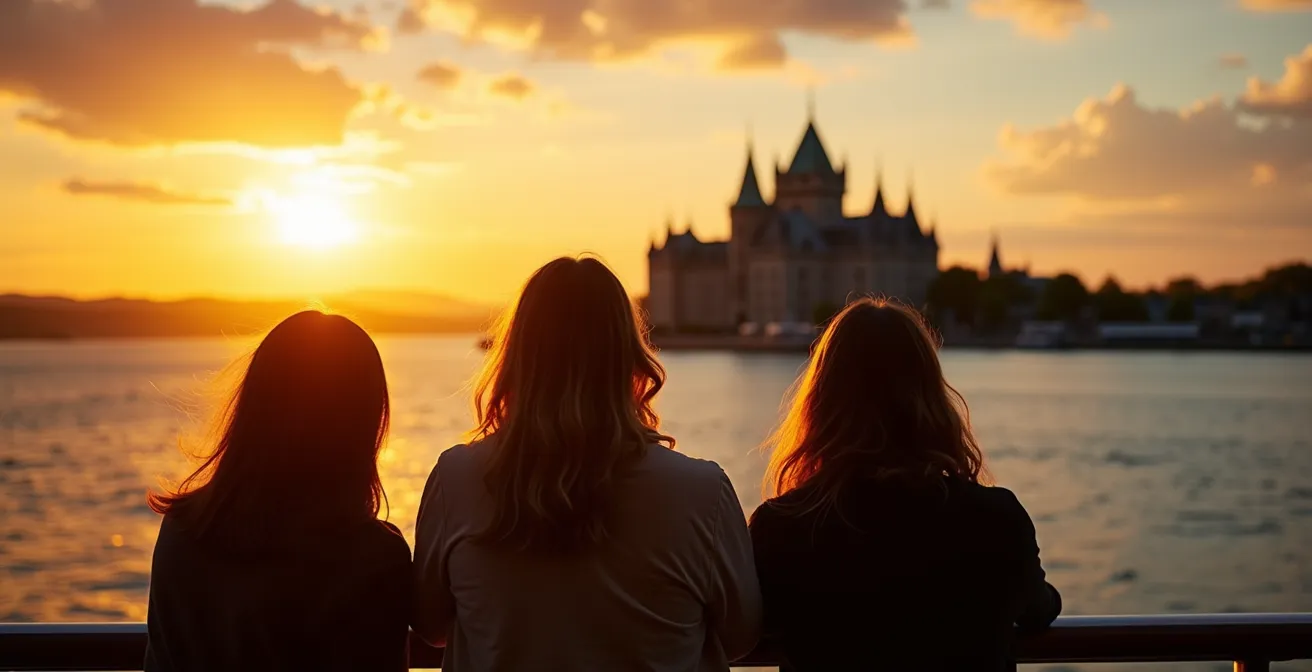
What about the high-elevation decks like the Observatoire? While you can see the sunset, you’ll often be shooting *into* the sun, which can create challenging silhouettes and heavy lens flare. The key here is to wait for the “blue hour,” the 30 minutes just after the sun has dipped below the horizon. During this time, the sky holds a deep blue hue while the city lights begin to turn on, creating a magical balance of natural and artificial light. For indoor photography from the Observatoire or Ciel!, using a polarizing filter is essential to cut down on the significant glare from the windows.
Your Seasonal Sunset Positioning Guide
- Summer Sunsets: The sun sets further north, almost directly behind the city. The best views are from the Lévis side or the ferry, which will have the sun lighting up the skyline in front of you.
- Winter Sunsets: The sun sets more to the south (left of the skyline when viewed from Lévis). This creates dramatic side-lighting on the Château.
- Blue Hour Magic: For any viewpoint, the 30 minutes after sunset provide a fantastic opportunity to capture illuminated cityscapes against a richly colored sky.
- Ferry Timing: An evening departure from Quebec City aligns perfectly with golden hour, allowing you to capture stunning water reflections as the sun sets.
- Indoor Glare Reduction: When shooting from the Observatoire or Ciel!, press your lens against the glass and use a polarizing filter to minimize reflections.
Understanding these angles and timings allows you to plan your shoot not just around a location, but around the light itself, ensuring you’re in the right place at the right time for that perfect golden hour shot.
Governor’s Park or Ferry: Which spot frames the Château perfectly at sunset?
While the ferry offers an expansive, wide-angle “hero shot” of the entire skyline, sometimes the most powerful image is one with a more intimate, deliberate composition. This is where land-based viewpoints like the Parc des Gouverneurs (Governor’s Park), located right beside the Château Frontenac, come into play. The choice between the park and the ferry is a fundamental decision in compositional framing.
The ferry provides the grand, sweeping vista. It places the Château in the context of the entire city and the vast St. Lawrence River. The reflection on the water is a key compositional element, creating symmetry and adding a dynamic quality to the image. This is the shot that communicates scale and majesty.
Governor’s Park, on the other hand, offers a compressed and intimate frame. Using the park’s trees, benches, and gentle slope as foreground elements, you can create a classic postcard composition that leads the viewer’s eye directly to the Château. This viewpoint allows for a much tighter shot, focusing on the hotel’s architectural details. It feels less like a landscape and more like an environmental portrait of the building itself. You’re close enough to feel its presence, creating a powerful sense of place.
Comparative Analysis of Château Frontenac Viewing Angles
A photographer’s analysis reveals three distinct framing options. Governor’s Park (Parc des Gouverneurs) offers an intimate, compressed frame, using trees and the park’s slope to lead the eye to the Château, creating a classic postcard composition. The ferry provides an expansive ‘hero shot’ of the entire skyline reflected on water. A third powerful option, the viewpoint from the walls of the Citadelle or the nearby Pierre-Dugua-De-Mons Terrace (which requires ascending approximately 400 steps to climb), uniquely combines elevation with proximity, framing the Château perfectly against both the cityscape and the St. Lawrence River.
At sunset, both locations excel but offer different results. From the ferry, you capture the entire skyline glowing. From Governor’s Park, you capture the warm light catching the copper roofs and brick facade of the Château, often framed by the dark silhouettes of trees. Neither is definitively better; they simply tell different visual stories. For the wide, epic landscape, take the ferry. For the charming, tightly framed, classic view, set up your tripod in Governor’s Park.
The Martello Towers: Are the guided tours inside worth the admission?
Beyond the primary skyline views, Quebec City’s rich military history offers other elevated perspectives, notably from the Plains of Abraham where the Martello Towers stand guard. These squat, circular forts were defensive structures, and as such, offer strategic vistas over the river and the city. A tourist might wonder if paying for a guided tour inside one of the towers is necessary to access these views.
For the photographer focused purely on the panoramic view, the answer is generally no. The admission for a guided tour grants you access to the history and interior architecture of the tower, which is fascinating in its own right. However, the most valuable viewpoints are often freely accessible from the exterior grounds on the Plains of Abraham. The slight elevation of the plains already provides an excellent vantage point, similar to what you’d get from the top of the tower itself.
The real value for a history buff or a curious traveler is the tour’s content, not its view. But if your goal is capturing the landscape, your money and time are better spent elsewhere. You can achieve 90% of the photographic potential by simply exploring the area around the towers for free. This allows you to leverage the towers as powerful compositional elements in your photos, rather than just a platform to stand on.
Your Checklist for Free Martello Tower Area Views
- Walk the exterior perimeter of all four towers located on the Plains of Abraham at no cost.
- Read the free interpretive signs placed around the towers, which explain their strategic military purpose and historical context.
- Access numerous free viewpoints along the edge of the Plains of Abraham that offer similar or even better vistas of the St.Lawrence River.
- Check the Parks Canada website for special event days, such as Canada Day, when admission to historical sites is often free.
- Combine your walk with a stroll along the nearby fortification walls for a more complete military history experience and additional photo angles.
In short, the guided tours are for those deeply interested in the military history and mechanics of the towers. For the view-seeker and photographer, the Plains of Abraham themselves offer a wealth of compositional opportunities without any admission fee.
Key Takeaways
- The Observatoire de la Capitale is your best bet for a guaranteed, weather-proof, panoramic shot, making its higher cost a form of photographic insurance.
- The Québec-Lévis Ferry offers the highest “photographic ROI,” providing the classic postcard view with water reflections for the price of a transit ticket.
- Light is paramount: shoot from the Lévis side at sunset to see the Château illuminated, and wait for the “blue hour” when shooting from high-elevation, indoor decks.
Experience the Château Frontenac Without Breaking the Bank: Dining and Tours for Non-Guests
After capturing the Château Frontenac from every possible angle, the final piece of the photographic journey is to experience the iconic landmark from the inside. Many assume this requires an expensive hotel stay, but the “world’s most photographed hotel” is more accessible than you might think. You don’t need a room key to soak in its historic ambiance and find unique interior shots.
The Château is, at its heart, a public space, welcoming visitors to explore its main floor. A simple walk through the grand lobby offers a glimpse into its Gilded Age opulence. You can admire the intricate woodwork, historical displays, and elegant decor that make the hotel a living museum. This self-guided exploration is completely free and provides numerous opportunities for capturing the hotel’s majestic interior.
For those willing to spend a little, the experience deepens. The 1608 Bar à Vin is a perfect example. Named for the year of Quebec’s founding, this sophisticated bar allows you to enjoy a locally-distilled gin cocktail or a Quebec cheese plate. It’s a way to experience the hotel’s luxury on your own terms, providing a cozy, atmospheric setting for more intimate photos. Similarly, the Afternoon Tea service at Place Dufferin offers a more affordable dining experience than a full dinner at the Champlain restaurant, complete with stunning views of the terrace and the river.
Budget-Friendly Ways to Experience the Château Frontenac
- Visit the 1608 Bar à Vin for a single craft cocktail or a local cheese plate to soak in the ambiance.
- Take a free self-guided tour through the main lobby to see the historical architecture and displays.
- Walk the public hallways near the Champlain restaurant to view historical artifacts and paintings on display.
- Explore the central courtyard and the Dufferin Terrace for the best exterior photography angles without needing to enter a private area.
- Consider the Afternoon Tea at Place Dufferin for a structured, yet more affordable, dining experience with a view.
This accessibility is part of what makes the landmark so beloved. As the official tourism board states, its fame is well-earned. Being able to walk its halls and have a drink at its bar is an essential part of the Quebec City experience, and it’s a chapter that can be added to your visual story without breaking the bank.
Québec City’s most famous landmark is also the most photographed hotel in the world.
– Visit Quebec City, Quebec City Tourism Board
Now that you are equipped with a complete visual strategy for capturing Quebec City’s skyline, the next step is to put this guide into practice. Choose your light, select your viewpoint, and start composing your own masterpiece.