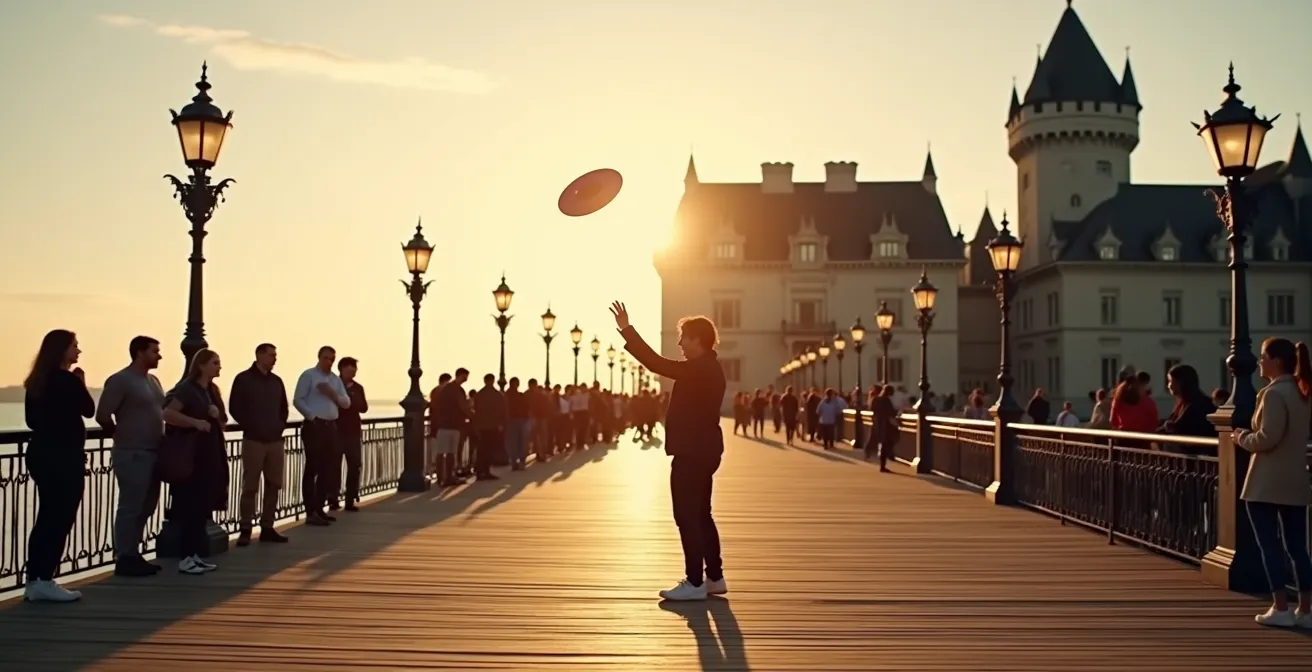
Many tourists see street shows as free entertainment. The reality is they are a collaborative performance funded directly by you. This guide reveals the unwritten rules of this partnership, from the $2 ‘Toonie Standard’ for tipping to audience etiquette, transforming you from a passive spectator into an active participant who helps create the magic on Dufferin Terrace.
There’s a unique energy that hums along the wooden planks of Dufferin Terrace. With the iconic Château Frontenac at your back and the vast St. Lawrence River stretching before you, the air fills with music, laughter, and gasps of amazement. This is the office of Old Quebec’s street performers. For many visitors, it’s a delightful, seemingly free bonus to their stroll. But as a former performer who has worked that very space, I want to let you in on a secret: it’s not a free show, it’s a shared experience.
Most guides will tell you the obvious: the shows are great and you should tip if you enjoy them. But they miss the fundamental point. A street show is a partnership. The artist provides the skill, the risk, and the spectacle, but it’s the audience that provides the energy and, crucially, the funding that makes it all possible. Understanding this dynamic is the key to moving beyond being a simple tourist and becoming part of the magic. The difference between a good show and an unforgettable one is often the quality of its audience.
This guide is your backstage pass. We’ll go beyond the generic advice and delve into the specific culture of Dufferin Terrace. We’ll cover the ‘why’ behind the tipping customs, the unwritten rules of audience etiquette, and the seasonal rhythms of this outdoor stage. By the end, you won’t just know what to do; you’ll understand why it matters, ensuring you have the best possible experience while respectfully supporting the artists who make Quebec City so vibrant.
Summary: Your Complete Guide to Enjoying Shows on Dufferin Terrace
- Why tossing a Toonie ($2) is the minimum for a full 15-minute show
- Acrobats vs. Musicians: Which acts dominate the Terrace in July?
- The error of interrupting a juggler mid-act for a selfie
- Why you won’t find performers during heavy rain or winter storms
- How performers earn their spot: The audition process behind the magic
- Where to find rest stops and benches along the steepest historical routes
- Ticket booth vs. Slide line: The double-wait mistake to avoid
- Observatoire de la Capitale vs. The Ferry: Best Panoramic Views of Quebec
Why Tossing a Toonie ($2) is the Minimum for a Full 15-Minute Show
Let’s tackle the most common question first: “How much should I tip?” The vague answer is “what you feel it’s worth,” but for a visitor, that’s not helpful. Here in Quebec, there’s an unwritten rule among locals and seasoned tourists: the Toonie ($2 coin) is the baseline. Think of it as the price of a ticket for a 15-to-20-minute show. If you watch the entire performance, a Toonie per person in your group is the standard of appreciation. For a family of four, a $5 or $10 bill is even better and saves us from a pocket full of heavy coins.
Why this amount? Performing isn’t free for us. We have real costs, from the creation of our acts to equipment maintenance. More formally, performer community discussions suggest that permit fees in Quebec City range from $150 to $300 per year. That’s before we even account for costumes, props, instruments, and insurance. Your contribution isn’t just a “tip”; it’s our salary. It’s what allows us to dedicate our lives to honing our craft and bringing this unique entertainment to the public.
The best time to pay is at the end of the show, during what we call the “hat speech.” This is when the performer will take a moment to talk to the crowd, explain what they do, and pass the hat. Many performers now also offer modern payment options like tap-to-pay terminals or QR codes for Interac e-Transfers, making it easier than ever to show your support. Waiting for the hat speech is a sign of respect; it shows you value the entire performance, not just a fleeting moment.
Acrobats vs. Musicians: Which Acts Dominate the Terrace in July?
As the weather warms up, Dufferin Terrace transforms into a vibrant, rotating stage. While you’ll always find a talented array of musicians and magicians, July is undoubtedly the month of the acrobatic circle show. This is no coincidence. Quebec is a global hub for circus arts, and many graduates from world-renowned institutions like the École nationale de cirque in Montreal cut their teeth performing for the public. The graduate employment rate is on average over 95%, and many of these highly versatile artists bring their professional skills to the streets, testing new material and interacting directly with an audience.
This means you’re often seeing a world-class spectacle for the price of a tip. These acts—involving juggling, acrobatics, and high-risk balancing—are designed to build a large crowd and are most common in the peak afternoon and early evening hours, typically from 3 PM to 7 PM. You’ll find the best shows when the sun is high and the Terrace is bustling with people. Musicians, on the other hand, often prefer the slightly less chaotic morning hours or the golden hour just before sunset, providing a beautiful soundtrack to the river views.

Of course, this all happens within a specific window. While some hardy musicians might play on a crisp autumn day, the official street performance season in Quebec City runs from early May to late October. If you visit outside of this period, especially in the heart of winter, the Terrace will have a very different, much quieter character.
The Error of Interrupting a Juggler Mid-Act for a Selfie
The performance area, which we call “the circle,” is sacred space. It’s where we build tension, focus our energy, and ensure the safety of both ourselves and the audience. The single biggest mistake a visitor can make is treating it like a simple photo op. Walking through the middle of an act, even as a shortcut, is not only disrespectful but also dangerous. A performer balancing on a high unicycle or juggling flaming torches is in a state of intense concentration. A sudden distraction can lead to a dropped prop at best, or an injury at worst.
The same rule applies to photos. We love when you take pictures and share them, but not at the expense of safety or the show’s flow. Trying to grab a selfie with a performer mid-act is a major breach of etiquette. The best approach is to wait until after the show has concluded. Once you’ve given your tip, politely ask for a photo. Most performers are more than happy to oblige a supportive audience member. It’s about respecting the performance as a structured piece of theatre, not just a random occurrence.
Being a great audience member is an active role. It means keeping your children from running into the circle, putting your phone away (unless you’re taking photos or video from your spot), and offering your focused attention. Your applause and reactions are the fuel we run on; they tell us you’re engaged and help build the energy for everyone. This partnership is what makes street theatre so special.
Your Quick Guide to Street Show Etiquette
- Engage Visually: Make eye contact with the performer. It shows you’re connected to the show and not just passing by.
- Applaud Generously: Clap for impressive tricks and at the end of the show. Your audible appreciation is a huge motivator.
- Mind the Circle: Keep yourself and your children on the audience side of the performance line. Never walk through the active space.
- Wait for Photos: The best time to ask for a photo is after the final bow and after you have tipped. It’s a respectful exchange.
- Minimize Distractions: Avoid taking phone calls or having loud conversations during the performance. Treat it like you would an indoor theatre.
Why You Won’t Find Performers During Heavy Rain or Winter Storms
The Dufferin Terrace may be our office, but it’s an office with no roof. The schedule of a street performer is dictated entirely by the weather. Heavy rain is an obvious showstopper; our equipment can be damaged, and slippery surfaces make acrobatic acts extremely dangerous. Even high winds can make juggling or balancing acts impossible. If the weather looks uncertain, don’t be surprised to find the Terrace far quieter than usual. We are constantly checking the forecast, and a rainy day for us is an unexpected, unpaid day off.
Beyond daily weather, there’s a much larger seasonal shift. Once winter sets in, typically from mid-December to mid-March, street performance ceases entirely. The Terrace undergoes a magical transformation, and our performance space becomes something else: a high-speed toboggan slide. This tradition dates back to 1884, and when you race down one of the icy lanes, you can attain speeds of up to 70 km/h (43.5 mph). It’s an incredible winter activity, but it means our summer stage is completely occupied.
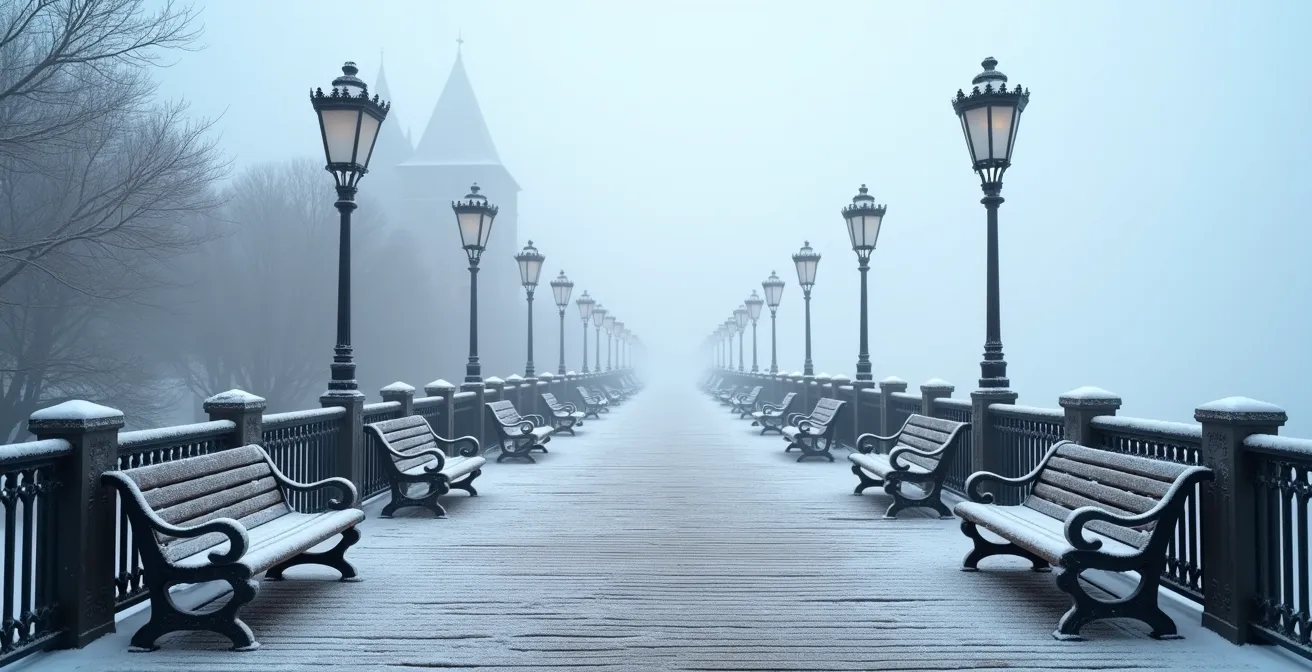
So, if you’re visiting Quebec City between December and March hoping to see street shows, you’ll be disappointed. The artists are gone, either working indoor gigs, creating new acts for the next season, or travelling to warmer climates. The vibrant, noisy energy of summer is replaced by the crisp, frosty silence of a Quebec winter, a beautiful but performer-free experience.
How Performers Earn Their Spot: The Audition Process Behind the Magic
The incredible talent you see on Dufferin Terrace isn’t there by accident. You can’t just show up with a guitar or a set of juggling clubs and start a show. Quebec City maintains a high standard for its public entertainers through a formal audition process. Performers must apply for a permit and are evaluated on several criteria, including originality, artistic quality, safety, and crowd management skills. The city wants to ensure that the entertainment is top-notch and, crucially, that it’s performed safely without aggressive tactics to solicit money.
This vetting process is why the quality is consistently high. It filters out amateurs and ensures that the performers you see are professionals who have invested significant time and effort into their acts. The busking scene has evolved over the years; it used to be a free-for-all “melting pot of artists,” but increased regulation has professionalized the environment.
One notable and recent regulation change impacts certain areas. According to a city bylaw modified in May, buskers at two specific sites in the nearby Petit Champlain district must now perform in French or play instrumental music. While this rule is specific to those spots, it highlights the city’s commitment to preserving its francophone culture. On Dufferin Terrace, you’ll find most experienced performers are bilingual, delivering their “hat speech” and interacting with the crowd in both French and English to welcome all visitors.
Where to Find Rest Stops and Benches Along the Steepest Historical Routes
Part of the charm of Old Quebec is its dramatic geography, with Upper Town towering over Lower Town. Dufferin Terrace sits at the top of this cliff, and getting there can be a journey in itself. The main routes, like the Côte de la Montagne and the famous “Breakneck Stairs” (Escalier Casse-Cou), are steep. In fact, the climb from Place Royale to Dufferin Terrace involves a 55-metre (180-foot) ascent. While beautiful, it can be taxing.
Thankfully, the city planners understood the need for a breather. As you make your way up, you’ll find strategically placed benches and landings. Here is a simple path many performers and visitors use:
- Start in Place Royale in Lower Town, a charming square that often hosts smaller musical acts.
- If you have mobility concerns or want to save energy, the Funicular is your best friend. It’s a quick, scenic ride directly up to the Terrace.
- If walking, the landings on the Escalier Casse-Cou and the benches along the Côte de la Montagne offer fantastic photo opportunities and a chance to catch your breath.
- Once you arrive at Dufferin Terrace, the long stretch of benches becomes your front-row seat. A pro tip: some benches face the performance areas, while others face the river. Grab one that allows you to enjoy the show and then turn around to soak in the view between acts.
Planning your ascent and taking advantage of these rest stops makes the journey part of the fun rather than a chore. You’ll arrive at the top energized and ready to enjoy the main event, rather than breathless and searching for the nearest place to sit.
Ticket Booth vs. Slide Line: The Double-Wait Mistake to Avoid
The spot on Dufferin Terrace that hosts the largest, most spectacular circle shows in the summer is the very same spot that houses the ticket booth for the toboggan slide in the winter. This dual-purpose nature of the space creates a common point of confusion for visitors. In summer, the “wait” involves arriving early to secure a good viewing spot around the informal performance circle. There’s no ticket, no formal queue—just a gathering of people.
In winter, however, the dynamic is completely different. To ride the historic toboggan, you face a “double-wait”: first, you must queue at the ticket booth to purchase your ride pass, and then you join a separate line to wait for an available toboggan. First-time winter visitors often make the mistake of just joining the slide line, only to be turned away at the top for not having a ticket. It’s a frustrating and time-consuming error. The key is to locate the separate ticket booth (“billetterie”) first.
The following table breaks down the fundamental differences between the Terrace’s two main seasons, helping you manage your expectations and avoid common mistakes whether you visit in July or January.
| Feature | Winter (Dec-Mar) | Summer (May-Oct) |
|---|---|---|
| Main Attraction | Toboggan slide (70 km/h speeds) | Street performers & buskers |
| Cost | Ticketed attraction (paid) | Tip-based (suggested $2 minimum) |
| Wait Time | Queue for tickets + slide line | Arrive early for best viewing spots |
| Location Used | Slide ticket booth area | Same spot hosts main acrobatic shows |
| Best Time | Afternoons (warmer) | 3-7 PM (peak performance hours) |
Key Takeaways
- The Toonie Standard: Consider $2 per person the minimum “ticket price” for a full show you watch.
- Respect the Circle: The performance area is a sacred, high-concentration zone. Never walk through it or interrupt an artist mid-act.
- Check the Season: The main performance season runs from May to October. The Terrace is for tobogganing, not busking, in deep winter.
Observatoire de la Capitale vs. The Ferry: Best Panoramic Views of Quebec
Many visitors seek out the highest point for the best view, often heading to the Observatoire de la Capitale for a 360-degree panorama. While spectacular, it offers a detached, bird’s-eye perspective. For a view that combines the grand landscape with the vibrant human element of the city, there are two better options that relate directly to the Dufferin Terrace experience: the Terrace itself, and the Lévis-Quebec ferry.
The Terrace is a 425m-long boardwalk perched 60m above the St Lawrence River, offering a “living panorama.” You are immersed in the view, not just observing it from afar. Here, the foreground is filled with the energy of performers and strolling crowds, creating a dynamic cultural landscape that no observation deck can match. It’s an experience for all the senses. As one local guide beautifully puts it:
The stunning panorama of the river and the Laurentian mountains is the backdrop for the artists. This unique ‘office view’ is part of the magic and appeal of performing in Quebec City.
– Local tourism perspective, WorldCityTrail Quebec Guide
For an ingenious reverse perspective, take the short and inexpensive ferry ride to Lévis. From the water, you get the iconic postcard view of the Château Frontenac and the entire cliffside. More importantly, it acts as a strategic scouting tool. From the ferry, you can easily spot where large crowds are gathering on the Terrace, indicating exactly where the best and biggest shows are happening in real-time. You can then head straight to the action upon your return. It’s the ultimate insider’s trick to finding the best entertainment of the day.
Now you have the insider’s knowledge. You understand that the show is a partnership, that your contribution is vital, and that your respectful attention is the highest compliment you can pay. You know the rhythms of the Terrace, from the time of day to the time of year. Go, find a spot in the crowd, let yourself be amazed, and when the hat comes around, toss in your Toonie with a smile. You’re not just a spectator anymore; you’re part of what makes Quebec City’s street theatre world-class.