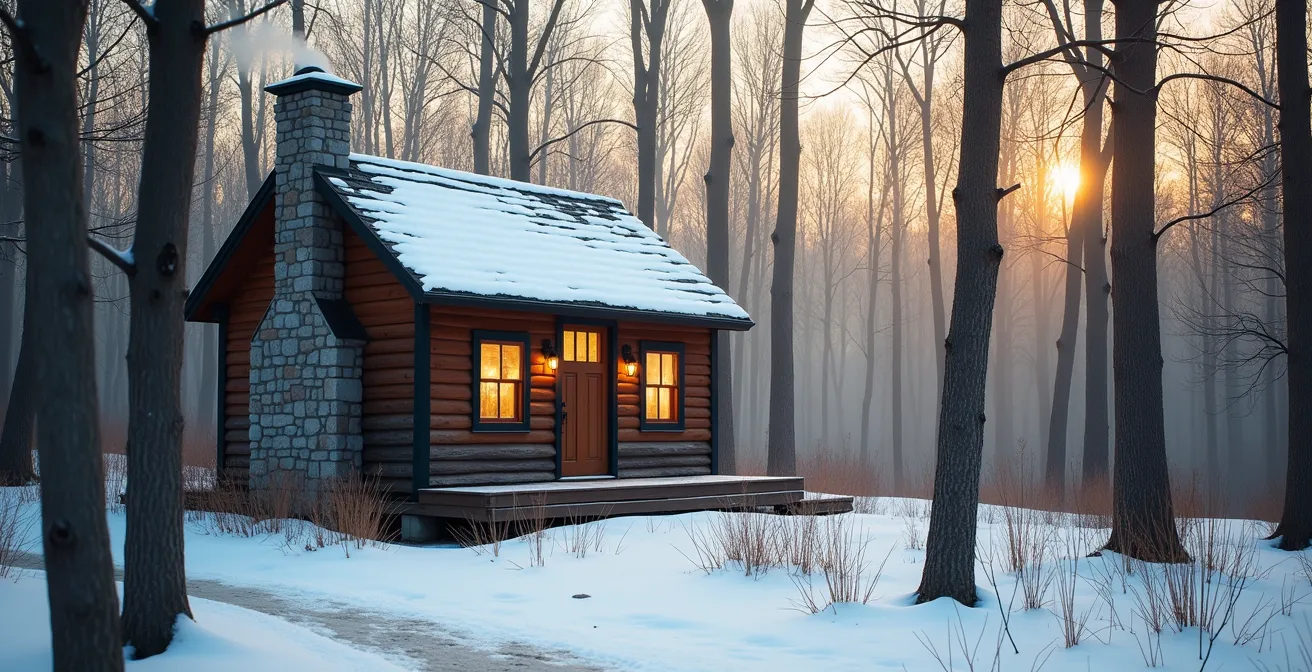
Renting a sugar shack cottage isn’t just a booking; it’s a commitment to experiencing the ‘temps des sucres’ on the producer’s clock.
- The true magic happens during the unpredictable March thaw, not on a fixed calendar date.
- The experience is a full sensory immersion, from the etiquette of rolling taffy to understanding the purpose of the heavy, traditional meal.
Recommendation: Plan at least six months ahead for peak season and choose a cottage that lets your family participate in the rhythm of the forest, not just observe from a distance.
As a maple producer, I can tell you the soul of the ‘temps des sucres’—the sugar season—isn’t found on a pancake plate in a crowded hall. That’s part of it, for sure, but the real thing? It’s the smell of the woodsmoke at dawn, the sound of the sap dripping in the quiet woods, and the feeling of mud and snow under your boots. So many visitors come for a quick meal and miss the heart of it all. They treat it like a restaurant, but it’s a harvest. It’s a fundamental part of our Québécois culture, a celebration of the land waking up.
Most guides will give you a list of the biggest, most commercial shacks. They’ll tell you to eat your fill and buy some syrup. But what if you could do more? What if you could wake up to the sight of a maple forest, take part in the daily rituals, and understand the season from the inside out? That’s the promise of renting a cottage right at the source. It’s about shifting your perspective from a tourist to a temporary neighbour. It means syncing your family’s vacation to the “sap’s clock,” a schedule dictated by nature, not by business hours.
This guide isn’t about the top 10 places to eat. It’s my advice, from one family to another, on how to live the authentic sugar shack experience. We’ll cover the precise moment the sap flows, the unspoken rules of the traditions, the history behind our hearty food, and the practicalities of booking your stay. This is your invitation to step beyond the dining room and into the heart of the maple forest.
To help you plan this unique getaway, we’ve broken down the essential elements of an authentic stay. From understanding the science of the season to finding the best treats in the city, this guide will walk you through creating an unforgettable family memory.
Summary: Your Guide to an Authentic Quebec Sugar Shack Cottage Rental
- March thaw: The specific weather window when the sap actually flows
- Taffy on snow etiquette: How to roll the perfect stick without making a mess
- Pea soup to Oreilles de Crisse: A guide to the heavy, caloric traditional meal
- Bucket collection: Safe activities for children in the maple forest
- The reservation rush: Why the best authentic shacks book up 6 months prior
- Strawberry vs. Corn season: When to hit the rural festivals for peak flavor
- BeaverTails or Sit-down: Where to feed 4 kids under $60 in the village?
- Where to Find Authentic Cipaille (and Other Classics) in Quebec City
March thaw: The specific weather window when the sap actually flows
The first and most important thing to understand is that maple season doesn’t run on a human calendar. It runs on the sap’s clock. The magical window opens when we get a specific weather pattern: freezing nights below 0°C followed by mild, sunny days above freezing. This freeze-thaw cycle creates pressure inside the sugar maple trees, forcing the slightly sweet sap, or “maple water,” to flow from the taps. This typically happens between late February and late April in Quebec, but the peak can be a short, intense period of just two to three weeks.
Renting a cottage puts you front and centre for this natural spectacle. You’ll witness the forest come alive. One day, there’s silence and deep snow; the next, you hear the steady ‘plink, plink, plink’ of sap dripping into thousands of buckets. This is the heartbeat of the season. The industry is a cornerstone of our province’s agriculture; a recent report confirms that a staggering 108.4 million kilograms were produced in Quebec in 2024 alone. This massive output is entirely dependent on that specific weather window.
By staying on-site, you’re not just hoping to time your visit right; you’re living it. You’ll see producers rushing to collect the sap before it spoils and smell the sweet steam billowing from the sugar house, where the boiling is in full swing. This is the authenticity you can’t get from a day trip—the feeling of being part of the rush and the reward. You’re no longer a spectator; you’re part of the producer’s rhythm.
Taffy on snow etiquette: How to roll the perfect stick without making a mess
One of the most cherished rituals of any sugar shack visit is ‘la tire sur la neige’, or maple taffy on snow. It seems simple: hot syrup poured on a bed of clean snow. But there’s an art and an unspoken forest etiquette to it. The goal is to create a perfectly chewy, golden lollipop, not a sticky mess. As a producer, watching families discover this for the first time is a joy, especially when they get it right.
The secret starts in the sugar house. To get that perfect consistency, we heat the pure maple syrup to exactly 125°C (257°F). Any cooler and it won’t set; any hotter and it becomes hard candy. We then pour it in thin lines onto a trough of packed, fresh snow. Here’s the crucial part: you must wait about 10-15 seconds. This allows the intense heat to dissipate and the bottom layer to firm up. Then, using a wooden popsicle stick, you press down at one end and begin to roll, turning the stick continuously. The taffy will wrap around itself, creating a soft, warm, and delicious treat.

This process highlights the incredible transformation of sap. At some shacks, you can even taste the raw maple water, which is only slightly sweet. It’s amazing to think it takes about 40 litres of that water to make just one litre of syrup, which is then boiled down even further for taffy. And a final tip on etiquette: in communal troughs, it’s strictly one stick per person. No double-dipping! It’s a simple sign of respect in a shared tradition.
Pea soup to Oreilles de Crisse: A guide to the heavy, caloric traditional meal
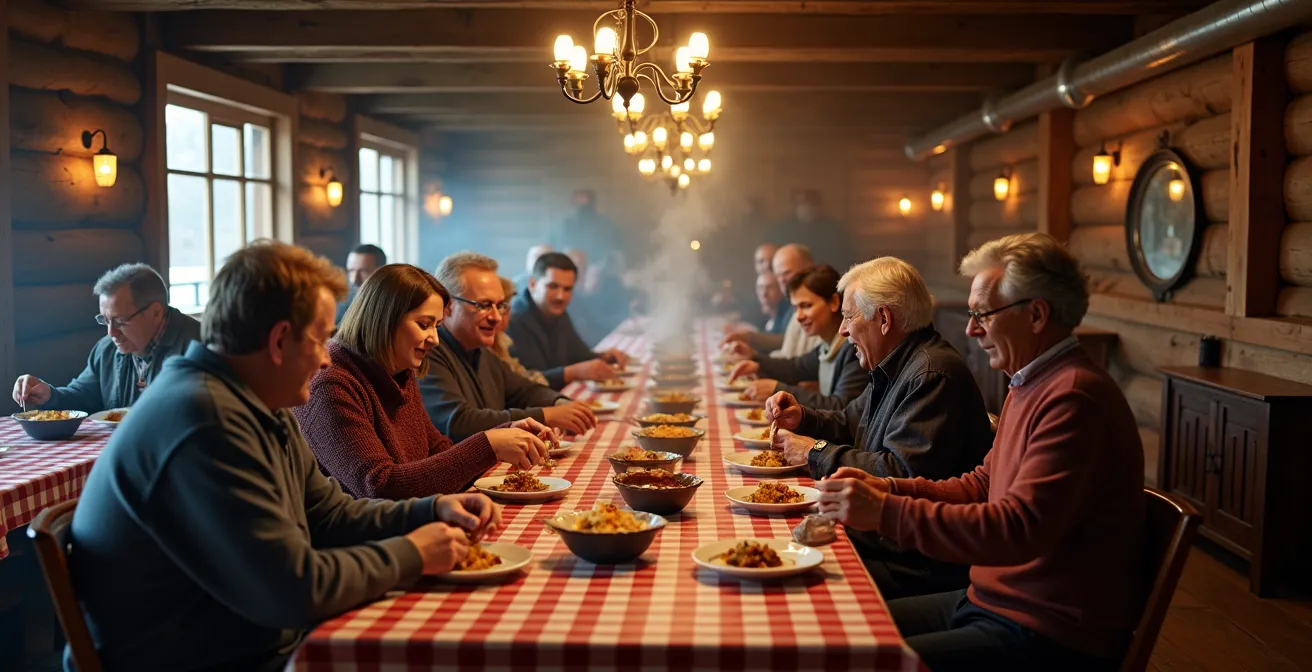
The traditional sugar shack meal is not for the faint of heart. As Tourisme Montréal aptly puts it in their guide, this is a marathon, not a sprint. To understand the menu, you must understand its purpose. This isn’t just a feast; it’s a “caloric contract” rooted in history. These dishes were designed to refuel lumberjacks and farmhands after a long, cold day of hard labour in the sugar bush. Every item is rich, hearty, and often, drenched in maple syrup.
A sugar shack meal is no small affair. You have to be prepared to indulge in a rich, maple-laden meal that will leave you feeling full. Put on your stretchy pants and pace yourself – this is a marathon not a sprint.
– Tourisme Montréal, Sugar Shack 101 Guide
The meal is a journey through Québécois culinary history. It begins with soupe aux pois (ham hock pea soup) to warm you from the inside out. Then comes the barrage of savoury dishes: fluffy scrambled eggs, mountains of bacon, sausages, and the iconic fèves au lard (pork and beans slow-baked with maple syrup). A true classic you must try are the Oreilles de Crisse (Christ’s ears), which are crispy, deep-fried pork rinds. They represent our ancestors’ commitment to using every part of the animal. The meal is a testament to resourcefulness and survival through harsh winters, as this table from a local guide illustrates.
| Dish Name | Description | Historical Purpose |
|---|---|---|
| Soupe aux pois | Yellow pea soup with ham hock | Warm starter for cold spring days |
| Oreilles de Crisse | Deep-fried pork rinds (Christ’s ears) | Used every part of pig, no waste |
| Fèves au lard | Baked beans with maple syrup | High-calorie fuel for sugar bush workers |
| Tourtière | Meat pie with cloves and cinnamon | Stretched meat supplies during winter |
| Grands-pères dans le sirop | Dumplings cooked in maple syrup | Sweet dessert using simple ingredients |
Just when you think you can’t eat another bite, dessert arrives. This often includes sugar pie, pancakes, and ‘grands-pères dans le sirop’ (dumplings boiled in maple syrup). Understanding the history transforms the meal from simple indulgence into an appreciation for the generations of hard work that it represents.
Bucket collection: Safe activities for children in the maple forest
One of the biggest advantages of renting a cottage at a sugar shack is giving your children the freedom to explore the forest. It becomes their backyard. This is about going “beyond the boil” and engaging them with the nature and history of maple production. While the sugar house can be hot and crowded, the maple grove (or ‘érablière’) is a giant, living classroom. Some of the most authentic shacks still use traditional methods, where you might even see a barrel of maple water being pulled by a horse—a sight that fascinates every child.
You can see the whole process, from old-school metal buckets to the vast network of blue tubing that modern producers use to bring the sap to a central collection point. It’s a wonderful way to teach them about technology and tradition coexisting. But the best way to engage them is to give them a mission. A scavenger hunt is a perfect activity, turning a simple walk in the woods into an adventure of discovery. They can learn to identify the trees, spot signs of past seasons, and understand the work involved.
This is a safe, fun way for them to connect with the environment. The forest floor in spring is a mix of snow, mud, and emerging plants, full of animal tracks to identify. It fosters a sense of wonder and respect for the land. By the end of their stay, they won’t just see maple syrup on a shelf; they’ll remember the forest where it came from.
Action plan: a sugar bush scavenger hunt for kids
- Identify sugar maple trees by their distinctive gray bark with vertical ridges and five-lobed leaves.
- Find old tapping holes from previous seasons, which look like dark circular scars on the trunk.
- Spot the difference between traditional metal spiles (taps) and the modern plastic taps used with tubing systems.
- Count the growth rings on a cut log or stump to estimate how old the tree is.
- Follow the blue tubing networks to see how they lead downhill towards the sugar house, using gravity to help collect the sap.
The reservation rush: Why the best authentic shacks book up 6 months prior
Here is a crucial piece of practical advice: the small, authentic sugar shacks—the ones that offer cottages and a genuine family experience—are not a last-minute destination. The demand is enormous, and the best places are often fully booked six months or more in advance, especially for weekends in March and April. This isn’t a marketing gimmick; it’s a reality driven by a deep-rooted local tradition and growing interest.
For Québécois families, visiting a sugar shack, especially around the Easter holiday, is an annual pilgrimage. It’s a time for multiple generations to gather. These local families are often the ones booking their favorite spots a year ahead. Added to this is a growing interest from visitors seeking authentic experiences. The industry itself has seen significant growth, with a report noting there were over 6,364 maple farms in Quebec in 2021, a nearly 20% increase from 2016. This has increased both the options and the competition for the best spots.
So, how do you secure a spot? Strategic planning is key. Here’s a general timeline to follow:
- September/October: This is when you should be booking for a March or April visit the following year, especially if you want a weekend spot or a cottage rental at a highly-rated, traditional shack.
- November to January: You may still find availability for mid-week visits, which are often quieter and offer a more relaxed experience.
- February to April: At this point, you’ll likely be looking at last-minute cancellations or options at larger, more commercial venues. You can also try for very early or very late in the season (end of February or late April) when demand is lower.
Some shacks, like the famous Sucrerie de la Montagne, are open year-round, offering an alternative if you miss the main season. But for that true “temps des sucres” magic, planning ahead is non-negotiable.
Strawberry vs. Corn season: When to hit the rural festivals for peak flavor
While the maple season is our most famous harvest, the life of rural Quebec doesn’t stop when the sap does. Renting a cottage in an agricultural region opens the door to a whole calendar of flavours. Your sugar bush cabin can be a home base for exploring the province’s incredible agri-tourism year-round. Many holiday sites in regions like Gaspésie or the Eastern Townships offer cottage rentals in the heart of these productive landscapes, allowing you to experience the full cycle of the seasons.
After the ‘temps des sucres’ wraps up in April, the fields come alive. Early summer brings the strawberry and raspberry season, particularly vibrant on the Île d’Orléans near Quebec City. Families flock to U-pick farms, and the air is filled with the sweet smell of fresh berries. Mid-summer is all about wild blueberries, with the Lac-Saint-Jean region being the undisputed king. The season culminates in late summer and fall with the corn and apple harvest. This is another major festival season, with corn roasts, apple picking, and cider tasting, especially in Montérégie and the Eastern Townships.
Each harvest has its own festivals, its own culinary traditions, and its own unique charm. By choosing a cottage in these regions, you can experience a different facet of Quebec’s ‘terroir’ with each visit. It’s a chance to connect with different producers and see the passion and hard work that goes into every season.
| Season | Harvest | Peak Months | Key Regions |
|---|---|---|---|
| Early Spring | Maple Syrup | March-April | Eastern Townships, Montérégie |
| Early Summer | Strawberries & Raspberries | June-July | Île d’Orléans, Montérégie |
| Mid Summer | Blueberries | August | Lac-Saint-Jean, Côte-Nord |
| Late Summer/Fall | Corn & Apples | August-October | Montérégie, Eastern Townships |
BeaverTails or Sit-down: Where to feed 4 kids under $60 in the village?
After the magnificent, belt-busting sugar shack meal, your food budget (and your appetite) might need a bit of a break. Luckily, rural Quebec villages are full of delicious, affordable options that are just as authentic as the big feast. Feeding a family of four doesn’t have to be expensive if you know where to look. The key is to eat like a local.
First, look for a ‘casse-croûte’. These small, roadside snack bars are a Quebec institution, famous for their poutine. You can get a generous, classic poutine for under $10. Another must-try are ‘steamés’—steamed hot dogs served in a soft bun, often for just a few dollars each at any local ‘dépanneur’ (convenience store). For a sweet treat that won’t break the bank, the iconic Queue de Castor (BeaverTail) is a perfect choice. This hand-stretched fried dough pastry, often topped with cinnamon sugar or other sweets, is a crowd-pleaser and costs around $5-$7.
If you’re staying in a cottage with a kitchen, the best strategy is to visit a local supermarket like IGA or Metro. Here you can stock up on fantastic local products. Pick up some cretons (a pork spread, perfect on toast for breakfast), a pre-made tourtière, and local cheeses. Combining these with fresh bread and maple products from a farmer’s market allows you to create your own delicious, budget-friendly picnics and meals. This approach not only saves money but also lets you continue exploring the local flavours at your own pace.
Key Takeaways
- An authentic sugar shack experience is about immersing yourself in the producer’s rhythm, which requires staying on-site in a cottage.
- The season is dictated by the “sap’s clock”—the freeze-thaw cycle in March/April—not a fixed calendar.
- The heavy meal and taffy ritual are historical traditions rooted in the needs of forest workers, not just tourist attractions.
Where to Find Authentic Cipaille (and Other Classics) in Quebec City
Your authentic culinary journey doesn’t have to end when you leave the maple forest. If your trip includes a visit to Quebec City, you can continue to explore the province’s rich ‘cuisine du terroir’ (cuisine of the land). Many restaurants in the city, especially in the historic Old Quebec district, specialize in the very same traditional dishes you enjoyed at the sugar shack, serving them year-round. This is where you can hunt down classics like cipaille, a layered and slow-cooked meat and potato pie.
As the team at Bonjour Québec highlights, the focus is on celebrating our culinary heritage. Their praise for one establishment could apply to many:
Their cuisine is traditional, generous and tasty. Here, we revisit sugar shack classics, keeping maple syrup as the main star in all dishes.
– Bonjour Québec Tourism, List of sugar shacks in Quebec
To find these gems, look for establishments with ‘Cuisine du Terroir’ certifications or those recommended by locals. Restaurants like Aux Anciens Canadiens are famous for their historical setting and traditional menu. For a more casual but equally authentic experience, the Buffet de l’Antiquaire is a local favourite for cipaille and tourtière. You can even find urban versions of the sugar shack experience at the Grand Marché during maple season. And for a quick taste of the season, La Petite Cabane à Sucre de Québec in Old Quebec offers maple products and taffy on snow right in the city.
The key is to ask for family-run places that pride themselves on ‘grands-mères’ recipes (grandmothers’ recipes). This ensures you’re getting a taste of true Quebec hospitality and history, connecting the flavours of the countryside to the heart of the city.
By embracing the full experience—from the forest to the city, from the sap’s flow to the harvest table—you’re doing more than just taking a vacation. You’re creating a deep, lasting connection to the land and culture of Quebec. To begin planning your own authentic ‘temps des sucres’ adventure, the next logical step is to research and book a cottage at a traditional, family-run sugar shack that aligns with the values we’ve shared.