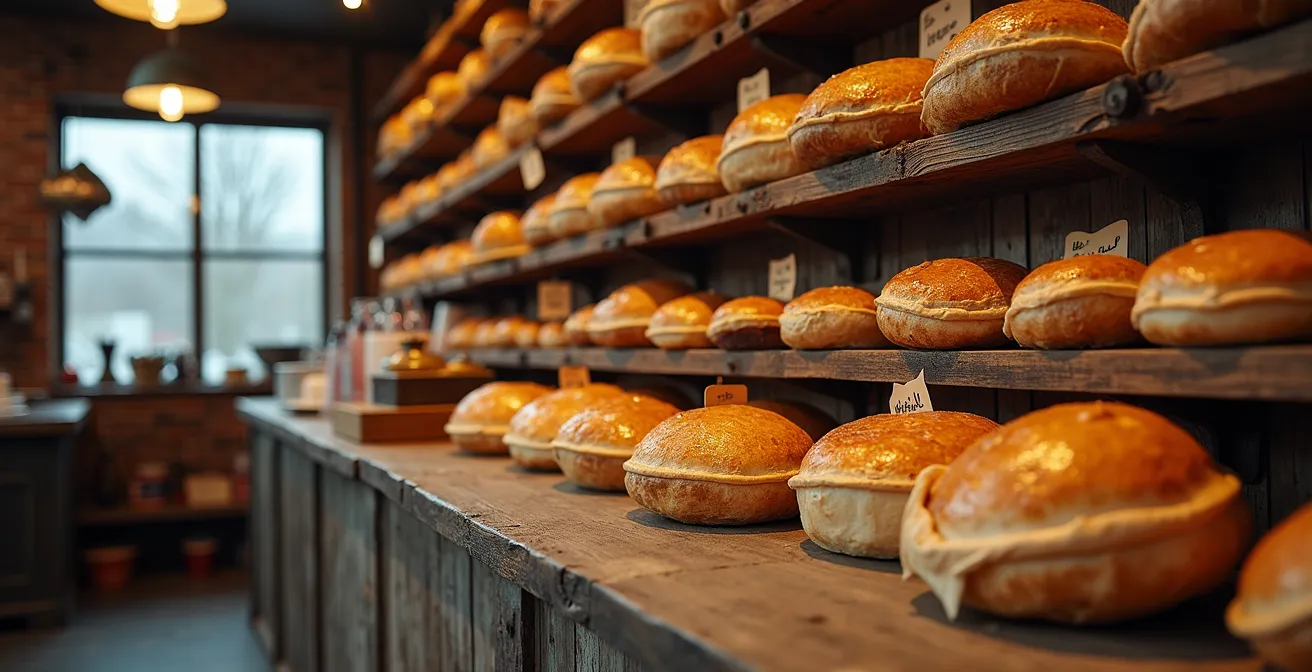
To truly eat like a local in Quebec City, you must look beyond poutine and learn to recognize the subtle signifiers of authentic heritage cuisine, from the cut of the meat in a pie to the house-made condiments on the table.
- The great pie debate—cipaille vs. tourtière—isn’t just semantics; it’s a test of your understanding of Quebec’s regional culinary history.
- Authenticity is found in the details: diners packed with locals offer better value than historic-looking tourist spots, and house-made fruit ketchup is a non-negotiable part of the experience.
Recommendation: Use this guide to read the menus like a critic, seeking out the dishes and establishments that honor tradition over convenience.
You’ve come to Quebec City with an appetite. You’ve heard tales of hearty, soulful food born from long winters and a fierce sense of identity. But you’re a discerning traveler. You know in your gut that the city’s true culinary soul isn’t found in the first poutine shop you see on a cobblestone street. Poutine is a fine introduction, a glorious late-night indulgence, but it’s merely the opening act. The real feast, the food that tells the story of Quebec, lies deeper.
Most guides will give you a simple checklist: tourtière, pea soup, sugar pie. They point you toward the most picturesque buildings in Old Quebec, where the menus are conveniently translated into five languages. This is the tourist trail, and while pleasant, it often leads to a sanitized, simplified version of the real thing. But what if the key to an authentic meal wasn’t in the dish’s name, but in its preparation? What if the difference between a real tourtière and a bland imposter was whether the meat was cubed or minced? What if the most important item on the table wasn’t the salt shaker, but a jar of beet marinade?
This is a guide for those who want to eat with intention. We will bypass the platitudes and dive into the delicious, complex world of Quebecois heritage cooking. We will learn to distinguish a cipaille from a tourtière du Lac, weigh the merits of a working-class diner against a fine-dining institution, and understand why a Depression-era dessert remains the undisputed king of the menu. This is how you leave the tourist traps behind and find a meal that feeds not just your hunger, but your curiosity.
This article will guide you through the essential dishes, debates, and dining experiences that define authentic Quebecois cuisine. Below is a summary of the culinary secrets we are about to uncover.
Summary: A Critic’s Guide to Authentic Quebec City Dining
- Cipaille vs. Tourtière: Why asking for the wrong one reveals you’re a tourist
- Buffet de l’Antiquaire or Aux Anciens Canadiens: Which offers better value?
- Ketchup aux fruits vs. Marinades: The essential condiments you must try
- Pouding Chômeur: Why this depression-era cake is the only way to end the meal
- Game meat season: When to order the elk or bison stew
- Pea soup to Oreilles de Crisse: A guide to the heavy, caloric traditional meal
- Cipaille vs. Tourtière du Lac: The regional rivalry you taste at festivals
- Renting a Sugar Shack Cottage: Experience the Maple Season Like a Local Producer
Cipaille vs. Tourtière: Why Asking for the Wrong One Reveals You’re a Tourist
The first test of your culinary seriousness in Quebec is the pie question. To the uninitiated, “tourtière” is a catch-all for any French-Canadian meat pie. This is a rookie mistake. Asking for tourtière when you really mean cipaille, or vice-versa, is like asking for a Chianti in Bordeaux—it instantly reveals you haven’t done your homework. A classic tourtière is a relatively straightforward affair: a standard double-crust pie filled with minced pork, veal, or beef, seasoned simply with cinnamon, clove, and allspice. It’s named after the dish it was originally cooked in.
Cipaille (or Six-Pâtes), however, is an entirely different beast. It is a towering, slow-cooked masterpiece of layered game and meats. Imagine a deep-dish vessel lined with pastry, then a layer of meat (perhaps venison), another thin layer of pastry, a layer of pork, another sheet of pastry, and so on. It is a rich, dense, and complex creation that speaks to the hunting traditions of regions like Gaspésie. The true signifier is the construction: cipaille is about multiple layers of different meats separated by pastry, resulting in a much taller, more substantial dish.
Then there is the formidable Tourtière du Lac-Saint-Jean, a deep-dish pie from its namesake region, which features cubed (never minced) meats and potatoes, all slow-cooked in a rich broth under a thick top crust. Knowing these distinctions is more than trivia; it’s the key to ordering what you truly crave and showing respect for the deep-seated regional pride baked into every crust.
Buffet de l’Antiquaire or Aux Anciens Canadiens: Which Offers Better Value?
Once you know your pies, the next question is where to eat them. In Quebec City, two names dominate the conversation on traditional food: Buffet de l’Antiquaire and Aux Anciens Canadiens. They could not be more different, and choosing between them defines the kind of experience you’re seeking. One is not “better” than the other; they simply offer completely different kinds of value.

As this comparison of traditional restaurants makes clear, your choice depends on your priorities. Aux Anciens Canadiens, housed in the city’s oldest building (1675), offers a “historical fine dining” experience. It’s a beautiful, tourist-friendly establishment perfect for a special occasion. As one analysis notes, the restaurant has successfully evolved by incorporating locally sourced game meats and berries, creating a “nouvelle Quebec cuisine” that honors tradition while feeling contemporary. It’s a taste of history, refined and presented with polish.
Buffet de l’Antiquaire, by contrast, is a diner. It’s a bustling, no-frills institution packed with locals, workers, and savvy visitors. This is where you find unpretentious, soul-satisfying comfort food at local prices. Their ragoût de boulettes (meatball stew) and recipes from the Lower St. Lawrence are legendary. The “value” here is not in the historic ambiance but in the raw, delicious authenticity. For a discerning eater, the choice is clear: Aux Anciens Canadiens is for a romantic night out, but Buffet de l’Antiquaire is for a real taste of Quebec.
| Restaurant | Style | Clientele | Specialties | Value Proposition |
|---|---|---|---|---|
| Buffet de l’Antiquaire | Diner-style institution | Locals and workers | Ragoût de boulettes, Lower St. Lawrence recipes | Authentic comfort food at local prices |
| Aux Anciens Canadiens | Historical fine dining | Tourists and special occasions | Game meats, nouvelle Quebec cuisine | 51 years of tradition in 1675 heritage building |
| La Bûche (Saint-Louis St) | Sugar shack-themed bistro | Mix of locals and tourists | Pouding chômeur with bacon, maple specialties | Nostalgic atmosphere with modern twists |
Ketchup aux fruits vs. Marinades: The Essential Condiments You Must Try
You’ve ordered your pie at the right spot. The plate arrives, steaming and fragrant. But the meal is not yet complete. A true Quebecois table is defined by its condiments, and using them correctly is another sign of an informed palate. The star of the show is ketchup aux fruits, a sweet and tangy relish of fruits and vegetables, traditionally served with meat pies. As Quebec City tour guide Marie-Pierre authoritatively states, “Ketchup aux fruits is mandatory for tourtière and pâté à la viande, never poutine.” This is a critical rule.
A restaurant’s commitment to authenticity can often be judged by this condiment. If you see a bottle of Heinz on the table, be wary. If the menu mentions “ketchup maison” (house-made ketchup), you are in good hands. This sweet, spiced concoction is the perfect foil for the rich, savoury meat fillings. But the condiment story doesn’t end there. You will almost always find a small bowl of betteraves marinées (pickled beets) on the table. Their sharp, earthy tang is designed to cut through the richness of the main course, acting as a vital palate cleanser between heavy bites. Another common side is chow-chow, a pickled green tomato relish that serves a similar tangy purpose.
And let’s not forget the breakfast condiment that often appears alongside heartier meals: cretons. This is a cold pork pâté, coarsely textured and seasoned with onions and spices. It’s meant for spreading on toast, but don’t be surprised to see locals adding a dollop to their plate to enjoy with the rest of the meal. Mastering the use of these condiments is key to enjoying the cuisine as it’s meant to be eaten.
Pouding Chômeur: Why This Depression-era Cake is The Only Way to End The Meal
After a heavy meal of stew and pie, you might think dessert is an over-the-top indulgence. You would be wrong. In Quebec, dessert is not an option; it is the final, glorious act of a proper traditional meal. And there is only one true choice: Pouding Chômeur, the “unemployed man’s pudding.” Its name speaks to its humble origins during the Great Depression, when factory workers’ wives created a simple cake with flour, butter, and water, then poured a hot syrup of brown sugar over it before baking. The result is magical: a simple cake “floating” on a thick, creamy caramel sauce.
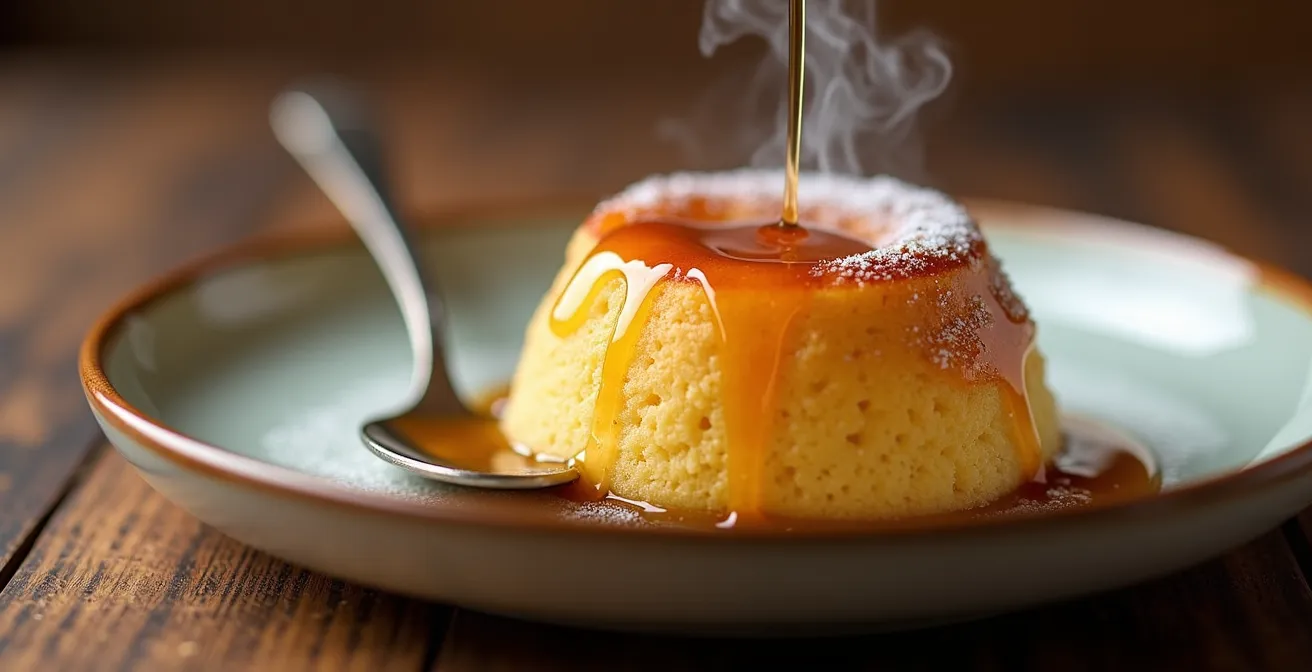
The dish has evolved, but its soul remains. As chronicled in its journey from survival food to gourmet staple, modern versions have elevated the recipe. Most notably, maple syrup is now almost universally used in place of brown sugar, creating a more complex and distinctly Quebecois caramel. High-end restaurants might offer deconstructed versions with fleur de sel, but the best Pouding Chômeur is often found in diners, where the cake is spongy and light, and the sauce is a gloriously sweet, syrupy pool at the bottom of the bowl. It is a dessert that is both comforting and decadent, a testament to the ingenuity of making something beautiful out of almost nothing. To skip it is to miss the heart of Quebecois comfort.
Game Meat Season: When to Order the Elk or Bison Stew
While pork is the backbone of many traditional recipes, the true heart of Quebec’s historical cuisine lies in the forest. Before livestock farming was widespread, wild game was the primary source of protein. As Wikipedia’s entry on Quebec cuisine notes, “When available, Québécois eat meat from moose, deer, hares, ruffed grouse, wild turkey, waterfowl and more rather than that of livestock.” This tradition continues today, particularly in the fall and winter, which is game meat season.
This is the time to look for dishes that go beyond standard beef and pork. Keep an eye out for ragoût de cerf (venison stew), tourtière à l’orignal (moose pie), or steak de bison. These meats offer a deeper, richer, and more complex flavour profile that is quintessentially Quebecois. Restaurants that take their heritage seriously will often feature seasonal game specials. Aux Anciens Canadiens, for instance, has built its modern reputation on expertly prepared game meats. Ordering the elk or bison isn’t just a novelty; it’s a direct connection to the province’s hunter-trapper past.
Don’t be hesitant. The stews are slow-cooked for hours until the meat is meltingly tender, its gaminess mellowed into a profound savoury depth. Paired with root vegetables and a rich, dark sauce, a bowl of game stew on a cold winter’s night is perhaps the most authentic Quebecois dining experience you can have. When you see it on the menu, especially between October and March, you must order it. It’s a taste of the terroir in its purest form.
Pea Soup to Oreilles de Crisse: A Guide to The Heavy, Caloric Traditional Meal
Nowhere is the unapologetically caloric glory of Quebecois food more apparent than in the traditional sugar shack meal. This multi-course feast is a rite of spring, but its components form the DNA of the province’s comfort food. It begins, as all great sagas do, with soupe aux pois (pea soup). This is not some light, green purée. This is a thick, rib-sticking soup made from dried yellow peas and salt pork, simmered for hours until it’s practically a stew. Its origins are legendary, tracing back to Samuel de Champlain’s ships in 1608, which were stocked with the dried peas and cured meats necessary for surviving the harsh winters. It is, quite literally, a 400-year-old survival meal.
The main event is a platter groaning with food. You’ll find fèves au lard, baked beans slow-cooked with pork fat and a generous pour of maple syrup until they are dark and sweet. Alongside them are fluffy omelettes, thick slices of maple-glazed ham, and grillades de lard (strips of grilled salt pork). But the most curious item is the condiment served on the side: oreilles de crisse (“Christ’s ears”). These are deep-fried strips of salt pork belly, rendered until they are outrageously crispy and salty. They are meant to be crumbled over the other dishes, adding a salty, crunchy counterpoint to the sweetness of the beans and ham.
Your Checklist for an Authentic Sugar Shack Meal
- Starter: Does the meal begin with a thick, yellow soupe aux pois, ideally with chunks of salt pork?
- Main Components: Are fèves au lard (baked beans) present, slow-cooked and dark with maple syrup?
- Proteins: Is there a combination of eggs (usually an omelette), maple-cured ham, and some form of grilled salt pork?
- The Crispy Test: Are oreilles de crisse served as a salty, crispy condiment for the table?
- Finishing Touch: If in season (late winter/early spring), does the meal conclude with tire sur la neige (maple taffy on snow)?
Cipaille vs. Tourtière du Lac: The Regional Rivalry You Taste at Festivals
We’ve established the basic difference between a common tourtière and a cipaille, but for the true food enthusiast, the debate goes deeper. The most passionate rivalries are regional, most notably between the cipaille of Bas-Saint-Laurent/Gaspésie and the tourtière of Lac-Saint-Jean. These are not interchangeable pies; they are declarations of regional identity, best experienced at local festivals or from specialized butcher shops.
The distinction reflects the land itself. Cipaille, from coastal and heavily forested regions, is a testament to a hunting economy, showcasing multiple layers of game meats. It is a “hunter’s pie.” Tourtière du Lac-Saint-Jean, from a more agricultural region, is a heartier, deeper dish reflecting a farmer’s sensibility. Its defining characteristics are the use of cubed meat and potatoes. The meat isn’t ground, allowing the different textures of pork, veal, and beef to remain distinct. The potatoes absorb the rich broth, becoming soft and flavourful, making the pie a complete, substantial meal in a crust.
This rivalry is so serious that butcher shops in Quebec City often specialize. A place like Boucherie Florent & Fils might become a destination for those seeking a truly authentic Saguenay-style tourtière. When you’re in Quebec, ask where a pie is from or what style it is. The answer tells a story, and tasting the difference is a delicious lesson in the province’s diverse culinary geography. The fact that these traditions are so fiercely protected is a sign of a living, breathing food culture.
Key Takeaways
- Authenticity is in the details: Look for cubed meat in Tourtière du Lac-Saint-Jean and layered game in Cipaille.
- Judge a restaurant by its condiments: The presence of “ketchup maison” and pickled beets is a sign of a kitchen that cares about tradition.
- Embrace the whole meal: From the rib-sticking pea soup to the mandatory Pouding Chômeur, a traditional Quebecois meal is a marathon, not a sprint.
Renting a Sugar Shack Cottage: Experience the Maple Season Like a Local Producer
To truly understand Quebec cuisine, you must understand maple syrup, and not just as a topping for pancakes. It is the lifeblood of the culture and a foundational flavour in everything from baked beans to desserts. Quebec’s agricultural power is immense, with a staggering 90.7% of Canadian maple syrup production originating from the province. The best way to immerse yourself in this world is to go straight to the source during the spring sap run (typically March and April) and rent a cottage at a sugar shack.
This is the ultimate culinary experience, allowing you to wake up to the smell of boiling sap and eat the traditional feast in its natural habitat. Booking one of these stays requires planning, as they are incredibly popular. Here are some essential tips:
- Book far in advance: For the peak season of March-April, you should be looking to book 6 to 12 months ahead.
- Know your keywords: Search for “érablière” (a maple grove/production site) or “sucrerie” (a sugar house) to find authentic properties.
- Choose your style: Decide between a large commercial “cabane à sucre” which is mainly a restaurant, or a smaller, private cottage rental on a working maple farm for a quieter experience. A place like Sucrerie de la Montagne offers a rustic village of cottages for rent.
- Pack for mud: The spring thaw, or “dégel,” makes the woods extremely muddy. Waterproof boots are non-negotiable.
Staying at an érablière transforms you from a consumer into a participant. You can walk through the maple groves, see the sap collection lines, and talk to the producers. It connects you to the food, the land, and the people in a way that no city restaurant ever could. It is the final, most important step in understanding the soul of Quebec’s culinary heritage.
Armed with this knowledge, you are no longer a mere tourist seeking sustenance. You are a culinary explorer, ready to engage with the stories, traditions, and passionate rivalries that make Quebec’s food scene one of the most vibrant in North America. It’s time to plan your authentic culinary journey through Quebec City.