In summary:
- The Plains of Abraham is a vast park with a dual identity: a historic battlefield and a modern recreational hub.
- Maximizing your visit requires choosing the right spot for your activity, from picnics and concerts to skiing.
- Key historical sites, like where General Wolfe fell, can be found with a little guidance.
- The park seamlessly connects to other Quebec City landmarks like the Dufferin Terrace and the city fortifications.
- Insider knowledge on concert views, tour values, and local etiquette will significantly enhance your experience.
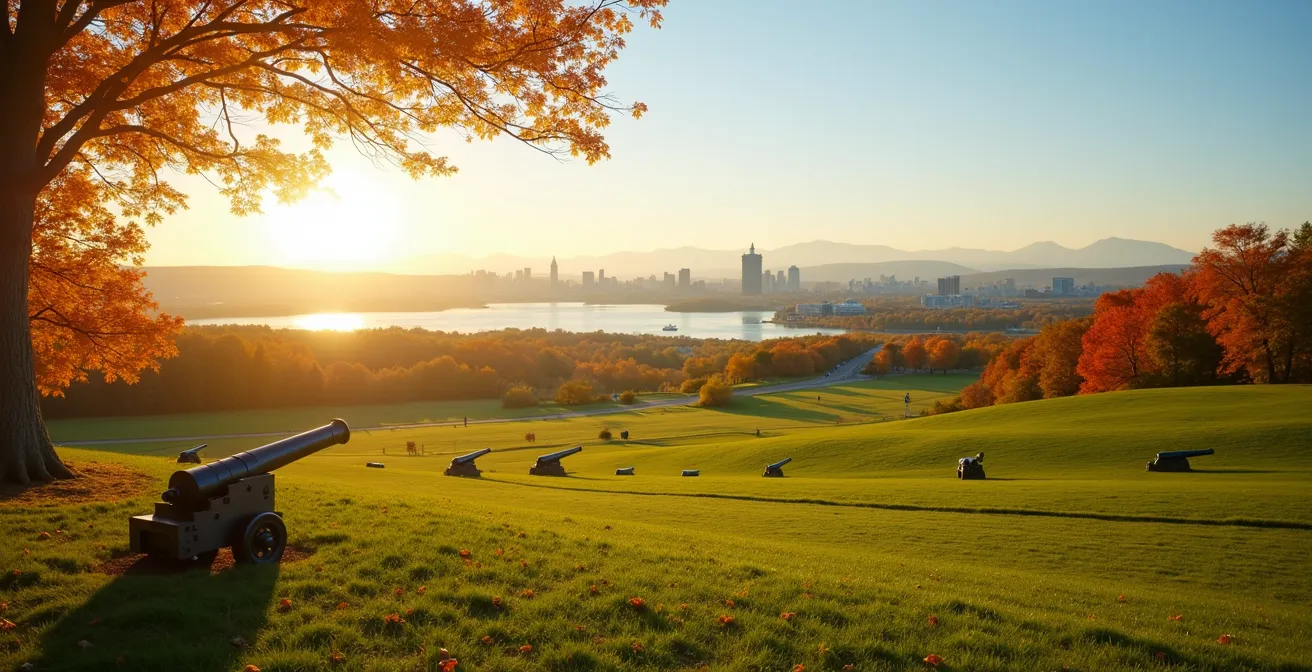
Welcome to the Plains of Abraham! As one of the largest and most prestigious urban parks in the world, its sheer size can be overwhelming for first-time visitors and even locals. Many see a vast expanse of green, a great place for a walk, and know it’s the site of a famous battle. They might notice the cannons or the summer festival stage, but they often miss the park’s true nature. The Plains are not one single place; they are a collection of distinct micro-environments, each with its own story, purpose, and perfect use.
This guide is designed to take you beyond the obvious. We won’t just tell you that there was a battle here; we’ll show you how to stand on the very spot a general fell. We won’t just say it’s good for picnics; we’ll help you choose a location based on the specific vibe you’re looking for—a panoramic sunset or a quiet, shaded garden. The real magic of the Plains lies in this dual identity, the constant, living dialogue between its past as a battlefield and its present as the city’s backyard.
Forget aimless wandering. This is your strategic map to unlocking the full potential of the Plains of Abraham. We’ll explore how to pick the perfect lunch spot, find the best trail for a novice skier, secure the ideal vantage point for a concert, and tour the fortifications efficiently. By understanding the unique character of each zone, you can transform a simple park visit into a truly memorable Quebec City experience.
This article breaks down the park’s key experiences into practical, actionable advice. Explore the sections below to find exactly what you’re looking for on your next visit to this national treasure.
Summary: A Guide to the Best of the Plains of Abraham
- Grey Terrace vs. Joan of Arc Garden: Choosing the right vibe for your lunch
- Beyond the cannons: Finding the exact spot where Wolfe fell
- Cross-country skiing loops: Which trail is best for beginners?
- The FEQ setup: Where to stand on the hill for sound vs. view
- The Martello Towers: Are the guided tours inside worth the admission?
- How to tour the fortifications in under 2 hours without missing key cannons
- Ciel! vs. Terrace Dufferin: Elevation differences and visibility
- Old Quebec Street Performers: Schedule and Tipping Etiquette for Tourists on Dufferin Terrace
Grey Terrace vs. Joan of Arc Garden: Choosing the right vibe for your lunch
One of the most common questions I get is, “Where’s the best spot for a picnic?” The answer always depends on the experience you want. The Plains of Abraham offers two premier, yet vastly different, options: the open Grey Terrace and the intimate Joan of Arc Garden. Think of it as vibe-mapping: are you seeking a grand, social setting or a peaceful, personal retreat? The Grey Terrace, with its sweeping, panoramic views of the St. Lawrence River, is perfect for those who want to feel the pulse of the park. It gets beautiful afternoon sun, making it ideal for a late lunch that stretches into a sunset viewing. It’s generally busier, especially on weekends, creating a lively, communal atmosphere.
In contrast, the Joan of Arc Garden is a hidden gem of tranquility. This formal garden, meticulously maintained with stunning floral displays, offers an entirely different energy. It’s an oasis of calm, with plenty of shade from mature trees and better protection from the river winds. For those looking to grab supplies, the garden is slightly closer to the delis and cafes on Avenue Cartier. It’s the ideal choice for a quiet morning coffee, a romantic lunch, or a peaceful read. The atmosphere here is less about the grand vista and more about intimate, natural beauty.

Your choice ultimately comes down to priorities. Do you value an expansive view and a vibrant crowd, or is a quiet, shaded, and intimate setting more your style? This quick comparison can help you decide.
| Feature | Grey Terrace | Joan of Arc Garden |
|---|---|---|
| Atmosphere | Open, panoramic views | Intimate, formal garden setting |
| Crowd Level | Moderate (busier on weekends) | Low-moderate (quieter mornings) |
| Shade Availability | Limited – bring umbrella | Abundant from mature trees |
| Accessibility | Fully wheelchair accessible | Some gravel paths, partial access |
| Best Time | Late afternoon for sunset | Morning for flower viewing |
Beyond the cannons: Finding the exact spot where Wolfe fell
The Plains of Abraham is, first and foremost, a National Historic Site. While the park welcomes an impressive 4 million visitors annually for recreation, its historical significance is the bedrock of its identity. The 1759 battle that took place here was a pivotal moment in North American history, yet many visitors walk right past its most poignant location without realizing it. Beyond the impressive rows of cannons, a modest monument marks the very spot where the British commander, General James Wolfe, died from his wounds.
Finding this spot offers a tangible connection to the past, transforming the park from a simple green space into a profound historical landscape. To locate it, start from the Musée national des beaux-arts du Québec. Walk directly onto the Plains, heading towards the river. You’re looking for a simple, column-like monument known as the Wolfe Monument. It’s not grand or ostentatious, which is why so many miss it. The inscription reads, “Here Died Wolfe Victorious.”
Standing there, you can imagine the chaos of the battle unfolding around you, a stark contrast to the peaceful, recreational atmosphere of today. It’s a powerful moment that encapsulates the dual identity of the Plains. It’s a place where children play and joggers run, but also a field consecrated by history. Taking a few minutes to find this monument enriches any visit, adding a layer of depth and respect for the events that shaped the continent.
Cross-country skiing loops: Which trail is best for beginners?
When winter blankets Quebec City in snow, the Plains of Abraham transforms into a premier Nordic skiing destination. The park becomes a hub of activity, offering meticulously groomed trails right in the heart of the city. While Quebec’s extensive network includes nearly 400 km of mechanically groomed trails across Sépaq parks, the accessibility of the Plains is unmatched for an urban ski experience. For a beginner, however, the network of loops can seem daunting. My advice is to start simple.
The best trail for anyone new to the sport is the 2-kilometre beginner loop located near the outdoor skating rink and the Skaters’ Chalet (Chalet des Patineurs). This trail is almost entirely flat, allowing you to focus on finding your balance and rhythm without worrying about challenging hills. A huge advantage is that this loop is well-lit until 9 PM, making it perfect for an after-work ski. It provides a safe and encouraging environment to build confidence.
Once you’re comfortable on the beginner loop, you can graduate to the longer, more varied trails that crisscross the main fields. But before you even clip into your skis, it’s essential to be prepared. The following checklist will ensure your first outing is a success.
Your action plan: Gearing up for beginner skiing on the Plains
- Start with the 2km beginner loop near the skating rink – it’s flat and well-lit until 9 PM.
- Check trail conditions in real-time on the Nordic Pulse app before heading out.
- Rent equipment at the Chalet des Patineurs (skaters’ chalet) – daily rentals available.
- Visit the waxing room for proper ski preparation – staff can help beginners.
- Warm up at the heated rest areas along the trails – two chalets available with hot drinks.
The FEQ setup: Where to stand on the hill for sound vs. view
Every July, the Plains of Abraham transforms from a tranquil park into one of North America’s largest outdoor music venues for the Festival d’été de Québec (FEQ). The main stage, set against the historic backdrop, hosts massive crowds on its natural, sloping amphitheatre. A frequent question from festival-goers is: “Where’s the best place to be?” The answer is a trade-off between sound quality and visual experience. The hill’s topography creates distinct zones, each offering a different kind of concert experience.
For the music purist, the goal is to get as close to the sound mixing tent as possible. This spot, typically located about 50-75 metres from the stage in the center of the field, is the “sweet spot” where the audio engineers design the sound to be perfectly balanced. You’ll sacrifice a bit of the up-close view of the artists, but you’ll hear the music exactly as it’s intended to be heard. Conversely, for those who want the best visual experience and to feel the energy of the front rows, the goal is to be within the first 30 metres of the stage. Be prepared for very loud volume and a packed crowd.
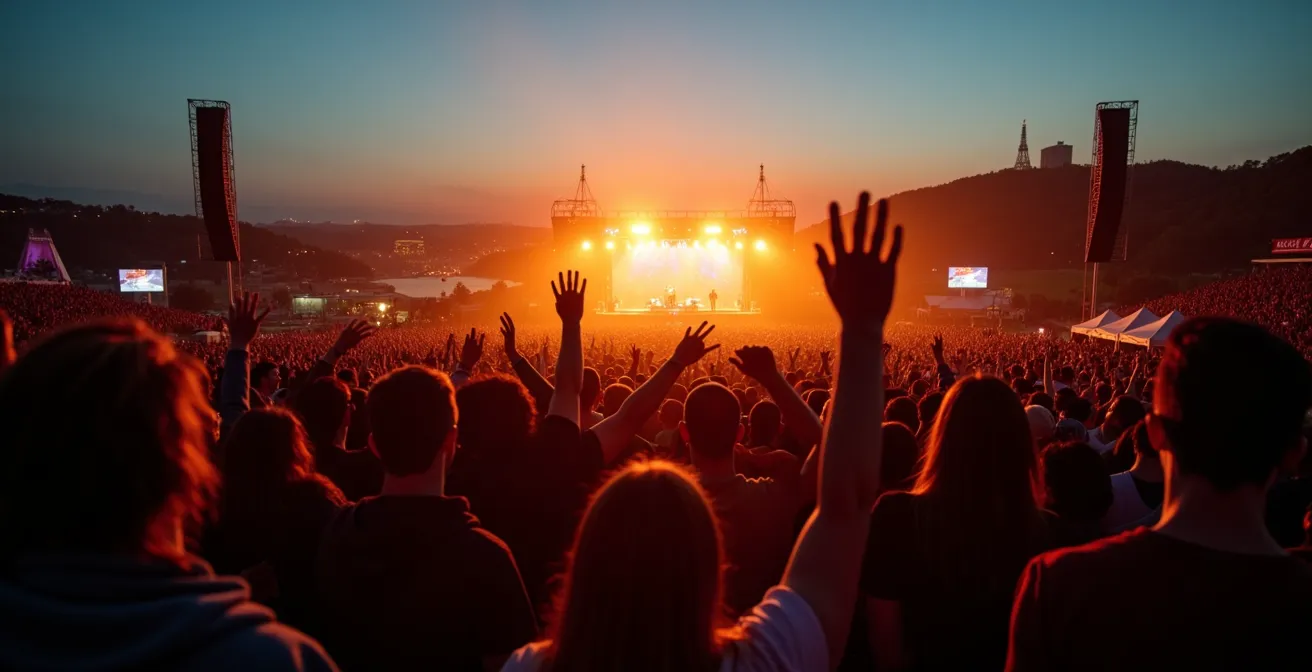
Families or those looking for a more relaxed experience should aim for the back half of the hill. The sound is still good, and while the artists are small, the large screens provide a great view. This area is less crowded, making it easier to set up a chair or blanket. Finally, for those planning an early exit, positioning yourself on the far sides of the hill provides a quick escape route, though it comes at the cost of both sound and view quality. This table breaks down the strategic choices for your next FEQ show.
| Zone | Distance from Stage | Sound Quality | View Quality | Best For |
|---|---|---|---|---|
| Audiophile’s Spot | 50-75m center | Excellent | Good | Music purists |
| Family Zone | 100-150m back | Good | Fair | Groups with children |
| Quick Exit Route | Side areas | Fair | Limited | Early departures |
| VIP Experience | Front 30m | Loud | Excellent | Die-hard fans |
The Martello Towers: Are the guided tours inside worth the admission?
The four stone Martello Towers are iconic features of the Plains of Abraham’s landscape, but many visitors are unsure of their purpose or if the interior tours are worth the price of admission. First, it’s crucial to understand their history. A common misconception is that they are related to the 1759 Battle of the Plains of Abraham. This is incorrect. As the National Battlefields Commission clarifies, their origin is from a later period.
The Martello Towers were built in the early 1800s as part of the fortifications to defend against a potential American invasion, not related to the 1759 battle.
– National Battlefields Commission, Plains of Abraham Museum Exhibition
So, is it worth paying to go inside? The answer depends on your interest in military history and technology. The main exhibition is housed in Martello Tower 1, and it offers significant experiential value beyond just looking at an old building. The tour provides a fascinating glimpse into the life of a 19th-century soldier and the clever defensive design of these structures. For history enthusiasts, the admission is an excellent value.
Case Study: The Value of the Martello Tower Experience
Martello Tower 1 serves as the primary exhibition space, featuring interactive 3D displays and historical artifacts that create an engaging experience lasting approximately 45-60 minutes. Visitors consistently report that the self-guided tours, using handheld devices, provide excellent historical context. Crucially, the admission price often includes access to the permanent exhibitions at the Plains of Abraham Museum during the summer months. This effectively doubles the value, giving you two historical experiences for one price, making it a highly recommended activity for anyone interested in the city’s military past beyond the 1759 battle.
In short, if you are simply walking the park, enjoying the view from the outside is enough. But if you have an hour to spare and a curiosity for history, the tour provides a rich, educational experience that adds another layer to your understanding of Quebec City’s fortifications.
How to tour the fortifications in under 2 hours without missing key cannons
The Plains of Abraham is just one part of a larger defensive network that includes the historic fortifications of Quebec City. Touring these walls offers a spectacular walk through history, but the full circuit can be long. For visitors short on time, it’s possible to experience the highlights—including the most picturesque cannons—in a strategic two-hour walk.
This efficient route focuses on the most preserved and scenic sections of the ramparts. By following this path, you’ll capture the essence of the fortifications without dedicating an entire day. Here is a suggested timeline for your express tour:
- Start at Saint-Louis Gate (0:00): This is one of the main historic gates into Old Quebec. Begin your tour here by taking a photo with its impressive stone archway.
- Walk the Ramparts to Kent Gate (0:20): Head north along the top of the walls. This section is one of the best-preserved and offers fantastic views into the old city on one side and the modern city on the other.
- Stop at the Citadelle Overlook (0:45): As you approach the Citadelle, you’ll find an overlook with what many call the ‘Most Photogenic Cannon.’ This cannon is perfectly positioned to capture a quintessential Quebec City photo with the iconic Château Frontenac in the background.
- Visit the Powder Magazine (1:10): Near the Citadelle, a quick 10-minute stop at the powder magazine (poudrière) exhibition provides essential context on how the fortifications were supplied and maintained.
- End at Governor’s Promenade (1:45): Conclude your walk on this elevated boardwalk, which offers breathtaking panoramic views of the St. Lawrence River, the port, and the ‘Best View Cannon’ that watches over it all.
This route is not just efficient; it’s filled with moments that bring the history to life, a sentiment shared by many who walk it.
One of my personal highlights was the World War I Canadian captured artillery cannon display on George VI Avenue. The explanatory signs are everywhere, so you can walk yourself around the battlefields without taking a guided tour. The area is very large with lots of walking, but the free 60-minute parking near the gazebo makes it manageable for a quick visit.
– Visitor Review, TripAdvisor
Ciel! vs. Terrace Dufferin: Elevation differences and visibility
The view of the St. Lawrence River is one of Quebec City’s defining features, and the Plains of Abraham and its surroundings offer multiple vantage points. Two of the most famous are the public Dufferin Terrace and the rotating Ciel! Bistro-Bar. While both provide stunning vistas, they offer fundamentally different experiences due to a dramatic difference in elevation and perspective. The Dufferin Terrace, the iconic boardwalk flanking the Château Frontenac, provides a ground-level, immersive experience. You are right there, part of the city’s fabric, with the wind off the river and the sounds of street performers nearby. It’s a view from within the landscape.
Ciel!, located at the top of the Le Concorde Québec hotel, offers the opposite: a god’s-eye view. From this high elevation, the entire landscape unfolds below you—the Plains, the Old City, the river, and the distant mountains. The slow 360-degree rotation gives you an ever-changing panorama that is impossible to get from the ground. It’s a detached, all-encompassing perspective that helps you understand the city’s geography. The value of such a view is not just aesthetic; in Quebec City, it’s a measurable asset. For instance, real estate data shows that Quebec City condos with panoramic views command a 15-25% premium, proving how highly prized a great vista is.

Choosing between them is a matter of preference. Do you want to feel the history under your feet on the Dufferin Terrace, feeling connected to the city’s energy? Or do you prefer the breathtaking, map-like overview from Ciel!, where you can appreciate the grand scale of the region? One is an experience of immersion, the other of observation. Both are essential parts of the Quebec City experience.
Key Takeaways
- The Plains of Abraham’s greatest asset is its dual identity as both a historic site and a modern recreational space.
- Effective planning is crucial; choosing the right “micro-environment” for your activity (picnic, concert, skiing) will greatly enhance your visit.
- The park’s history is accessible and tangible, from the spot where Wolfe fell to the 19th-century Martello Towers, offering depth beyond its recreational use.
Old Quebec Street Performers: Schedule and Tipping Etiquette for Tourists on Dufferin Terrace
The experience of the Plains of Abraham naturally extends to its neighbour, the Dufferin Terrace. This wide boardwalk becomes a stage for a vibrant cast of street performers, especially during the warmer months. From musicians and magicians to living statues and acrobats, their presence adds a magical energy to the atmosphere. For tourists, navigating the unspoken rules of this open-air theatre can be tricky. Understanding the general schedule and local tipping etiquette can make the experience more enjoyable for everyone.
Performances are not random; they are part of a regulated system that ensures quality. As the Quebec City Tourism Office notes, this isn’t just typical busking. This professional status means you can expect a high caliber of entertainment.
The artists are often selected and licensed by the city, lending them a professional status beyond typical busking.
– Quebec City Tourism Office, Street Performance Licensing Guidelines
Generally, you’ll find more intimate, smaller-scale acts like solo musicians on weekday afternoons. The big “circle shows”—large-scale acrobatics or magic acts that draw a crowd—tend to happen on weekend evenings. For these popular shows, it’s wise to arrive early to secure a good viewing spot. When it comes to tipping, it’s important to remember this is how the artists make their living. For a quick photo with a costumed character, a tip of $2 to $5 is appropriate. For a full 20-30 minute circle show that you’ve watched from start to finish, a contribution of $5 to $10 per group is a common and appreciated gesture. Many performers now also display signs with QR codes for Interac e-Transfers, a very Canadian way to tip in our increasingly cashless society.
Now that you’re equipped with this insider knowledge, from picking the perfect picnic spot to tipping a performer, it’s time to plan your own perfect day on the Plains and in its beautiful surroundings.
Frequently Asked Questions about The Plains of Abraham: Best Spots for Picnics, History, and Sports
When are the best times to catch street performers?
Weekday afternoons offer smaller crowds and more interactive shows. Weekend evenings feature larger ‘circle shows’ with acrobatics and magic, but arrive early for good spots.
What’s the appropriate tip for different performances?
For a full 20-minute circle show, locals tip $5-$10 per group. Quick photos with costumed characters warrant $2-$5. Many performers now accept Interac e-Transfers.
Where do different types of performers typically set up?
Large acrobatic shows happen in the central circle, solo musicians near the cannons, and living statues closer to Château Frontenac.